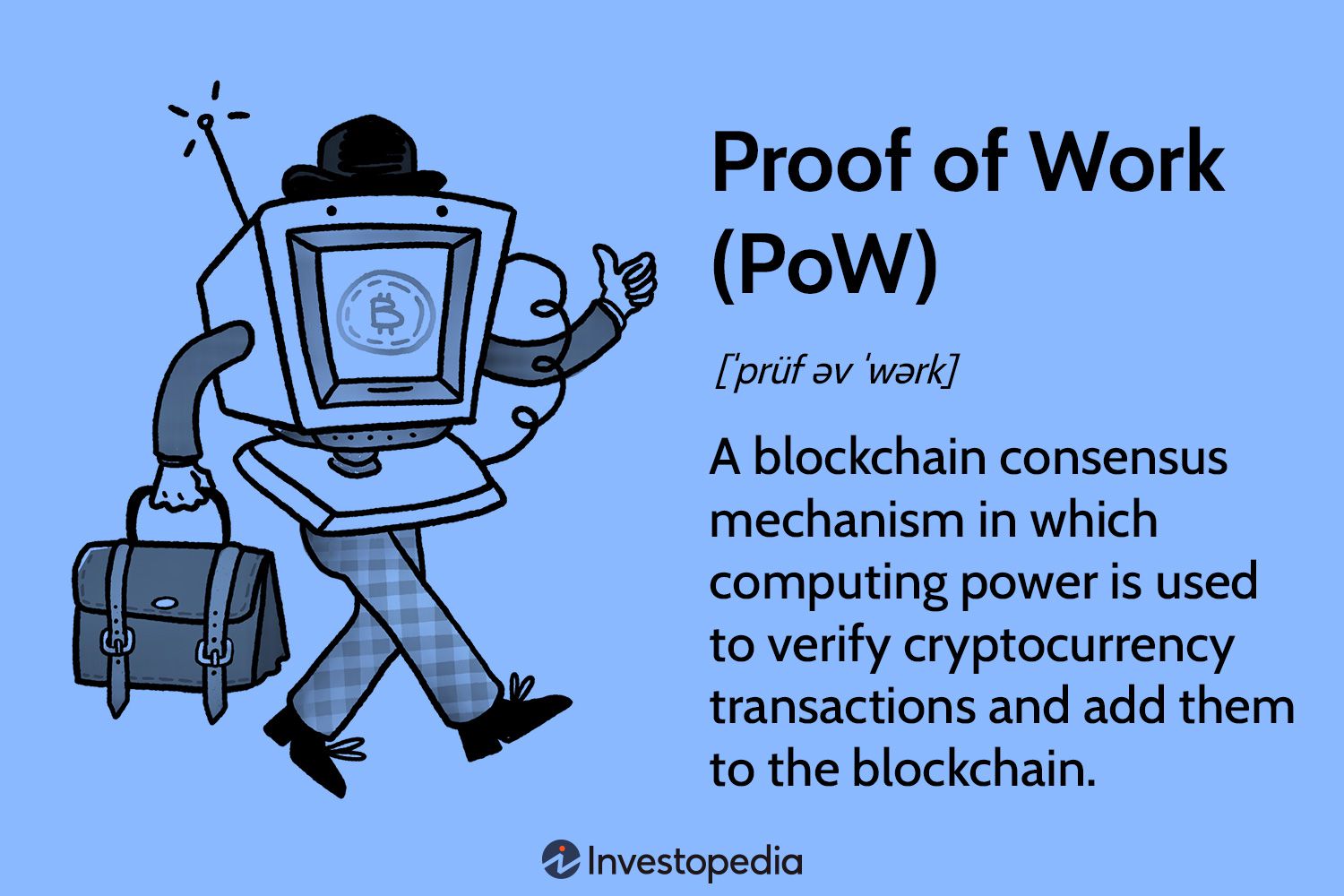
Proof of work
22
MENTIONS
9
EPISODES
9
PODCASTS
Search complete. 22 mentions across 9 episodes found for "Proof of work".
Oct 18, 2026

Elon MuskSOUNDBITE_SPEAKER
can improve the efficiency of bitcoin hashing algorithms in silicon but but not not fundamentally crack it
Dante CookHOST
ai can't defy fundamental math and crack it but it can replace your job at the factory energy is the true currency you cannot legislate energy you can't snap your finger and make more of and bitcoin runs on proof of work not only does it have a fixed cap in that you cannot create more bitcoin at 21 million but it also requires real energy real hash and real money in order to operate the network.
Dante CookHOST
And that's why with all of these different charts and plots and predictions out there about what is correlated to Bitcoin and trying to predict the price based on these sorts of things, the hash rate has been a pretty reliable indicator of the price of Bitcoin.
Dante CookHOST
Hash rate is the measure of how many energy units of compute are going into protecting the Bitcoin network or hashing every single second.
Dante CookHOST
And right now we're at 1.28 terahash per second in the Bitcoin network or more energy than the United States Navy.
Dante CookHOST
In this world of Bitcoin and AI, the age of abundance, Bitcoin is the final boss.
Dante CookHOST
In a Twitter debate with Zero Hedge when they were talking about the debasement of dollars and other cryptocurrencies, Elon says, yeah, this is why Bitcoin is built on proof of work.
Dante CookHOST
You cannot fake energy.

Elizabeth ThurgalandGUEST
yes yeah it's proof of work i heard you say like their own projects and like that's what i want to hear about you know is what you've been doing and And what about Bitcoin interested you and why? Because that lens and perspective that you have, your ability to speak from brings that special it factor that other people don't have.
Elizabeth ThurgalandGUEST
that maybe only you do that can be plugged into the right team where your energy will compound and there's a lot of examples of that and it's something too that is a bit unique to the bitcoin space that we have um you know the principle of proof of work that we just understand at a different level i guess and yeah more than accolades or degrees what have you actually done
Joe SpencerHOST
prove it right yeah real life proof of work is a saying i say it all the time it's become such a a part of my life with people i'll say show me the receipts i want to see your proof of work And Bitcoin taught me that, like, you know, we had that.
Joe SpencerHOST
I'm a military guy.
Joe SpencerHOST
It's, you know, show me what you got, not what you think.

Michael TangumaHOST
and you can obfuscate the bitcoin in the background with however you want to add dollars to it but there needs to be a cost and there will be there will need to be a cost to sending and receiving emails specifically sending because as the rest of the market realizes these tools in our inbox is already unsustainable but they're going to increasingly be unsustainable And so you can imagine a world where if you have it on both sides and if you open that email, well then maybe you give back the Bitcoin or maybe you keep a portion of it.
Michael TangumaHOST
You can figure out how the mechanics work, but there needs to be some proof of work that's involved when you're trying to get it into somebody's inbox and that you're willing to spend or, uh, You just shouldn't be sending or you're going to be spending a bunch of capital because right now the way that the system's going, and this goes across all the internet and the amount of slot being created, that you just need to increase that
Brian CubellisHOST
barrier.
Brian CubellisHOST
So that's
Brian CubellisHOST
Yeah, I mean, it's a great call out.
Brian CubellisHOST
I like your new segment, Michael.
Brian CubellisHOST
And as it relates to email, that was sort of the genesis of Proof of Work to begin with, was this anti-spam mechanism.
Brian CubellisHOST
And so coming full circle, I think that that will be super necessary in this world where not just slop on the internet um it's also slop to your inbox so there needs to be some value exchange there to know what the signal is and and sift through um one other headline nick if you could go to um the jev uh evaluation which we talked about maybe a month ago um jev which was released by typesafe ai um is basically you know not an llm it's what's called a transformer so it outputs uh calibrated probabilities over predefined choices instead of long form text so it can run much faster on far fewer tokens and they raised 870 million at a 7.5 billion dollar valuation uh less than a month ago and um Then it was, you know, within a few days, open source.

Michael TangumaHOST
and you can obfuscate the bitcoin in the background with however you want to add dollars to it but there needs to be a cost and there will be there will need to be a cost to sending and receiving emails specifically sending because as the rest of the market realizes these tools in our inbox is already unsustainable but they're going to increasingly be unsustainable And so you can imagine a world where if you have it on both sides and if you open that email, well then maybe you give back the Bitcoin or maybe you keep a portion of it.
Michael TangumaHOST
You can figure out how the mechanics work, but there needs to be some proof of work that's involved when you're trying to get it into somebody's inbox and that you're willing to spend or, uh, You just shouldn't be sending or you're going to be spending a bunch of capital because right now the way that the system's going, and this goes across all the internet and the amount of slot being created, that you just need to increase that
Brian CubellisHOST
barrier.
Brian CubellisHOST
So that's
Brian CubellisHOST
Yeah, I mean, it's a great call out.
Brian CubellisHOST
I like your new segment, Michael.
Brian CubellisHOST
And as it relates to email, that was sort of the genesis of Proof of Work to begin with, was this anti-spam mechanism.
Brian CubellisHOST
And so coming full circle, I think that that will be super necessary in this world where not just slop on the internet um it's also slop to your inbox so there needs to be some value exchange there to know what the signal is and and sift through um one other headline nick if you could go to um the jev uh evaluation which we talked about maybe a month ago um jev which was released by typesafe ai um is basically you know not an llm it's what's called a transformer so it outputs uh calibrated probabilities over predefined choices instead of long form text so it can run much faster on far fewer tokens and they raised 870 million at a 7.5 billion dollar valuation uh less than a month ago and um Then it was, you know, within a few days, open source.

Ricky ZhangGUEST
I think that's, you know, my thesis at the start was this is something we all are a part of.
Ricky ZhangGUEST
And if people can see the inner workings, hopefully it can help others, right? Not just the finished product, not just like when I show up in a podcast, right? But how did I get to this point? And so all of that is on the record and I wanted it to be part of my proof of work, right? As I sort of, you know, like came from a different niche or field or domain into Bitcoin and abundance and like really trying to become a voice of like, okay, what are the next five, 10 years going to look like? I wanted to put in my proof of work in the form of this daily format that showed people in real time as I was changing.
Ricky ZhangGUEST
And what it ultimately is, is me taking my agency, right? Me taking my actions day by day, step by step.
Ricky ZhangGUEST
But in doing so in this public way, hopefully helping others too, as they get exposed to all manners of the ideas amongst AI and Bitcoin and the energy transition and ultimately what that reflects in all of us, right? The change that all of us are going through.
Jake RoqueHOST
I love that part.
Ricky ZhangGUEST
Yeah.
Ricky ZhangGUEST
And to add on to that, like you want records that, That persists, right? You want proof of work to be part of your contributions and that other people can see, and that can't be forged by AI, especially in this world that we're going into, right? This is one of the more frontier ideas I've been fleshing out, but in an age of abundance.
Ricky ZhangGUEST
If the control structure becomes obviated, if we route around the control structure with a free market, and if abundance and material needs are solved for, with prices falling forever under Bitcoin and energy itself, which is the input to everything.

Cory KlippstenGUEST
And that's why you have to actually spend the energy on those hashes.
Cory KlippstenGUEST
So the proof of work is like, hey, you have to actually buy and spend electricity or generate and spend electricity.
Cory KlippstenGUEST
to be able to earn the block reward from these lotteries that happen on the Bitcoin network from Bitcoin miners every 10 minutes.
Cory KlippstenGUEST
So that proof of work is elegant and is integral to the functioning of the Bitcoin network and it's the reason that there's all these data centers all over the world kind of hashing away trying to earn this block reward of the transaction fees plus the small and getting smaller number of Bitcoins in the block reward every 10 minutes.
Jeremy SzafronHOST
Hey, there's that quote, I know Bitcoiners love it, not your keys, not your coins.
Jeremy SzafronHOST
But what does it mean for a 70-year-old who doesn't want to manage their keys?

TerrenceHOST
Not all of it was necessarily good, but, you know, he was running around with Brock Pierce, you know, who created Tether.
TerrenceHOST
You know, he worked with, you know, Proof of Work was created by...
TerrenceHOST
if I'm recalling the names correctly, Cynthia Dwork and Moni Noor, these two people that worked at IBM, they're the ones that actually invented proof of work.
TerrenceHOST
And he worked with Cynthia Dwork's husband.
TerrenceHOST
They had a company together.

Cory KlippstenGUEST
And that's why you have to actually spend the energy on those hashes.
Cory KlippstenGUEST
So the proof of work is like, hey, you have to actually buy and spend electricity or generate and spend electricity.
Cory KlippstenGUEST
to be able to earn the block reward from these lotteries that happen on the Bitcoin network from Bitcoin miners every 10 minutes.
Cory KlippstenGUEST
So that proof of work is elegant and is integral to the functioning of the Bitcoin network and it's the reason that there's all these data centers all over the world kind of hashing away trying to earn this block reward of the transaction fees plus the small and getting smaller number of Bitcoins in the block reward every 10 minutes.
Jeremy SzafronHOST
Hey, there's that quote, I know Bitcoiners love it, not your keys, not your coins.
Jeremy SzafronHOST
But what does it mean for a 70-year-old who doesn't want to manage their keys?