Project Azorian
ProjectWikipedia
13
MENTIONS
8
EPISODES
7
PODCASTS
Search complete. 13 mentions across 8 episodes found for "Project Azorian".
Oct 22, 2026

Kaylan HillHOST
us energy.
Kaylan HillHOST
And the great thing is, mining manganese nodules conveniently requires everything Project Azorian actually needed to do for real.
Kaylan HillHOST
Because you need a ship that can hover in one exact spot for weeks, massive vertical pipes going miles down, experimental tech no one has ever seen before, and endless delays, breakdowns, and engineering challenges.
Hunter HillHOST
In other words, if your ship looks insanely over-engineered and barely functional, that's not a red flag.

speaker_1HOST
Exactly.
speaker_1HOST
In 1974, the CIA, under the Nixon administration, launched Project Azorian.
speaker_1HOST
To build the machine capable of lifting the submarine, they went to the one civilian eccentric enough that no one would question a bizarre billion-dollar vanity project.
AC WilsonHOST
Which was?
speaker_1HOST
But the main prize, the code books and the ballistic missiles, were likely lost in the section that fell back.
AC WilsonHOST
But the legacy of the operation is what matters for our deep dive today.
AC WilsonHOST
When the story of Project Azorian eventually leaked to the press in 1975, it shattered the public's perception of what was possible.
speaker_1HOST
It really did.

Beard LawsHOST
I'm Beard Laws.
Beard LawsHOST
Across from me is the one and only Luther Grimwood, and today we're investigating Project Azorian, the CIA's secret attempt to steal a Soviet submarine from the bottom of the ocean.
Beard LawsHOST
Luther, please tell me somebody at least questioned this plan.
LutherHOST
Oh, sure, someone must have, but in that era, questioning just meant, "Can we do this without starting World War III?" Not, "Should we?" And for a while it probably felt like a brilliant plan.

Jay DyerHOST
Diamonds features the kidnapping of Willard White, Howard Hughes, by Stavro, Ernst Stavro Blofeld, echoing the Gemstone File claim that Onassis had Hughes perhaps kidnapped and brought to his private Greek island of Skorpios.
Jay DyerHOST
Hughes, the aerospace magnate, worked with the CIA in Project Azorian, which was to build this massive submarine that could basically swallow other underwater crafts, right? So this is completely, like, directly out of Spectre.
Jay DyerHOST
It was directly out of a Bond novel, right? And this is what Howard Hughes is actually up to.
Jay DyerHOST
Fleming was a close friend of Aristotle Onassis.
Jay DyerHOST
Diamonds features the kidnapping of Willard Whyte, Howard Hughes, by Stavro, Ernst Stavro Blofeld, echoing the Gemstone File claim that Onassis had Hughes perhaps kidnapped and brought to his private Greek island of Skorpios.
Jay DyerHOST
Hughes, the aerospace magnate, worked with the CIA in Project Azorian, which was to build this massive submarine that could basically swallow other underwater crafts, [laughs] right? So this is completely, like, directly out of Spectre.
Jay DyerHOST
It was directly out of a Bond novel, right? And this is what Howard Hughes was actually up to.
Jay DyerHOST
Fleming was a close friend of Aristotle Onassis.

Daven HiskeyHOST
The refitted Halibut's first clandestine mission was to find and photograph the wreck of the Soviet Golf II class submarine K-129, which had sunk with all hands 2,890 kilometers northwest of Hawaii on March the 8th, 1968.
Daven HiskeyHOST
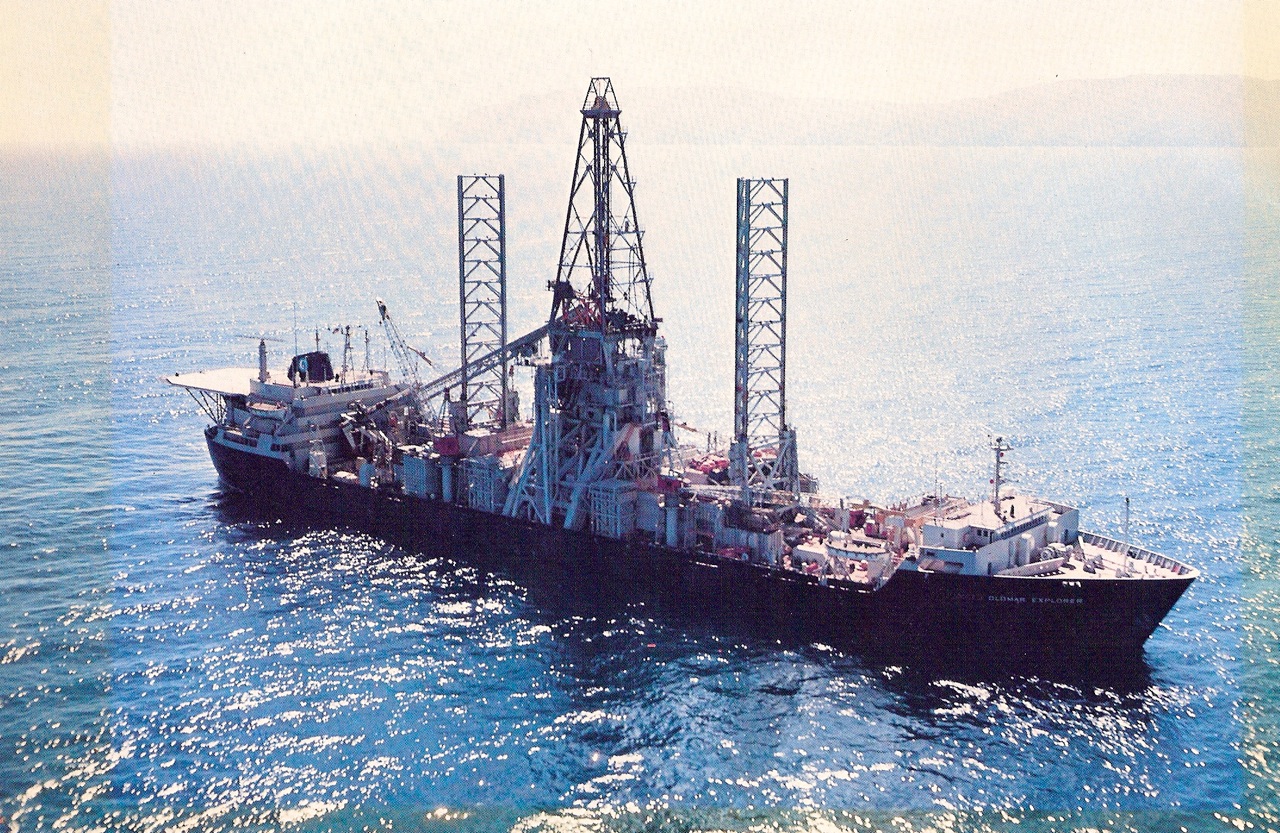
This mission was part of the larger Project Azorian, wherein the CIA constructed a special ship called the Glomar Explorer to snatch K-129 off of the ocean floor.
Daven HiskeyHOST
The cover story for the mission was that Glomar Explorer was constructed by eccentric billionaire Howard Hughes to mine manganese nodules off the ocean floor, a scheme crazy enough to be plausible.
Daven HiskeyHOST
Incredibly, in July 1974, Glomar Explorer succeeded in recovering the forward section of K-129 from a depth of 4.9 kilometers, but, well, that's a story for a different video.

Dan GelernterHOST
Possibly.
Josh GelernterHOST
Um, in any event, so that's, that was, uh, Project, uh, Azorian is what it's, uh...
Josh GelernterHOST
It was specifically called Project Jennifer, was the wider overarching project of plucking submarines off the seabed, so it's generally called Project Jennifer today.
Josh GelernterHOST
Uh, it's a real, real tragedy that, that, that got leaked, or else we would still be picking up subs.