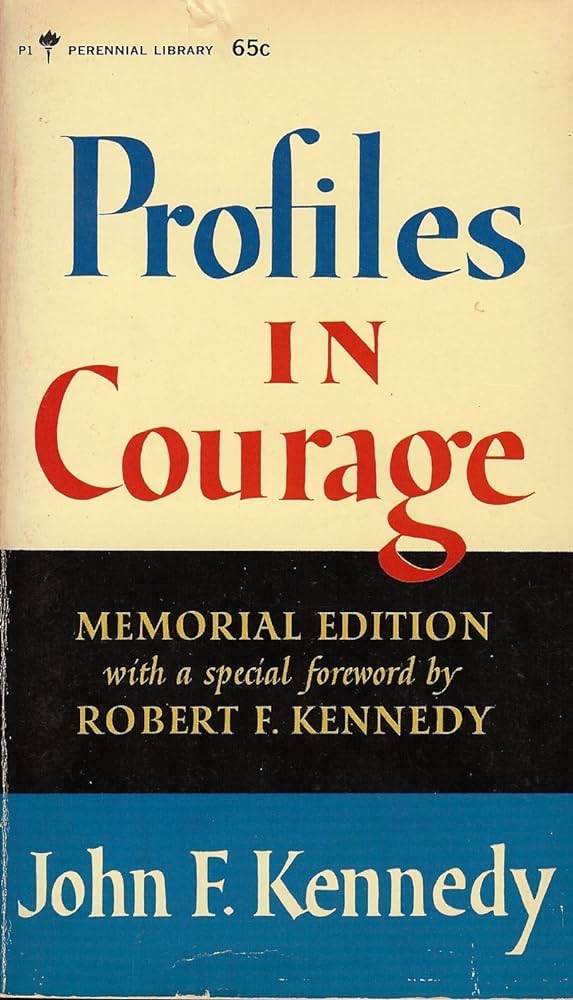
Profiles in Courage
Book by John F. KennedyWikipedia
18
MENTIONS
16
EPISODES
13
PODCASTS
Search complete. 18 mentions across 16 episodes found for "Profiles in Courage".
Sep 12, 2026

Dahlia LithwickHOST
This episode tries to parse why.
Dahlia LithwickHOST
Jacob Weisberg's new book, Profiles in Cowardice, A Study of Collaboration in the Trump Era, is styled as an inverted version of President John F. Kennedy's 1956 classic, Profiles in Courage.
Dahlia LithwickHOST
It's a meditation on who caves and who buckles under authoritarian and illiberal pressure.
Dahlia LithwickHOST
Jacob Weisberg was editor-in-chief of Slate magazine back in the halcyon days of the Bush administration.

Dahlia LithwickHOST
This episode tries to parse why.
Dahlia LithwickHOST
Jacob Weisberg's new book, Profiles in Cowardice, A Study of Collaboration in the Trump Era, is styled as an inverted version of President John F. Kennedy's 1956 classic, Profiles in Courage.
Dahlia LithwickHOST
It's a meditation on who caves and who buckles under authoritarian and illiberal pressure.
Dahlia LithwickHOST
Jacob Weisberg was editor-in-chief of Slate magazine back in the halcyon days of the Bush administration.

Dahlia LithwickHOST
This episode tries to parse why.
Dahlia LithwickHOST
Jacob Weisberg's new book, Profiles in Cowardice, a study of collaboration in the Trump era, is styled as an inverted version of President John F. Kennedy's 1956 classic, Profiles in Courage.
Dahlia LithwickHOST
It's a meditation on who caves and who buckles under authoritarian and illiberal pressure.
Dahlia LithwickHOST
Jacob Weisberg was editor-in-chief of Slate magazine back in the halcyon days of the Bush administration.

David PlotzHOST
It's called Profiles in Cowardice, a Study of Collaboration in the Trump Era.
David PlotzHOST
And it is in the same font as Profiles in Courage.
David PlotzHOST
So Jacob, congratulations.
David PlotzHOST
Tell us about, start by telling us about two people who you've written about who were weak and craven or are being weak and craven.
13 MINS LATER
Jacob WeisbergGUEST
Well, we have one great historical example, which is McCarthyism.
Jacob WeisbergGUEST
And I think institutions and leaders who did that, who accommodated McCarthy and McCarthyism, including, by the way, John F. Kennedy.
Jacob WeisbergGUEST
I think that's part of the reason he wrote Profiles in Courage, to try to deal with his own failure to come out against McCarthy when the censure vote happened in the Senate and he took a powder.
Jacob WeisbergGUEST
I think those institutions, in retrospect, were harmed by that.
David PlotzHOST
It's called Profiles in Cowardice, a Study of Collaboration in the Trump Era.
David PlotzHOST
And it is in the same font as Profiles in Courage.
David PlotzHOST
So Jacob, congratulations.
David PlotzHOST
Tell us about, start by telling us about two people who you've written about who were weak and craven or are being weak and craven.
13 MINS LATER
Jacob WeisbergGUEST
Well, we have one great historical example, which is McCarthyism.
Jacob WeisbergGUEST
And I think institutions and leaders who did that, who accommodated McCarthy and McCarthyism, including, by the way, John F. Kennedy.
Jacob WeisbergGUEST
I think that's part of the reason he wrote Profiles in Courage, to try to deal with his own failure to come out against McCarthy when the censure vote happened in the Senate and he took a powder.
Jacob WeisbergGUEST
I think those institutions, in retrospect, were harmed by that.
Jacob WeisbergGUEST
institutions and leaders who did that, who accommodated McCarthy and McCarthyism, including, by the way, John F. Kennedy.
Jacob WeisbergGUEST
I think that's part of the reason he wrote Profiles in Courage, to try to deal with his own failure to come out against McCarthy when the censure vote happened in the Senate and he took a powder.
Jacob WeisbergGUEST
I think those institutions, in retrospect, were harmed by that.
Jacob WeisbergGUEST
And there's the short view and the long view.

Thomas777GUEST
You know, Goldwater himself was a bizarre placeholder, but it wasn't just owing to a, a, a lack of, of personages who could interface effectively with kind of the n- the era of new media.
Thomas777GUEST
You know, it's that, like we've talked about, um, Kennedy's literal eulogy to Taft in Profiles in Courage.
Thomas777GUEST
You know, post-Nuremberg, there was no more American right It was, it was, it was for all practical purposes illegal in policy terms and in ethical and optical terms, it was just unthinkable, you know, to have an America First party.
Thomas777GUEST
So what was the Republican Party? Well, you know, they got behind Ike because like who could, you know, who could, um, who could disdain Ike? You know? Um, I'm speaking within the bounded rationale of the perception of the time, obviously.

ThomasGUEST
was part of it um definitely but i mean he he um his concession there i mean nixon actually looked like a gentleman in 1960 in a lot of ways especially especially um he never gave up till the end but there was a lot of dirty pool in that election and probably in absolute terms like in real in real numbers terms it was probably too close to call kind of full the kind of full frontal assault on nixon by the east coast press um i missed uh that kind of presentation that you know the national audience had been afforded would have um would have been somewhat unseemly i make the point about 62 because in a lot of ways like the proverbial mask dropped um What prompted Nixon's comeback? You know, as we've talked about, you know, the catastrophic defeat of Barry Goldwater, you know, Goldwater himself was a bizarre placeholder, but it wasn't just owing to a lack of personages who could interface effectively with kind of the era of new media.
ThomasGUEST
You know, is that like we've talked about Kennedy's literal eulogy to Taft in Profiles in Courage, you know, post Nuremberg, there was no more American right.
ThomasGUEST
It was it was It was for all practical purposes, illegal in policy terms and in ethical and optical terms.
ThomasGUEST
It was just unthinkable, you know, to have an America first party.

Michael MedvedHOST
That was Eleanor Roosevelt said about that.
Michael MedvedHOST
He had written a book, a Pulitzer Prize winning book called Profiles in Courage, actually written by Ted Sorensen, his aide.
Michael MedvedHOST
And she said, I wish Senator Kennedy had shown more courage and less profile.
Michael MedvedHOST
But President Kennedy came to office claiming as a campaign promise more defense spending, seeking agreements on arms control, support generally for civil rights, but nothing in particular, more aid to undeveloped nations, medical insurance for the elderly, increased medical research on cancer.

Brad PoulosGUEST
Being a war hero as well.
Brad PoulosGUEST
He wrote a great book, too, called Profiles in Courage, which I recommend to anybody.
Brad PoulosGUEST
It's about eight politicians that had the courage to do the right thing, but not the popular thing.
Brad PoulosGUEST
So it's a great book.
6 more episodes mention Profiles in Courage.
Create an account to see the whole feed, search across every transcript, and follow the entities you care about.