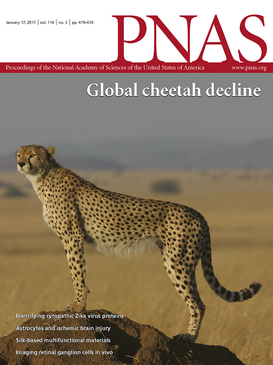
Proceedings of the National Academy of Sciences of the United States of America
Peer-reviewed journalWikipedia
99
MENTIONS
90
EPISODES
79
PODCASTS
Search complete. 99 mentions across 90 episodes found for "Proceedings of the National Academy of Sciences of the United States of America".
Sep 23, 2026

Mitch MoffitHOST
Well, let's talk a little science about how money changes how people act, speaking of, like, going to, like, the, what did you call it? The Met Gala? Um, okay.
Mitch MoffitHOST
Here's the famous study you've probably heard of that took place in California, in PNAS, you know, our famous, like, favorite journal.
Greg BrownHOST
Yeah.
Greg BrownHOST
[laughs]
Mitch MoffitHOST
Which is the proceedings of the National Academy of Science.
Greg BrownHOST
PNAS.
Mitch MoffitHOST
Okay.
Mitch MoffitHOST
So they basically found that drivers of a luxury vehicles were four times more likely to cut off pedestrians at crosswalks-

Michael BrownHOST
And every time one of those claims came stamped with a number and a prestigious name, everybody gave it a lot of credence.
Michael BrownHOST
In 2020, a NOAA scientist named James Cosson published in the Proceedings of the National Academy of Sciences his warning that warming was raising the odds of a storm reaching major hurricane strength by about 8% every decade.
Michael BrownHOST
Last November.
Michael BrownHOST
a group called the World Weather Attribution Group.

Hilbert FlumingtopCORRESPONDENT
That's the textbook version.
Hilbert FlumingtopCORRESPONDENT
And a 2024 radiocarbon study in PNAS complicates it hard.
Hilbert FlumingtopCORRESPONDENT
This is the one with the 100 plus dates.
Hilbert FlumingtopCORRESPONDENT
Over 100 radiocarbon dates from four excavation areas in the city of David.

speaker_0HOST
From Discover Wildlife, August 2024.
speaker_0HOST
From the Proceedings of the National Academy of Sciences, Volume 103, Number 17.
speaker_0HOST
From Physics and Chemistry of the Earth, Parts ABC, Volume 140.
speaker_0HOST
And from Wikipedia.

Brian MilnerHOST
It was a joint study from John Hopkins and MIT.
Brian MilnerHOST
And it was published in the Proceedings of the National Academy of Sciences.
Brian MilnerHOST
And it was really this interesting kind of study that I'll get into a little bit more of the details about here in just a moment.
Brian MilnerHOST
But the idea was about AI and personality.

Ray CochranHOST
So apparently they didn't have to drill anything new for this.
Ray CochranHOST
It's a synthesis of five decades of existing studies, publishes a brief reports in PNAS.
Ray CochranHOST
So it's a hypothesis that fits 50 years of data, not a fresh discovery, but pretty cool read just in general, but that's it for the headlines tonight.
Ray CochranHOST
Uh, sorry, I kind of blew through the last couple of them there, but, um, Very science-heavy on the last two, especially the El Nino one.

Gary MannersHOST
A better clock for ancient DNA.
Gary MannersHOST
The primary study, a refined phylogenology of the second plague pandemic in western Eurasia, has been published in Proceedings of the National Academy of Sciences.
Gary MannersHOST
The main tool of that study, called phylogenetically informed radiocarbon modeling, or PHIRM, uses the radiocarbon range combined with the position of a genome on Y. pestis's evolutionary tree, narrowing dates that can otherwise span more than a century.
Gary MannersHOST
This improvement in accuracy is a game-changer because it lets genetic evidence be compared with specific named outbreaks in chronicles and local records.

Hunter WilliamsHOST
This is going to confer a lot of benefits to nerve repair.
Hunter WilliamsHOST
Basically, there was a 2004 PNAS paper identifying the heterodimer as the foundation of everything that follows.
Hunter WilliamsHOST
Separate 2004 paper showed chemically modified EPO kept tissue protection while losing the red cell effect.
Hunter WilliamsHOST
And together, they proved the two jobs could be separated at the molecular level.

Joyce KaufmanHOST
It means a legitimate fear can be exploited.
Joyce KaufmanHOST
A 2025 PNAS study, Hose and Gilardi, N10800, Three Pre-Registered Experiments, tested the distraction hypothesis that existential risk narratives crowd out public attention to AI's real immediate harms, bias, labor displacement, and so on.
Joyce KaufmanHOST
They found the opposite of what you'd expect if the fear were a pure smokescreen.
Joyce KaufmanHOST
Existential framing increased catastrophic risk concern without reducing concern about immediate harms.

Elizabeth HarryHOST
As AI tools become deeply embedded in healthcare, recent reports like the JAMA Summit Report on AI, which came out in October of 2025, highlight our urgent need for stronger systems in evaluation, monitoring, governance, infrastructure, and incentives.
Elizabeth HarryHOST
At the same time, there are real-world risks, like a London School of Economics analysis showing a GEMA-generated summary in social care may downplay women's health needs, and research in PNAS warning that large language models often misestimate well-being in underrepresented contexts.
Elizabeth HarryHOST
Today, we'll dive deep into these challenges, what it takes to become an AI literate clinician, how we should rethink medical training, the incentive shaping health system choices, and the practical tools and guardrails needed to ensure AI delivers real benefit without unintended harms.
Elizabeth HarryHOST
Welcome, Dr. James.
80 more episodes mention Proceedings of the National Academy of Sciences of the United States of America.
Create an account to see the whole feed, search across every transcript, and follow the entities you care about.