Pretty Good Privacy
SoftwareWikipedia
49
MENTIONS
24
EPISODES
22
PODCASTS
Search complete. 49 mentions across 24 episodes found for "Pretty Good Privacy".
Nov 19, 2026

Brian HardenGUEST
It has to be easy.
Brian HardenGUEST
If you ever tried to use PGP back in the 90s, it was kind of a nightmare.
Brian HardenGUEST
And every security minded person was like, I'm going to do this diligently.
Brian HardenGUEST
And then, no, you won't.
Brian HardenGUEST
In fact, rather famously, Phil Zimmerman, the guy that wrote PGP, somebody once said, hey, Phil, I sent you a PGP encrypted email.
Brian HardenGUEST
You never got back to me.
Brian HardenGUEST
And supposedly he responded with, oh, I don't use that.
Martin LibickiGUEST
Which means we can't have Tor.
Martin LibickiGUEST
You're all familiar with what Tor is, right? It's a good crowd, right? And it means you can't have things like PGP.
Martin LibickiGUEST
Well, that's a lot to pay for not having a cyber attack if you thought a national firewall would work, which, by the way, it may not for whole lots of other reasons.
Martin LibickiGUEST
And then there's this whole notion of, well, the attack could have come from a bad website.

Tyler WoodwardHOST
ProtonMail stores your mail so that, according to them, even they can't read it once it's in your inbox.
Tyler WoodwardHOST
There's also PGP.
Tyler WoodwardHOST
A little more advanced than I want to get into for this episode, but maybe we'll talk about that in the future.
Tyler WoodwardHOST
If you want to send me email to Tyler at TylerWoodward.com, I even put my PGP, you know, my... key or whatever up there on my website tylerwoodward.me so if you want to send me secure mail that is what you would use again a little more advanced than i want to get into for this episode but it is something that you can do now for regular old gmail or outlook think like a postcard All right, now this part of it surprises a lot of people.
Tyler WoodwardHOST
The original email rules have no built-in way to prove who sent the message.
Tyler WoodwardHOST
And a lot of us in the radio industry, if we run a post-fix server or an email server at our station's cluster, it's only for moving email inside the organization, we typically use port 25, which isn't secure.

Edward OjamboHOST
So there's a separate plugins page.
Edward OjamboHOST
You can see here, uh, HTML viewer, PGP.
Edward OjamboHOST
Yeah.
Edward OjamboHOST
So, uh, spam report V calendar.

Charles HoskinsonGUEST
I was in Israel at Eurocrypt and we had Phil Zimmerman there.
Charles HoskinsonGUEST
I said, hey, what are we doing PGP2? We got to get this done.
Charles HoskinsonGUEST
It's been a little long in the tooth and there's a lot more cool stuff we can do and let's make it post-quantum.
Charles HoskinsonGUEST
He said, well, I'll only do it if we can do web of trust the proper way.

Cindy CohnHOST
Snowden was fed up with being part of a mass surveillance machine, and it's thanks to him that we now had irrefutable evidence to take on the NSA.
Cindy CohnHOST
This is Privacy's Defenders, a podcast about the people who have fought to secure your digital civil liberties since 1990, long before most people even knew about the internet.
Cindy CohnHOST
I'm Cindy Cohen, and I had the honor of serving as the executive director and the legal director of the Electronic Frontier Foundation for over 26 years.
Cindy CohnHOST
Today's episode picks up where we left off, in our fight against mass government surveillance after the 9-11 attacks.
13 MINS LATER
Laura PoitrasGUEST
He wants your key, your PGP key.
Laura PoitrasGUEST
Can I give it to him? And I was like, yeah, sure.
Cindy CohnHOST
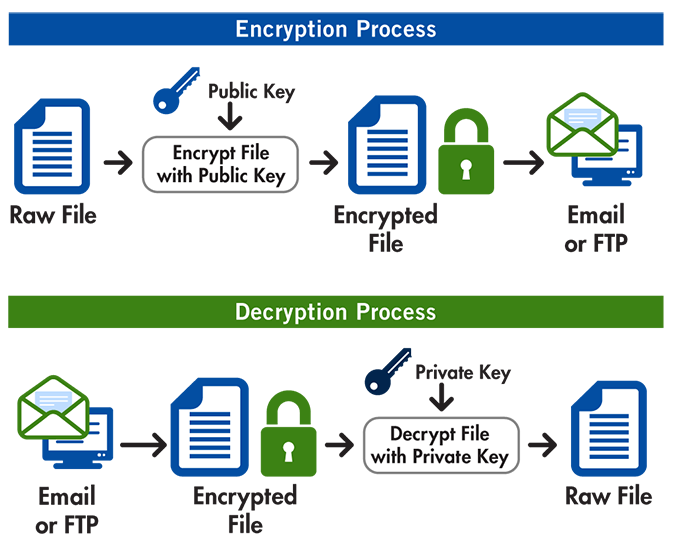
PGP stands for Pretty Good Privacy.
Cindy CohnHOST
It's software that scrambles your emails so that only the person you send it to can read it.

GorgorodHOST
Let me stop you there because this is where the technical details really matter.
GorgorodHOST
If the users were encrypting their messages with PGP, pretty good privacy, using public and private keys, how did the cops read the messages? Even if they own the server, shouldn't the messages just look like mathematical gibberish?
speaker_1UNKNOWN
If the users had encrypted their messages locally on their own offline computers before pasting the ciphertext into Hansa, the police couldn't have read them.
GorgorodHOST
Right.
speaker_1UNKNOWN
They utilized an automated encryption feature built directly into the Hansa website interface.
speaker_1UNKNOWN
The Dutch police simply altered the JavaScript on the login and messaging pages.
speaker_1UNKNOWN
When a user typed a message, the modified code silently copied the plain text and sent it to a police database before the site applied the PGP encryption.
GorgorodHOST
Oh, wow.

speaker_1HOST
mitnick is a big advocate of full disk encryption right which scrambles everything on your hard drive without the decryption key right it's just a jumble of unusable data
speaker_0HOST
He mentions tools like BitLocker, which is built into Windows, and PGP whole disk encryption, which is a commercial option.
speaker_1HOST
And newer computers often have a TPM chip,
speaker_0HOST
a trusted
speaker_1HOST
Yeah.
speaker_0HOST
Which is built into Windows.
speaker_0HOST
And then PGP whole disk encryption.
speaker_1HOST
Right.

David BennettHOST
The Institute's Bitcoin work continues inside the foundation, and Bitcoin remains a primary focus.
David BennettHOST
The name honestly, or obviously, honors Hal Finney, a cryptographer and software developer who helped build the email encryption program PGP, ran one of the first anonymous remailers, and received the first Bitcoin transaction from Satoshi Nakamoto in January of 2009.
David BennettHOST
In a November 1992 essay, Hal Finney wrote that the computer, quote, can be used as a tool to liberate and protect people rather than to control them.
David BennettHOST
He was then diagnosed with ALS the same year he received the first transaction and then died in 2014.

Corey NolesHOST
Like, what are you actually going to do?
Mark StockleyGUEST
I remember reading a story about PGP.
Mark StockleyGUEST
There were export controls on encryption that prevented people from exporting encryption out of the USA.
Mark StockleyGUEST
And I think what they did was they printed out all of the source code for PGP, pretty good privacy, onto sheets of paper.
Mark StockleyGUEST
And then they carried the sheets of paper out of the US.
Mark StockleyGUEST
And then they used optical character recognition.
14 more episodes mention Pretty Good Privacy.
Create an account to see the whole feed, search across every transcript, and follow the entities you care about.