premenstrual syndrome
SyndromeWikipedia
360
MENTIONS
120
EPISODES
109
PODCASTS
Search complete. 360 mentions across 120 episodes found for "premenstrual syndrome".
Oct 27, 2026

Ellen VoraGUEST
It's a very uncomfortable luteal phase.
Ellen VoraGUEST
So that's when we look at things like really severe PMS or even PMDD, premenstrual dysphoric disorder.
Ellen VoraGUEST
So when someone has a really tough time in their luteal phase, I'm looking at how do we help support their physiology? Because even though that's common, it's not normal.
Ellen VoraGUEST
It's a check engine light from the body.

ValHOST
Have you ever been told your painful periods are just normal, like cramps that knock you out, clots, big ones, lots of clots, PMS that makes you not even like yourself for a few days? And the answer is basically, yep.
ValHOST
That's just being a woman.
ValHOST
Earlier this year, I tried acupuncture and cupping with today's guest.
ValHOST
She works with a huge range of things in her clinic, pain, stress, anxiety, fertility, autoimmune conditions, even side effects from chemo and radiation.
ValHOST
But her heart is in women's health.
ValHOST
Think of cycle regulation, PMS, hormone transitions, helping women get pregnant and stay pregnant, and helping moms rebuild in their postpartum chapter.
ValHOST
She also does cosmetic acupuncture for natural facial rejuvenation, which I'm very interested in.
ValHOST
And her story is so good.

Liz RomanHOST
But we also can think about other symptoms that can come to play here.
Liz RomanHOST
So this would be more along the lines of maybe the week before you're a little bit more PMS, moody, maybe spotting.
Liz RomanHOST
Your sleep falls apart that whole second half of your cycle in the luteal phase.
Liz RomanHOST
Your PMS, your periods have just gotten worse after 40.
Liz RomanHOST
And therefore, Again, if we look at what the research shows, after age 35, progesterone kind of takes the nosedive compared to estrogen.
Liz RomanHOST
Testosterone's already gone, unless you're supporting it, which I think you should be.

Leisha DrewsHOST
Today we are talking about five things that I was wrong about when it comes to balancing hormones, PMS mood swings, and improving periods and energy.
Leisha DrewsHOST
And I'm going to be honest, as a hormone expert, I'm not the only one who's been wrong about these things.
Leisha DrewsHOST
I think a lot of people are getting them wrong, including probably who you're listening to on the internet.
8 MINS LATER
Leisha DrewsHOST
But I would look at how can my clients understand their bodies so much better so that they're not playing whack-a-mole with their hormones and feeling like they have to just run to progesterone and then birth control and HRT when we get to perimenopause, menopause years, because they understand the system that builds hormones in the first place and how, especially as women, we really have this innate sense of when things are okay and when things are not okay.
Leisha DrewsHOST
Even if everything's okay on paper, sometimes we know it really is not okay.
Leisha DrewsHOST
for us to have a stable libido or to be ready to get pregnant those type of things when our bodies are dysregulated and depleted we know it at a deep sense whether or not we know it on the surface so that is mistake number one that i made was just to assume that hormone balance was its own thing we could fix estrogen by fixing estrogen and that even these like hormone diagnoses were something in and of themselves like PCOS or now it's PMOS or painful periods or endometriosis or PMS, PMDD, that all of these diagnoses meant something separate versus that they really are coming from a root cause of dysfunction in the body as a whole that needs to be addressed in a very calm number one calm and regulated and steady manner to be able to create the foundations for those outcomes that we want like pain-free periods pms mood swings disappearing being able to get pregnant and stay pregnant and have a healthy pregnancy and postpartum all of those things are absolutely possible and available especially when we stop believing that the one little problem is the problem My number two mistake is that when I first started my practice, especially, this has been something that I've pulled away from for quite a few years now, but I used to believe that restriction was health.
Leisha DrewsHOST
Just sit with that for a minute.
Leisha DrewsHOST
If you're not there now, I know you've been there because that's what we were taught in the 2000s is that restriction was health.

Sierra GoncharoffGUEST
And then one I've been focusing on a lot because I see a lot of gut health and women's health in my office is a lot of hormonal imbalances happening.
Sierra GoncharoffGUEST
So women suffering from like PMS or really heavy menstrual cycles, we can look kind of take a step back, look at their diet, look at their overall lifestyle factors and see if we can address those.
Sierra GoncharoffGUEST
And oftentimes if we can get the gut working a little bit better, all of those symptoms also follow suit.
Melissa MondalaHOST
That's amazing.
Sierra GoncharoffGUEST
And so high beta glucuronidase levels have been associated with higher estrogen levels.
Sierra GoncharoffGUEST
It's actually really fascinating.
Sierra GoncharoffGUEST
So conditions, and I briefly mentioned this, but conditions like PCOS, endometriosis, PMS, breast cancer even, have all higher beta glucuronidase activity.
Sierra GoncharoffGUEST
And so you can shift the amount of bacteria that produce estrogen and produce beta glucuronidase Similar to what we just spoke of, diet being the number one factor.

Heather RhodesHOST
Number three is quick assessment of fertility markers.
Heather RhodesHOST
These are going to be things, your hair, your skin, your nails, your moods and your cycles, okay? So if your period is showing up, and you're feeling really crazy, you've got wild PMS, you have PMDD, you feel like a crazy person, or your period shows up super heavy, very crampy, lots of pain, that right there is telling you what you need to fix to get your fertility in line.
Heather RhodesHOST
That is literally telling you the key.
Heather RhodesHOST
If your cycles have changed significantly since you've had one or two babies, that's also a piece of the puzzle.

Sally LeechGUEST
It may not be.
Sally LeechGUEST
And it's considered to be a severe form of premenstrual syndrome, PMS.
Sally LeechGUEST
And it's considered to cause really significant physical, emotional and psychological symptoms.
Sally LeechGUEST
And those symptoms occur during what's called the luteal phase of the menstrual cycle.
Deborah GarlickHOST
And so many of us who had the education at school, well, actually, the education I had in school was probably more towards how not to get pregnant rather than understanding the different stages of the menstruation cycle.
Deborah GarlickHOST
But PMDD, this is one that you talk about a lot because more and more people feel that they're experiencing it.
Deborah GarlickHOST
So how is it different? Because many of us know the term PMS, premenstrual syndrome.
Deborah GarlickHOST
Many of us understand that.

Shara Jackson HarperGUEST
Yes.
Shara Jackson HarperGUEST
So in order to define PMDD, I'm also going to define PMS.
Shara Jackson HarperGUEST
So PMS is premenstrual syndrome.
Shara Jackson HarperGUEST
So that's where a lot of people will experience symptoms.
Shara Jackson HarperGUEST
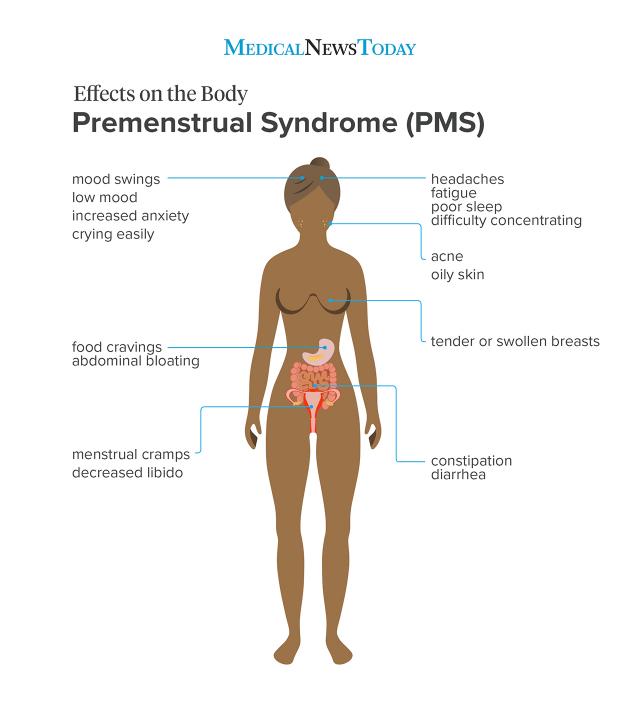
This is different for everyone, but the list is usually maybe a migraine or a headache, feeling achy in your body, maybe cramps, increased moodiness or like instability of emotions, feeling more tired, maybe depression symptoms might increase a little bit or anxiety symptoms.
Shara Jackson HarperGUEST
And then it's just usually for a few days before the period.
Shara Jackson HarperGUEST
That's PMS.
Shara Jackson HarperGUEST
A lot of people experience PMS.

Jamie DorleyHOST
You know, some kids now are going through puberty at a much younger age.
Jamie DorleyHOST
And then you also have a lot of, you know, young women that are suffering from PMS, dysmenorrhea, you know, making these cycles.
Kristine GenoveseHOST
We keep hearing about that lately.
Kristine GenoveseHOST
Oh,

Asa AndrewHOST
Calcium is also in here.
Asa AndrewHOST
It's very protective against colon cancer, osteoporosis, migraines, and PMS.
Asa AndrewHOST
In recent studies, Calcium has been shown to help protect colon cancer cells and a lot of cancer-causing chemicals.
Asa AndrewHOST
It can also help protect the bone loss and can occur with menopause and certain conditions like rheumatoid arthritis.
Asa AndrewHOST
It also reduces PMS symptoms.
Asa AndrewHOST
Now, it's loaded up with zinc, too.
Asa AndrewHOST
This is what's so great.
110 more episodes mention premenstrual syndrome.
Create an account to see the whole feed, search across every transcript, and follow the entities you care about.