Predictive analytics
28
MENTIONS
8
EPISODES
8
PODCASTS
Search complete. 28 mentions across 8 episodes found for "Predictive analytics".
Sep 10, 2026

Rafa FloresGUEST
strategies? It's a million dollar question.
Rafa FloresGUEST
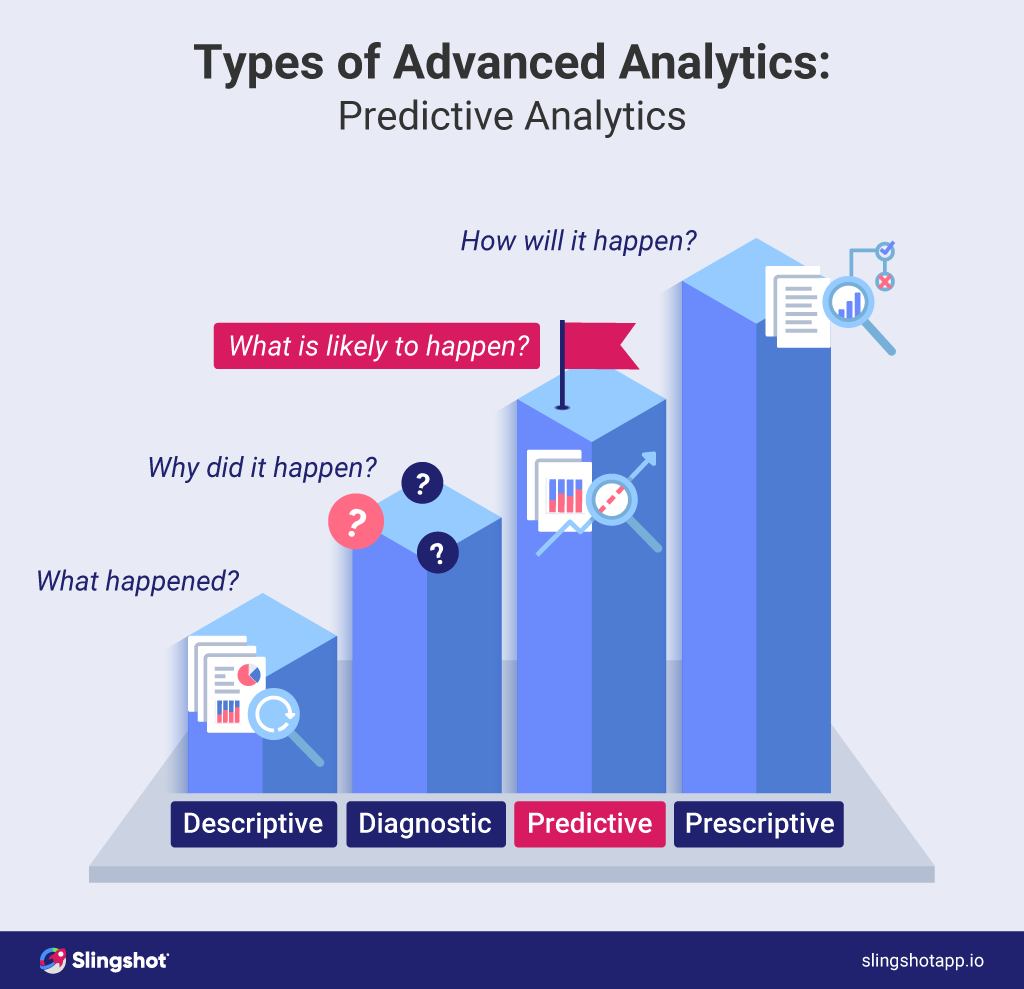
We always talk about it from the lens of predictive versus proactive.
Rafa FloresGUEST
Predictive is you're trying to predict the next behavior.
Rafa FloresGUEST
As a marketer or an agency supporting a marketer, you're trying to figure out, okay, what is the next best action? What is the next best offer? What is the next best product, for example? Proactive is a little bit differently.
Rafa FloresGUEST
It's actually engaging with that potential consumer in real time.

Cynthia Von HeeringenHOST
Get a front row preview of the latest innovations, expert insights, and what's shaping the future of pharmacy practice.
Cynthia Von HeeringenHOST
I'm Cindy von Herringen, senior education director on the national meetings education team at ASHP, and today we're sitting down with Jennifer Sternbach, assistant vice president of clinical pharmacy services at RWJBarnabas Health, to discuss her upcoming session, Data with a Dose of Insight, Predictive Analytics in Health System Pharmacy.
Cynthia Von HeeringenHOST
Welcome, Jen.
Cynthia Von HeeringenHOST
Thanks for joining me.
Cynthia Von HeeringenHOST
Obviously, in an hour and a half or three hours, you can't change the world, but you can change the questions you're asking and what you're going to look into when you go home, so thank you for that.
Cynthia Von HeeringenHOST
That is all the time we have today.
Cynthia Von HeeringenHOST
I wanna thank Jennifer for joining us to discuss her session, Data with a Dose of Insight, Predictive Analytics in Health System Pharmacy.
Cynthia Von HeeringenHOST
If you haven't already, I encourage you all to visit leaders.ashp.org to register for the meeting.

Jeremy JulianHOST
love that.
Jeremy JulianHOST
Before we ask you kind of how do they get in touch and for U.S. Foods existing clients, where do you see it going, James? You know, you guys have taken some of the new technology, allowed people to build out recipes in ways that we never could do before, allowing them to do some predictive analytics on what they're going to need for tomorrow and their next delivery.
Jeremy JulianHOST
All of these things 10 years ago, 15 years ago were next to impossible to do.
Jeremy JulianHOST
They took schools and schools of people to kind of figure these things out.
James JonesGUEST
And where I see this going is more looking further in the future to help them make decisions around ingredients, food choices, alternatives, to make sure that they are profitable and stay in the mainstream there.
James JonesGUEST
So I think that's one area.
James JonesGUEST
Another area that I see this going is just being able to use predictive analytics as we link tools together.
James JonesGUEST
I think, as I said, we do inventory, we do menu profitability, we help build menus, but I think as you see more and more of these tools connect to point of sale systems and other things, and you're bringing all those things together, You're going to be able to look at analytics and start messaging them in the future like, hey, we see the profitability of this slowly eroding.

David TuretskyGUEST
My pleasure.
Jill Coniglio-KirkHOST
If we look at things from the big picture, what do you think companies usually get wrong when they look at a topic like predictive analytics in HR? Can you start there maybe for us?
David TuretskyGUEST
Sure.
David TuretskyGUEST
I usually start at the beginning, which is the data that underlies all these statistics and analytics.
David TuretskyGUEST
So we may not enter the new dependent that we have.
David TuretskyGUEST
or we may not enter the loss of a loved one, or we may not put in for that time off that we've scheduled to take.
David TuretskyGUEST
And so measurement of the data that's in our HR technology systems typically is flawed because even if we have the best predictive analytics in the world and the best descriptive analytics in the world, they're going to be wrong because the data underlying them is wrong.
David TuretskyGUEST
And That gets into the whole concept of artificial intelligence utilizing the data that's in our HR systems.

Jane NorrisMODERATOR
Okay, so these are all very insightful.
Jane NorrisMODERATOR
Paul, can I ask a question? The predictive analytics that you talked about, maybe you didn't use that exact terminology, but the predictive ability of AI in the future, is that something that can really look at all this telemetry and help make predictions about where vulnerabilities lie?
Paul MillerGUEST
Yeah, it's actually, I mean, we've been evolving this capability for quite some time now, and some of our competitors do too, right? Like this is absolutely a use case.
Paul MillerGUEST
Now, the thing that we do differently now, and I think you'll see an acceleration of this across products in the industry, is we have enough corpus of data now to look at and to analyze and say, oh, we can say with 99.9% accuracy.
Sam RomoGUEST
As a security leader, now you're actively defending against AI-driven malware that can observe the network environment in real time, understand what's deployed as far as defense goes, and dynamically rewrite its own code to evade capture.
Sam RomoGUEST
So that's, I think, really what I hear from people on their mind.
Sam RomoGUEST
When we've been at some shows, you know, being able to show them some of the benefits of having that AI, fighting AI technology, right, showing them how quick I can get an incident summary done, So I can, you know, from a SOC threat hunter perspective, move on, get leadership the update they need, as well as getting those predictive analytics that are going to say, hey, this is the likely next step.
Sam RomoGUEST
Go ahead and stop this right now.

KianaHOST
How is predictive AI scoring fundamentally different?
speaker_1HOST
Well, the old way you described is rules-based logic, and it's heavily biased by whatever the marketer thinks is important.
speaker_1HOST
Predictive AI scoring doesn't care about human assumptions.
speaker_1HOST
It ingests massive data sets, your historical won and lost deals from the last five years, deep demographics, individual behavioral signals, macroeconomic trends, and it runs complex regression models to find the hidden correlations that humans miss.
KianaHOST
Give me an example of that.

James NordGUEST
We were the first influencer marketing platform in the world.
James NordGUEST
And, you know, Predictive is really a continuation of that goal.
James NordGUEST
And, you know, how do we, how do we make this the biggest part of advertising? Because I believe, you know, if brands can choose to spend their money with Meta or TikTok or with individual people, uh, I'd rather go to people.
James NordGUEST
I think they're better stories.

Jesse PinesHOST
Another area you mentioned is about sort of this care management and care standardization.
Jesse PinesHOST
What has been the general approach to using AI to implement clinical protocols or predictive analytics? What are some of the more successful areas that you've been able to achieve in that area?
Jennifer StevensGUEST
I think from a predictive analytics perspective in the population health space, we've found a lot of benefit from leveraging this in regards to our cohorting and how we do outreach to our patients.
Jennifer StevensGUEST
We've had a lot of work historically in trying to decide, okay, and I alluded to this a little bit before, when you have large populations, how do you slice and dice them? What's the Venn diagram look like of population identification so that you can get upstream and create what we call non-events, meaning you want to prevent that DKA event.
Jennifer StevensGUEST
You want to prevent that MI.
Jennifer StevensGUEST
You want to prevent the stroke.
Jennifer StevensGUEST
In order to do that, you have to get upstream and try to find patients that are at increased risk and have modifiable things that you can intervene on.
Jennifer StevensGUEST
And so predictive analytics, which oftentimes, you know, leverages these AI tools has been something we've leaned into.