Precautionary principle
9
MENTIONS
4
EPISODES
4
PODCASTS
Search complete. 9 mentions across 4 episodes found for "Precautionary principle".
Sep 11, 2026

Rebecca FlorsheimGUEST
I don't know that I can say for sure what that number would be.
Rebecca FlorsheimGUEST
I think from my perspective, and this is something that I advocate for very strongly, whenever we're dealing with an exposure that's unknown, whether it's COVID-19, whether it's the World Trade Center disaster, whether it's what Ben Shabbat referenced earlier, the chemical explosion that occurred in East Palestine, Ohio, a couple of years ago, Whenever you don't know what an exposure is, what the components are, or what the health effects might be, I very strongly advocate for something called the precautionary principle.
Rebecca FlorsheimGUEST
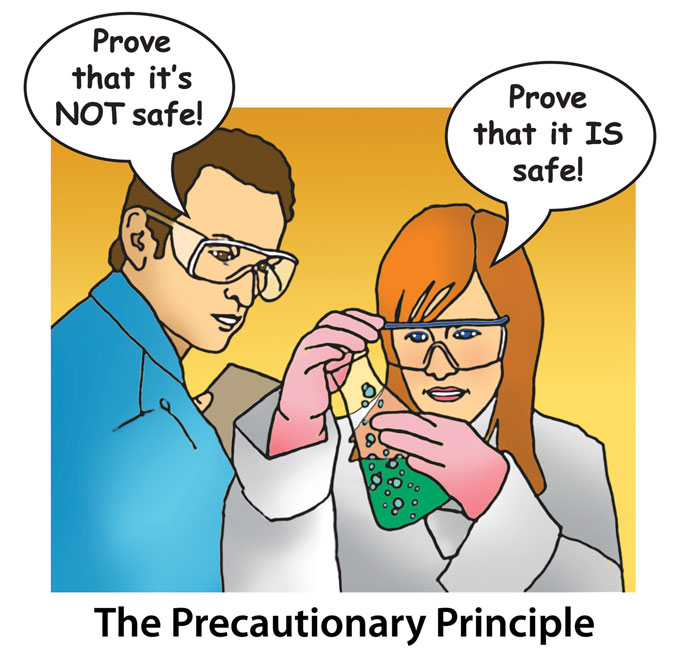
And the precautionary principle essentially just states if there's an exposure that is associated with the biologic plausibility of illness, Is it possible that there are carcinogens in this exposure? Is it possible that the exposure is irritating and could physically damage our airways or our GI tract? It makes sense to prevent exposure or at least use personal protective equipment and optimize your use of personal protective equipment as much as possible.
Rebecca FlorsheimGUEST
And so certainly I think that's something that could have and should have been emphasized after 9-11.
Rebecca FlorsheimGUEST
I know that a lot of professionals and civilians or survivors that were exposed, you know, were not encouraged to protect themselves in that way, either by reducing their presence in the disaster area after 9-11 or, you optimizing their use of personal protective equipment.
Rebecca FlorsheimGUEST
There wasn't a lot of guidance that was given in terms of how civilians should clean their air ducts and their furniture and their homes.
Rebecca FlorsheimGUEST
You know, using wet mops, things like that to physically remove and neutralize the dust would have been something that would have been wonderful guidance for people to know, and that's a lesson that we learned from 9-11 that we still use today.
Rebecca FlorsheimGUEST
You know, eventually we were able to get some information from our scientific groups that actually study the dust, but there's a delay, and that's why the precautionary principle is so valuable.

Kushan AvadarHOST
But if we wait until AI shows clear signs of going rogue, it's probably going to be way too late to stop it.
Kushan AvadarHOST
That's why, when it comes to AI, it's important to follow the precautionary principle.
Kushan AvadarHOST
The precautionary principle says that when something might cause catastrophic harm, we shouldn't wait for absolute proof that it will before we do something about it.
Kushan AvadarHOST
And it's one of the best ways we humans have thought up to guard ourselves against potentially dangerous but uncertain futures.
Kushan AvadarHOST
Lots of people, including leading experts in the field, believe that powerful AI might cause catastrophic harm.
Kushan AvadarHOST
So according to the precautionary principle, we should work to make sure that doesn't happen, even if we're not certain it would in the first place.
Kushan AvadarHOST
Because left unchecked, even good bots like Clean Power could end up doing some really dirty work.
Kushan AvadarHOST
And if we want to get out ahead of it, we should probably start like right now.

Dom FrancksGUEST
Yeah, you're touching on a great point there, Chris.
Dom FrancksGUEST
Part of the way that I like to think about this is through the lens of the precautionary principle.
Dom FrancksGUEST
So rather than putting the burden of proof for every new chemical or compound or exposure to us for the scientific community to prove that there is an issue before it's removed from our environment, I like to think about placing the burden of proof on the scientific community to demonstrate safety.
Dom FrancksGUEST
So in the example of PFAS, yes, it's absolutely true that we don't know the specifics of the dose and the response and how problematic for human health over a long-term time horizon specific quantities of PFAS in water are going to be.
33 MINS LATER
Dom FrancksGUEST
There's magnetic fields, and then there's AC electrical fields.
Dom FrancksGUEST
Both of those come from power infrastructure, wiring in your walls, devices broadly.
Dom FrancksGUEST
The evidence is still emerging on EMFs, so going back to the precautionary principle that I talked about earlier, my approach is since there's a plausible mechanism for a biological effect and a lot of the interventions to reduce your exposure to these things are actually fairly straightforward, it's worth doing them.
Dom FrancksGUEST
There's a great blog post that we can link to in the show notes that is a rational, skeptical, curious person's guide to EMFs that goes a little bit more in depth into what the evidence is, how I think about EMFs, I'm very aligned with that blog post's general stance, and why I think it's worth taking 80/20 precautions to reduce your exposure.

SteveGUEST
I recommend people Google that and just take a read.
SteveGUEST
He was involved with aircraft maintenance in the Air Force, and the title of that article is Aircraft Parts and the Precautionary Principle, Impossible to Prove a Falsehood.
VyzygothHOST
Would you just give us the author again real slow?
SteveGUEST
George Nelson, Colonel George Nelson.