Prague Spring
49
MENTIONS
28
EPISODES
23
PODCASTS
Search complete. 49 mentions across 28 episodes found for "Prague Spring".
Sep 16, 2026

Jeff LugoweHOST
We'll also revisit the era of normalization, which you heard Michaela mention.
Jeff LugoweHOST
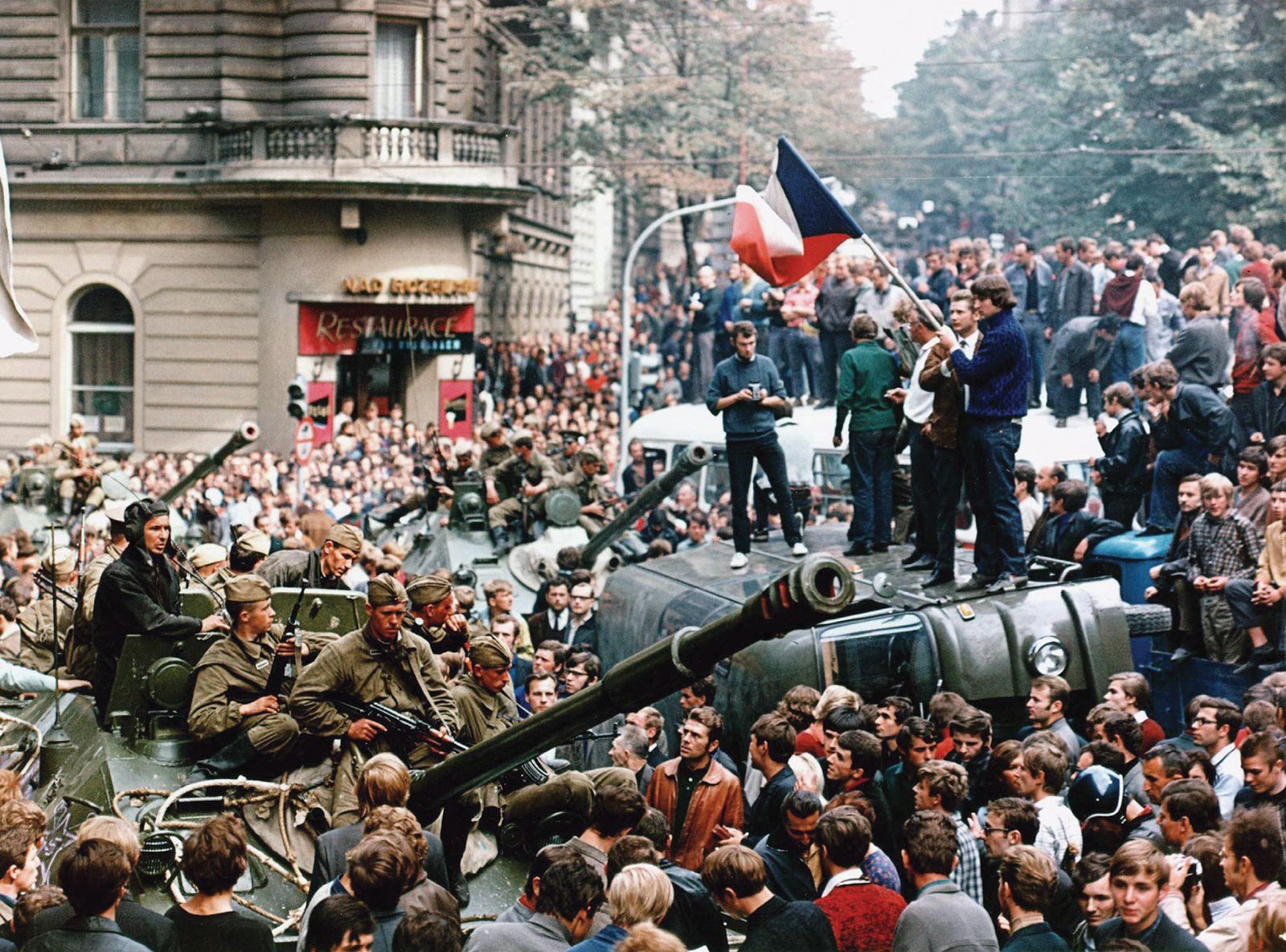
This is the name given to the period following Prague Spring, during which the Czechoslovak authorities tried, quite successfully, to erase the legacy of the reform movement that ended abruptly in 1968 when tanks from Soviet bloc countries invaded Czechoslovakia.
Jeff LugoweHOST
For the last four episodes of this season, we'll be spending most of our time in the present.
Jeff LugoweHOST
We'll also consider what might happen in the future.

Daniela RichterovaGUEST
And so you can imagine-
David LudlowHOST
Is, is this in the run-up to the Prague Spring or a bit earlier?
Daniela RichterovaGUEST
This is in, yeah, ex- so it's b- uh, in the run-up to the, to the Prague Spring, the m- mid-'60s.
Daniela RichterovaGUEST
I mean, he leaves officially, he retires as ambassador in 19, um, '66 actually.
Angus BlairHOST
Right.
Veronika Fischborn-VolčkováGUEST
There was no...
Veronika Fischborn-VolčkováGUEST
Apart from the very short, brief, uh, period of end of '60s when the Prague Spring was happening, that was the time when there was some reflection, even critical evaluation, and maybe starting s- there was a initiation of processes of actually confronting the past and what was going on.
Jeff LugoweHOST
Mm.
Veronika Fischborn-VolčkováGUEST
And maybe even talking about what the, you know, role of Nazi regime and what the role of Slovakia-

Jorge BesadaGUEST
The people in the Kronstadt rebellion, they were still socialists.
Jorge BesadaGUEST
They didn't like maybe how Lenin was running things, but they were still socialists, so they still had the mentality, right? Then we had the Prague Spring, right? We've had all of these times where the Soviet Union, where the bad idea looked like it was going to break apart.
Jorge BesadaGUEST
But what happened? We needed to wait.
Jorge BesadaGUEST
We needed to wait for enough suffering, right, for the books critical of, of the Soviet Union, for Mises and Hayek and all these guys to win the Nobel Prizes and, and write.

Giles BrownHOST
I'm f- you know, invested in this, okay? And, you know, we went, and we d- we demonstrated, and we learned things, and we supported various parties and whatever.
Giles BrownHOST
And the children of the, of the, of the... who grew up in the '68 and the Paris Spring and the, you know, the, the whole Vietnam, women's rights, you name it, right? Prague Spring, et cetera, again, and that was an idealism.
Giles BrownHOST
And there was a move s- you know, civil rights movement.
Giles BrownHOST
Forget the flowers in your hair stuff, but the civil rights movement, the women's rights movements exactly.

Scott BurryHOST
But anyway, it lasts until the U.S. withdraws in humiliation in 1975.
Scott BurryHOST
1968 is the Prague Spring.
Scott BurryHOST
Alexander Dubček was elected first secretary of the Communist Party of Czechoslovakia, and his government began a program of liberalizing reforms, like increased freedom of speech, freedom of the press, and more.
Scott BurryHOST
The USSR did not like this, so along with its Warsaw Pact puppets, it sent 165,000 soldiers and 4,600 tanks into the country.

Irena KalhousovaGUEST
And of course, it's not just that.
Irena KalhousovaGUEST
I think, you know, the fact that, you know, more educated people probably know that it was Israel where so many Czech Jews found refuge, be it before World War II, after the World War II, after the Prague Spring again, right? So they see Israel as culturally kind of close, not as one of the Middle Eastern countries, but the country which is culturally close because it was built by European Jews and even Czech Jews played a role.
Vít BohankaHOST
Now, back to present a little more.
Vít BohankaHOST
Where would you draw the line between the kind of legitimate, I would say, impartial criticism of what Israel is doing or the present Israeli government is doing in Gaza and West Bank, by the way, as well.

Irena KalhousováGUEST
people are simply interested, right? So I think, yeah, there is some kind of a feeling of closeness and of course it's not just that.
Irena KalhousováGUEST
I think, you know, the fact that, you know, more educated people probably know that it was Israel where so many Czech Jews found refuge, be it before World War II, after the World War II, after the Prague Spring again, right? So they see Israel as culturally kind of close, not as one of the Middle Eastern countries, but the country which is culturally close because it was built by European Jews and even Czech Jews played a role.
Vít PohankaHOST
Now, back to present a little more.
Vít PohankaHOST
Where would you draw the line between a kind of legitimate, I would say, impartial criticism of what Israel is doing, or the present Israeli government, I mean, is doing in Gaza and West Bank, by the way, as well.

AmandaHOST
Yeah, that wouldn't be great.
AmandaHOST
In the famous Prague Spring of 1968, massive reform swept through the Czechoslovakian government with Alexander Dubček at the helm.
AmandaHOST
Although modest compared to Gorbachev's own 1980s reform in the Soviet Union, human rights and a free press were encouraged and civil society did flourish.
AmandaHOST
This, though, was too much for the Soviet regime of the time.
LucyHOST
That's over such a long period of
AmandaHOST
time.
AmandaHOST
That period of time between the invasion that the Prague Spring 1968 and this velvet resistance that we're about to talk to in 1989.
AmandaHOST
All of this political violence was happening against the Czechs that were trying to resist Soviet occupation.

Ray PorterSOUNDBITE_SPEAKER
The violence that year was not limited to North America and Southeast Asia.
Ray PorterSOUNDBITE_SPEAKER
In Europe, President Charles de Gaulle's Fifth Republic struggled to survive in France, while the Prague Springs set the conditions for a Soviet invasion of Czechoslovakia.
Ray PorterSOUNDBITE_SPEAKER
In Africa, the Biafra War, Rhodesian Bush War, Angolan War of Independence, and Chadian Civil War raged.
Ray PorterSOUNDBITE_SPEAKER
The world was on fire.
18 more episodes mention Prague Spring.
Create an account to see the whole feed, search across every transcript, and follow the entities you care about.