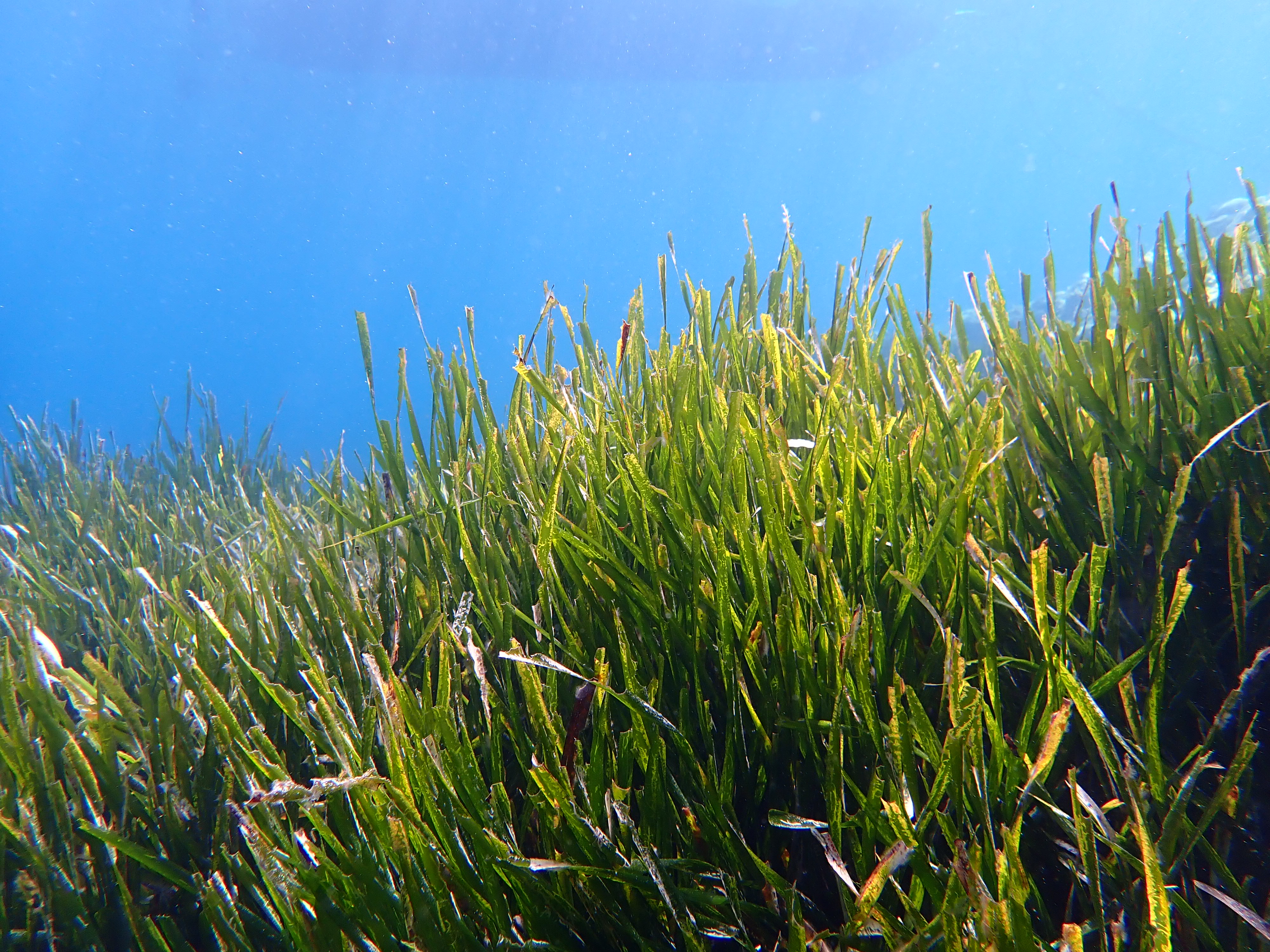
Posidonia
PlantWikipedia
44
MENTIONS
7
EPISODES
7
PODCASTS
Search complete. 44 mentions across 7 episodes found for "Posidonia".
Sep 25, 2026

Serena CookGUEST
Those prospections had already gone ahead in the Canary Islands and they are absolutely potentially lethal for marine life in the sea because how they prospect is they basically kind of bomb underneath it completely, underneath the soil, in the sand, in the sea.
Serena CookGUEST
And that totally messes with marine life, with fishing, potentially the colours of the water, Posidonia, which makes our water so rare.
Serena CookGUEST
And that was... an extraordinary situation where we managed to get environmentalists, who again then were thought of kind of Birkenstock lentil eating kind of hippies, round the same table as Pasha, Matuta's group, because everyone on this island makes money from tourism.
Serena CookGUEST
And so we put together, we got a Greenpeace lawyer in Madrid.
Serena CookGUEST
And then we have, we basically focus on five projects.
Serena CookGUEST
And those are the two Marine Forum Sustainability Observatory projects.
Serena CookGUEST
local produce ibiza produce which is encouraging zero economy the farmer's sons who are all taxi drivers to actually farm their land that there is a demand putting them in touch with chefs restaurants land banks which is basically like allotments so people in the towns can farm land under that replanting indigenous species like almond trees and Posidonia, which is obviously huge.
Serena CookGUEST
The lungs of the ocean gives out more CO2 than the Amazon.

Lucy DunnHOST
And that brings us on to our next Blue Wake Award winner, a marina that is thinking beyond simply providing somewhere for yachts to berth and looking at how it can actively contribute to the health of the surrounding marine environment.
Lucy DunnHOST
Marina Ibiza has been collaborating with the Velmari Association, led by renowned Spanish marine biologist Manu Sam Feliz, to protect and restore Posidonia, the seagrass that plays a vital role in the Mediterranean's ecosystem.
Lucy DunnHOST
Posidonia is remarkably effective at capturing and storing carbon, while also helping to stabilise the seabed, support marine life and keep the water clear.
Lucy DunnHOST
It can spread across huge areas of the seabed, creating habitats for hundreds of species, while its contribution to the formation and retention of beach sand is also significant.
Lucy DunnHOST
For all these reasons, protecting Posidonia and helping it to thrive is vital.
Lucy DunnHOST
So to tell us more about the brilliant work being carried out at Marina Ibiza, let's welcome Javier Thid, the marina's port captain.
Lucy DunnHOST
Okay, so Javier, tell me about the restoration project.
Lucy DunnHOST
What is Posidonia and why is it so important for the sea?

Crystal DiMiceliHOST
[upbeat music] Today we're diving into the world of Posidonia oceanica, the extraordinary sea grass that our guest, Dimitris Porsidanis, likes to call the queen of the Mediterranean.
Crystal DiMiceliHOST
We'll explore why these slow-growing underwater meadows are so important for biodiversity, coastal protection, water quality, and carbon storage, and why losing them can have consequences that last for generations.
Crystal DiMiceliHOST
We'll also look at the pressures they face, from anchoring and coastal development to ghost nets, abandoned aquaculture infrastructure, and microplastics, and ask what meaningful protection and recovery really look like for an ecosystem that can take centuries to rebuild.
Crystal DiMiceliHOST
Is that true?
Dimitris PoursanidisGUEST
It is true that seagrasses are among the most significant carbon capture devices, you can say that, or carbon banks.
Dimitris PoursanidisGUEST
In, in Europe, in Mediterranean more precisely, we have Posidonia oceanica, which the most significant important species in terms of carbon stocks and carbon accumulation rate because Posidonia has a very big mat that is formed by the rhizomes that are accumulated for millennia.
Crystal DiMiceliHOST
Real quick, I'm gonna interject here.
Crystal DiMiceliHOST
For those who are not familiar with what rhizomes are, imagine a network of horizontal cables that run along the surface of the sand or even slightly buried.

Riley Via-SilvaHOST
However, central government argued the move interferes with coastal recovery and dune protection, and previous Supreme Court decisions have already backed the refusal to extend concessions.
Riley Via-SilvaHOST
Further down the coast in Orihuela Costa, the council has awarded an eighty thousand five hundred and twenty euro contract to collect and transport washed-up Posidonia remains.
Riley Via-SilvaHOST
The decision arrived after a three-month process, missing the busy summer season entirely after months of complaints about algae on the sands.
Riley Via-SilvaHOST
Alongside the cleanup work, the council is hosting free public events at Campoamor Yacht Club, starting with a talk on Wednesday evening and creative workshops next week to explain how these marine plants protect our beaches from erosion.

Jo YuleHOST
Obviously you guys at Chinois have done things also with beach house.
Jo YuleHOST
You've done the, Manny San Felix event putting back into the Posidonia charity that he runs there and with Valamari and the replanting of the Posidonia and all the ecological and sustainable projects that he creates which I think is amazing but you also did something for Cancer Research last year as well I can't remember the artist but it was amazing to see the money that you raise from that and i think that this is a you know a sign for the future that you know clubs are now putting back into charitable you know organizations and giving something back so that's beautiful but in terms of the port side let's start with that you know why do you think what's the ethos of chinois to want to put that party on every year year four this summer what was it that made you say right let's you know create this for the community of the island
Wyan SchreiberGUEST
First of all, the party is just so cool.
Wyan SchreiberGUEST
So that's the first start.

SarahHOST
Natalie hopes to restore our seagrass meadows by encouraging people like you as citizen scientists to go out there and report sightings of the endangered seagrass.
SarahHOST
It's called Posidonia australis and we really are interested in when it is blooming.
SarahHOST
So Natalie, welcome to the Citizen Science Show.
Natalie CoyGUEST
Thanks so much for having me, Sarah.
Natalie CoyGUEST
I can't wait to talk about Seeds of the Sea and chat about our Posidonia australis.
SarahHOST
That's awesome.
SarahHOST
Well, to set the scene, Natalie, can you explain for us why seagrass meadows are so important for our marine ecosystem?
SarahHOST
People might take a photo of a seahorse, but it's the seagrass you're interested in.

Claudia TavaniHOST
Posidonia is not rubbish, it's not dirt, and its presence does not mean a beach is badly maintained or that the water is discolored.
Claudia TavaniHOST
Because yes, I read somebody saying that.
Claudia TavaniHOST
Posidonia oceanica is a Mediterranean seagrass, and the material that washes ashore is part of a natural and extremely important marine ecosystem.
Claudia TavaniHOST
Those brown deposits that some visitors dislike actually help protect beaches from erosion.
Claudia TavaniHOST
So if you arrive at a Sardinian beach and find Posidonia on the shore, Sardinia has not failed to clean the beach for you.