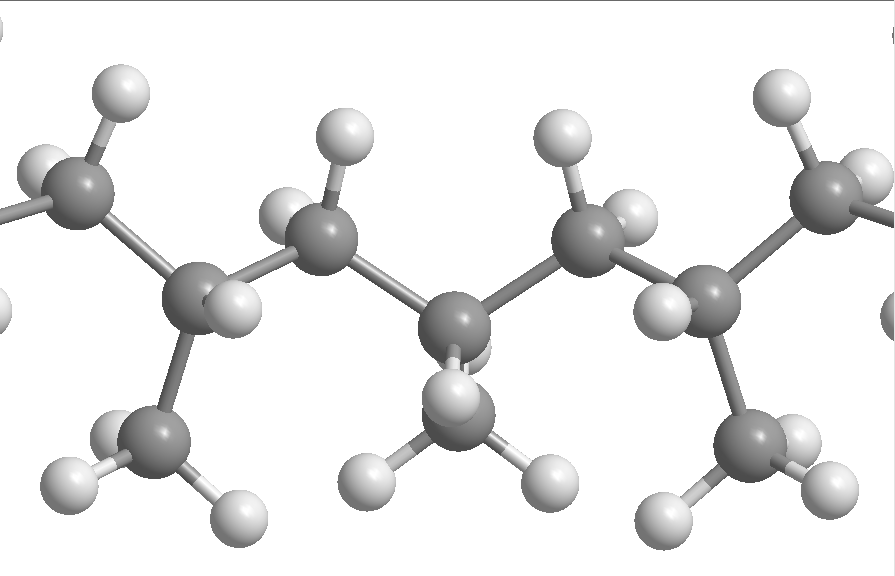
Polypropylene
Chemical compoundWikipedia
28
MENTIONS
7
EPISODES
7
PODCASTS
Search complete. 28 mentions across 7 episodes found for "Polypropylene".
Nov 19, 2026

Robbie StaniforthHOST
Yeah, and the key thing is what plastic is it made from, which is a recyclable plastic.
Robbie StaniforthHOST
Do you want to have a guess? I mean, it's either PE or PP, isn't it? So I'm going to go with PP.
Robbie StaniforthHOST
It's actually both.
James PiperHOST
So depending on which one you buy, I went and had a look, and the cod liver oil that I found in Co-op is HDPE.
James PiperHOST
I reckon AO would turn it into extractor fans for bathrooms if required.
James PiperHOST
But yeah, this really surprised me because obviously under simpler recycling, so if we dig out our simpler recycling knowledge, so this was a piece of legislation went live earlier this year to make recycling collections more consistent across the country.
James PiperHOST
It says from the 31st of March, 2026, by default, all councils must collect in the plastic stream PET, PP or HDPE plastic bottles.
James PiperHOST
So I do not understand why councils are saying they will not collect them because they have to.

Dave FarinaHOST
Okay, here's an interesting problem regarding some polymers.
Dave FarinaHOST
We've got a mixture of plastic beads consisting of polypropylene, or PP, and polyvinyl chloride, PVC, in a one liter beaker containing distilled water.
Dave FarinaHOST
After stirring the contents, the student observes that the beads of one type sink to the bottom, and the beads of the other type float on the water.
Dave FarinaHOST
Here are the structures.
Dave FarinaHOST
So the first thing we're asked, given that the spacing between polymer chains in PP and PVC is similar, the beads that sink are made of which polymer? So see here how we've got CH2CHCH3.
Dave FarinaHOST
CH2CHCH3.
Dave FarinaHOST
So this is why we put parentheses over here with an N because we're saying that's the repeating unit.
Dave FarinaHOST
Heavier in the same amount of volume, that's a greater density.

JulianHOST
But there are a lot of specialists working on it.
JulianHOST
For PP, there's next to nothing out there yet.
JulianHOST
We can only hope that improves over time because, yeah, the flex pack industry has to incorporate recyclates by 2030.
JulianHOST
And right now we're asking ourselves where they're supposed to come from.
Marcus HollandGUEST
Yeah, yeah, totally.
Marcus HollandGUEST
I mean, I know...
Marcus HollandGUEST
I mean, off the top of my head, I can only think of one plant that I know sorts flexible PP as an individual fraction in Mal.
Marcus HollandGUEST
Other than that, I'm honestly not sure who all is doing

Christian BrueyGUEST
Into that will help.
Christian BrueyGUEST
And we've seen that, I think, in Europe work, right? Like they've hit a lot of their targets for PCR content in the individual nations.
Christian BrueyGUEST
And we'll see that in PPWR across the EU.
Christian BrueyGUEST
But I think for us at PureCycle, like you come to our facility, it's going to smell like a MRF because we're taking post-consumer waste that has old milk and old soda and peanut butter and mayonnaise on it.
Christian BrueyGUEST
Right.
12 MINS LATER
Christian BrueyGUEST
We've started to get into thermoforming.
Christian BrueyGUEST
We've done textiles.
Christian BrueyGUEST
We've had success in BOPP film.

Michael WorkmanHOST
It's 2027 contract season right now.
Michael WorkmanHOST
Other than my obvious objective of getting the lowest price per pound, what term should I prioritize here in the 2027? So I'll go ahead and take that one to start guys, and then please, you know, anything additional that you'd like to add there.
Michael WorkmanHOST
So right now we've talked a lot about how the market is splitting into two events, right? On the PEPP side, supply events are making things more complex.
Michael WorkmanHOST
Feedstocks are easing on the benzene side.
Michael WorkmanHOST
The important thing here is to negotiate which mechanism makes the most sense for your particular situation.

Sam LovattHOST
And on that point, when you're saying it's going more global, I know your website notes that it's scalable globally.
Sam LovattHOST
What's a timeline that you could see there or how long would it take with the 2030 PPWR targets at the front of my mind, at least when I'm asking the question, how scalable is this within that timeframe?
Tom RoseGUEST
So we're going to be scaling up our plant over the next couple of years.
Tom RoseGUEST
So in 2029, we'll have our first plant operating.
Tom RoseGUEST
In addition to that, we have also signed a global alliance partnership with KBR who are going to be licensing our technology into many of the kind of further field markets.
Tom RoseGUEST
So Asia in particular, where it would take us some time to build that capacity there.
Tom RoseGUEST
So I think certainly combining our deployment of capacity plus KPR's licensing, we certainly hope to have a significant amount of capacity installed within the 2030s and to be able to really hit the implementation of PPWR.
Sam LovattHOST
Yeah.

Ronald WiegersGUEST
It's great to be here.
Elisabeth SkodaHOST
To get us started, maybe for our listeners who are not that familiar with the guidelines, could you give me a brief overview of what they entail and also how they fit into the wider framework of the PPWR timeline?
Ronald WiegersGUEST
Sure.
Ronald WiegersGUEST
The whole PPWR came from the notice that There's just not simple enough recycled content floating around in the value chain to increase the amount of recycled content in packaging.
Ronald WiegersGUEST
And the European Union has a desire to reach circularity somewhere in 2050.
Ronald WiegersGUEST
And for that, you need packaging that is made up of largely recycled content.
Ronald WiegersGUEST
And only then will we know what the actual law is going to be in terms of Design for Recycling Guidelines.
Ronald WiegersGUEST
And also then we will know what the calculation method will be, how you end up from the Design for Recycling Guidelines to this A, B, C category.