Polycrisis
27
MENTIONS
16
EPISODES
12
PODCASTS
Search complete. 27 mentions across 16 episodes found for "Polycrisis".
Nov 2, 2026

Kevin GannonSOUNDBITE_SPEAKER
So...
Kevin GannonSOUNDBITE_SPEAKER
Polycrisis.
Kevin GannonSOUNDBITE_SPEAKER
And my intent in naming these things is not to say that we need to just sit here in this space and soak in crisis, right? Because that is not a viable or sustainable practice.
Kevin GannonSOUNDBITE_SPEAKER
But it is important to be honest, perhaps brutally so, about where we stand and what we are reckoning with if we ever hope to create a more just and sustainable future.

Seth BaumGUEST
Yeah.
Seth BaumGUEST
Polycrisis, I'm familiar with their work and also more broadly within the field of systemic risk, which is taking a systems perspective at looking at risk.
Seth BaumGUEST
And this is not just unique to the global catastrophic risks.
Seth BaumGUEST
It's a perspective that can be used for pretty much any type of risk where It has these sorts of systemic interactions between different components or even systems, multiple systems that interact with each other in various ways.

Peter GriffinGUEST
So a lot of focus on what can you do at a micro scale in communities to to deal with these issues and not just externalise all the costs to the community that the companies and individuals involved have to actually take responsibility for the environmental degradation and the long-term impacts of some of these developments.
Garth BrayHOST
Polycrisis sounds like a bit of a gloomy term to be sort of confronting over breakfast.
Garth BrayHOST
What gave you any kind of optimism about solutions?
Peter GriffinGUEST
Well, you know, sort of what I came away with, you know, we're journalists, guys, and we're paid to look at the big picture and try and make sense of the macro issues.

Ellen KhalifaPANELIST
and then another adjustment is required.
Ellen KhalifaPANELIST
So Coughlin calls this the stacking problem, and he clarifies why the stacking problem is different from what's called polycrisis.
Ellen KhalifaPANELIST
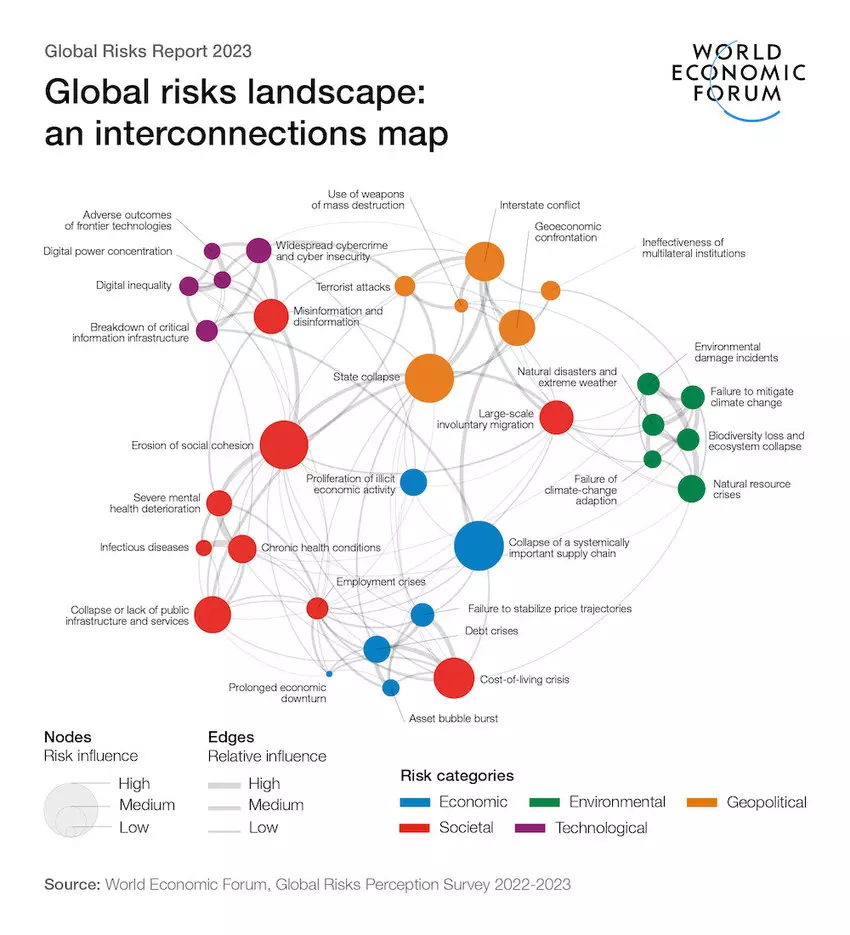
Polycrisis is the idea that multiple crises interact across economic, political, environmental, and social systems in ways that reinforce each other and create systemic instability.
Ellen KhalifaPANELIST
The stacking problem begins somewhere different.
Ellen KhalifaPANELIST
Polycrisis is a theory of systems that explains how crises interact across societies.
Ellen KhalifaPANELIST
But the stacking problem is a theory of that, what we said before, lived experience, explaining the cumulative demand those crises place on people navigating longer lives.
Ellen KhalifaPANELIST
Financial planning has traditionally focused on financial longevity risk.

Sean KellyGUEST
The term was coined in 1992, I think it is, with Terre Patrie that I translated as Homeland Earth in 1999.
Sean KellyGUEST
And on the one hand, I mean, the Pali side was there from the beginning.
Sean KellyGUEST
So the multiplicity, he was always...
Sean KellyGUEST
So the poly is a kind of first pass at complexity.
Sean KellyGUEST
There's a, you know, a psycho-spiritual crisis.
Sean KellyGUEST
There's multiple crises, and they are all interfering, reinforcing, and amplifying each other, and they're related to each other in very complex ways.
Sean KellyGUEST
So, and he says that, you know, in order to deal most effectively with this Pali crisis, We need a meta point of view.
Sean KellyGUEST
We need a meta point of view on the poly crisis.

Carl TeichribHOST
I'll give you a sense of what I mean when I say polycrisis.
Carl TeichribHOST
So the concept of polycrisis, it's language used by the World Economic Forum and the United Nations.
Carl TeichribHOST
Polycrisis is this idea that there are multiple existential threats emerging at the same time.
Carl TeichribHOST
And so we've got all of these various actions that are looking to to overthrow the existing order or that's going to stress the existing order so here's here's just the here's the uh i'll read the write-up for the one that you and i attended george communities nation states and transnational institutions face rising demands to respond to a wide array of crisis and disasters whether floods drought earthquakes or disruptions linked to violent conflicts The demands include prevention, preparation, response and recovery, and in virtually every instance religious communities and institutions are involved, often as those who respond first and remain long after international attention moves to the next crisis.
Carl TeichribHOST
Yet their roles are rarely recognized as primary actors at the table where decisions are made on policy planning and resource allocation.

Adrienne BullerHOST
And prior to that role, he had more than a decade of experience in UN environmental negotiations.
Adrienne BullerHOST
Tim Sahay is a climate policy expert and co-director of the Net Zero Industrial Policy Lab at Johns Hopkins, as well as co-founder with Kate McKenzie of the aforementioned Polycrisis.
Adrienne BullerHOST
And Jeremy Wallace is the A. Doak Barnett Professor of China Studies at Johns Hopkins School of Advanced International Studies.
Adrienne BullerHOST
We clearly have a lot of intellectual diversity on this panel.
6 more episodes mention Polycrisis.
Create an account to see the whole feed, search across every transcript, and follow the entities you care about.