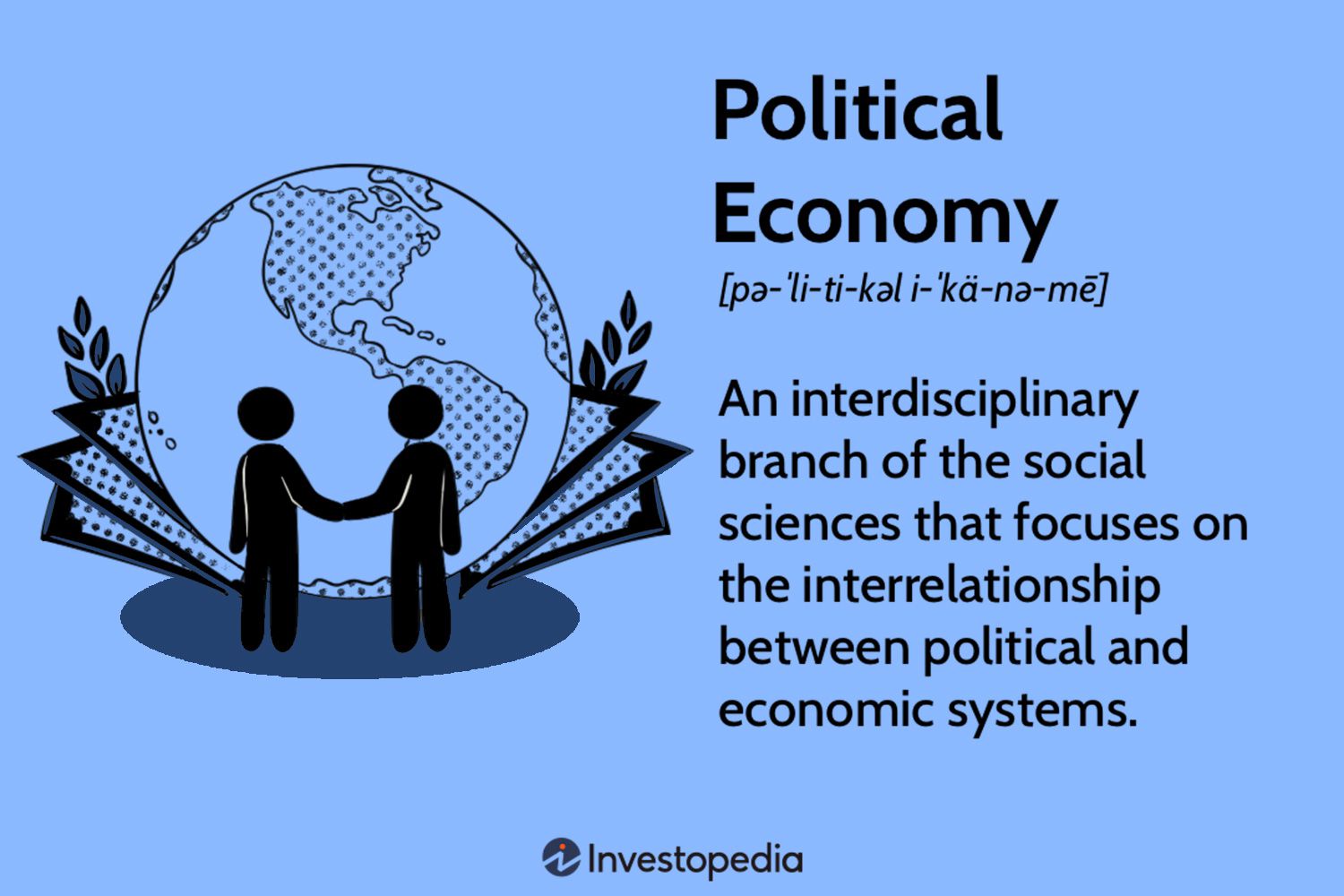
political economy
Field of studyWikipedia
333
MENTIONS
37
EPISODES
29
PODCASTS
Search complete. 333 mentions across 37 episodes found for "political economy".
Sep 16, 2026

MikeHOST
We spent six months doing a deep dive into this, asking what the phasing out of hydrocarbons and the new green industries mean for Grimsby and Aberdeen, and whether the claims about green jobs driving the economy forward really do stack up.
MikeHOST
Uh, to discuss this today, we have Melanie Onn, MP for Great Grimsby and Cleethorpes; Keith Bender, Chair of Political Economy at the University of Aberdeen and co-chair of their Just Transition Lab; and Oliver Nash, Director of Innovation at the Institute for the Future of Work, who've done lots of work on green skills and the labor market; and then James Smith, Chief Economist at the Resolution Foundation.
MikeHOST
Uh, we have a report out today, so you can go to our website and download that and follow along if you like, or you can also go to Slido, where you can ask questions and do the poll.
MikeHOST
The code is netzeronorth.

Marcus PeterHOST
We're joined by my friend Dr. Michael Pakaluk to talk about this.
Marcus PeterHOST
Dr. Michael Pakaluk is an Arist- Aristotelian scholar, ordinarius of the Pontifical Academy of Saint Thomas Aquinas, professor of political economy in the Bush School of Business at the Catholic University of America, and he lives in Hyattsville, Maryland with his bride, Catherine.
Marcus PeterHOST
They are prolific authors.
Marcus PeterHOST
The, w- one of his books that I found particularly impressive was The Shock of Holiness, although [laughs] all of his books give tremendous food for thought.
7 MINS LATER
Michael PakalukGUEST
Well, it's quick for people to quickly deny this analogy between the political community and household.
Michael PakalukGUEST
But as you said, I mean, it goes back to the very word economics.
Michael PakalukGUEST
That's a shortening of the word political economy, which means treat the entire city state as a single household, treat the United States as a single household.
Michael PakalukGUEST
And it's true, the government is not a household.

Graham WalkerHOST
And I'm especially glad to welcome my colleague Philip Magnus today.
Graham WalkerHOST
Phil is an economist who holds the David J. Thoreau Chair in Political Economy here at Independent Institute.
Graham WalkerHOST
Phil, you've done some serious research on inequality and this wealth tax plan.
Graham WalkerHOST
I said a moment ago that most people assume inequality has spiked up more than ever.

Sean MoncrieffHOST
The question is why? It's not exactly easy to sell on a world famous piece by a world famous artist.
Sean MoncrieffHOST
Anya Shortland is professor in political economy at King's College, London.
Sean MoncrieffHOST
Good afternoon, Anya.
Sean MoncrieffHOST
Good afternoon, Sean.
7 MINS LATER
Sean MoncrieffHOST
Good tips there for anyone with a fledgling criminal career.
Sean MoncrieffHOST
Anya, thank you very much for speaking with us today.
Sean MoncrieffHOST
That was Andrew Shortland there, Professor in Political Economy at King's College, London.
speaker_2ADVERTISER
Welcome to Planet Fitness, a.k.a.

Sean MoncrieffHOST
The question is why? It's not exactly easy to sell on a world famous piece by a world famous artist.
Sean MoncrieffHOST
Anya Shortland is professor in political economy at King's College, London.
Sean MoncrieffHOST
Good afternoon, Anya.
Sean MoncrieffHOST
Good afternoon, Sean.
7 MINS LATER
Sean MoncrieffHOST
Good tips there for anyone with a fledgling criminal career.
Sean MoncrieffHOST
Anya, thank you very much for speaking with us today.
Sean MoncrieffHOST
That was Andrew Shortland there, Professor in Political Economy at King's College, London.

K. HandNARRATOR
Authorities Miss Martineau's History of England Molesworth's History of England Mackenzie's History of the Nineteenth Century Allison's History of Europe Annual Register Lives of Lord Brougham, Wellington, Lord Melbourne, Lord John Russell, Lord Liverpool, and Sir Robert Peel These are the most accessible authorities, but the list is very large End of Section 2 Section 3 of Beacon Lights of History, Volume 10, European Leaders by John Lord This LibriVox recording is in the public domain Recording by K.
K. HandNARRATOR
Hand Sir Robert Peel, Part 1 1788-1850 Political Economy Among the great prime ministers of England, Sir Robert Peel is to be classed.
K. HandNARRATOR
He ranks with Pitt, Canning, and Gladstone for his intellectual force, his services, and his patriotism.
K. HandNARRATOR
He was to England what Guizot and Thiers were to France, a pre-eminent statesman, identified with great movements, learned, eloquent, and wise.
36 MINS LATER
K. HandNARRATOR
And they have ever been affected through parliament.
K. HandNARRATOR
All popular agitations have failed unless they have appealed to reason and right.
K. HandNARRATOR
Thus, the People's Charter movement, beginning about 1838, was a signal failure, because from the practical side it involved no great principles of political economy, nothing that enriches a nation, and from the side of popular rights it was premature, crude, and represented no intelligent desire on the part of the people.
K. HandNARRATOR
It was a movement nursed in discontent and carried on with bitterness and illegal violence.

John J. HardyHOST
And then there's this one I sort of talked about and teased at the top of the podcast today.
John J. HardyHOST
The title here is Capital and Nomos, the Political Economy of the Interregnum.
John J. HardyHOST
Now, if you're like me, you had to look up what Nomos is, and I'm sure he defines it in the article somewhere.
John J. HardyHOST
And I've not read all of this, but I've just read the beginning bits of it.

Ben WilfordNARRATOR
Part six: National Growth and World Politics.
Ben WilfordNARRATOR
Chapter 16: The Political and Economic Evolution of the South.
Ben WilfordNARRATOR
The outcome of the Civil War in the South was nothing short of a revolution.
Ben WilfordNARRATOR
The ruling class, the law, and the government of the old order had been subverted.
46 MINS LATER
Ben WilfordNARRATOR
As the years passed, these tendencies gained momentum.
Ben WilfordNARRATOR
The already huge colored quarters in some northern cities were widely expanded as whole counties in the South were stripped of their colored laborers.
Ben WilfordNARRATOR
The race question in its political and economic aspects became less and less sectional, more and more national.
Ben WilfordNARRATOR
The South was drawn into the mainstream of national life.

speaker_7NARRATOR
Of the contemporaries of Hume, the two who stand next to him in the measure of their importance are undoubtedly Adam Smith and Thomas Reid.
speaker_7NARRATOR
The one is the acknowledged founder of political economy as a distinct branch of knowledge, the other is the recognised head of the Scottish school in philosophy.
speaker_7NARRATOR
But even as regards these distinguished men, a pre-eminence must be assigned to Hume, for apart from his influence, probably neither of the two would have written as he did.
speaker_7NARRATOR
To Hume, as we shall find, more than to any living man, Adam Smith was indebted for the leading ideas of his principal work, and from Hume, as best understanding the completeness and value of the exposition, the wealth of nations received its first emphatic welcome.
1 HR 14 MINS LATER
Kevin ManleyNARRATOR
Next year he removed to Jack's Land, another of Edinburgh's tall tenements, in the Canongate.
Kevin ManleyNARRATOR
Here he remained till his purchase in 1762 of a house of his own in James' Court.
Kevin ManleyNARRATOR
It was shortly after this removal to Edinburgh in 1752 that Hume published his Political Discourses, mostly on subjects of political economy, and as remarkable in their grasp of sound principles as in their anticipations of some of the later doctrines of Adam Smith in his Wealth of Nations.
Kevin ManleyNARRATOR
He speaks of this book as the only work of mine that was successful on its first publication, and informs us that it was well received abroad and at home.

Paul MussonHOST
Hello everyone, my name is Paul Musson.
Paul MussonHOST
Welcome to Political Economy, where we strive to give our readers and listeners a clear view of what's going on in the world.
Paul MussonHOST
It's a view that is often contrary to the sensationalist headlines in mainstream media, as well as from fallacious economic and monetary doctrine that has served to make the world a more divided place.
Paul MussonHOST
It is Monday, September 7th, 2026, Labor Day Monday.
25 MINS LATER
Paul MussonHOST
The burden is shared by all of us, rather than forcing it upon a small business owner and putting them out of business.
Paul MussonHOST
And that's it.
Paul MussonHOST
for the special Labor Day edition of Political Economy, post number 383.
Paul MussonHOST
Thanks as always for listening, and until next time, be free and do no harm.
27 more episodes mention political economy.
Create an account to see the whole feed, search across every transcript, and follow the entities you care about.