PM10
39
MENTIONS
21
EPISODES
16
PODCASTS
Search complete. 39 mentions across 21 episodes found for "PM10".
Sep 29, 2026

Rebecca SealGUEST
They're also released by a lot of personal care products, scented candles, incense sticks, room fragrances, whether that's plug-in or using essential oils, and then you also get the reaction of chemicals with each other to form new particles or chemicals when they're in the air around us.
Rebecca SealGUEST
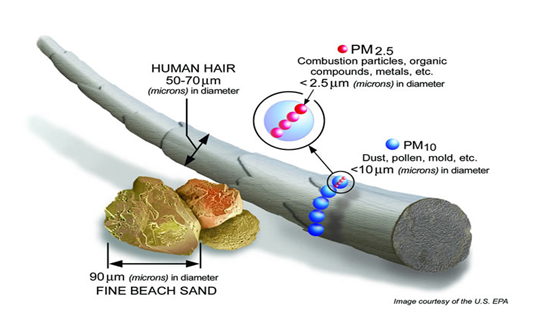
And then we're also talking about two kinds of small particle called PM2.5 and PM10, and they're absolutely tiny particles that can get really quite deeply into our lungs.
Rebecca SealGUEST
They're, um, getting as far as the blood and, in some cases, into our brains.
Rebecca SealGUEST
And the big question is what that then does to our health.
Madeleine FinlayHOST
And the PM2.5 and the PM10, where are those ones coming from? Are they from our cleaning products, or are they kind of entering the air from elsewhere?
Rebecca SealGUEST
Both.
Rebecca SealGUEST
[laughs] Um, so PM2.5 and PM10 are kind of, uh, best known, as it were, as, um, things which come from pollution that we're more familiar with, like vehicle exhaust pollution or pollution from industry and factories.
Rebecca SealGUEST
Um, but actually, they come from lots and lots of different things.

JC HarrisHOST
Scientists have known for many decades that there are a variety of exhaust emissions from auto, diesel, aircraft, and so forth, and they classify them by size.
JC HarrisHOST
The first one, the one that you think of as pollution, is referred to as PM10, particulate matter of size 10.
JC HarrisHOST
You can see it in things like wood smoke and the hazy sky at night from wildfires and, you know, when an old motorcycle backfires.
JC HarrisHOST
Around 30 years ago, the state began monitoring something much smaller called PM2.5, which is smaller than PM10, get it? And it's also very bad for human health.
JC HarrisHOST
But because it's smaller, it is invisible.
JC HarrisHOST
You cannot see it.

Dane WigingtonGUEST
And again, th- they're simply lying, and we know this.
Dane WigingtonGUEST
I've been in high-level EPA meetings in Sacramento, five top California EPA official- officials, meeting arranged by congressional rep, told, the entire system is rigged, told to my face that they test for combustion particulates only, generally PM10, which is a boulder compared to a nanoparticle, so the rest goes completely unreported and completely under the radar.
Dane WigingtonGUEST
Completely rigged system because they cannot afford people to wake up to what's happening in our skies.
Walter SterlingHOST
Dane Wigington, if you'd like to chat with him, that would be great.
Dane WigingtonGUEST
I've been in high-level EPA meetings in Sacramento.
Dane WigingtonGUEST
Five top California EPA official, officials, a meeting arranged by a congressional rep, told, the entire system is rigged, told to my face that they test for combustion particulates only, generally PM10, which is a boulder compared to a nanoparticle, so the rest goes completely unreported and completely under the radar.
Dane WigingtonGUEST
Completely rigged system because they cannot afford people to wake up to what's happening in our skies.
Walter SterlingHOST
Dane Wigington, if you'd like to chat with him, that would be great.

Anne-Marie FineGUEST
2.5 refers to the size, 2.5 microns.
Anne-Marie FineGUEST
There's also PM10, that's 10 microns.
Anne-Marie FineGUEST
There's also ultrafine particles, PM1 or below.
Anne-Marie FineGUEST
And the problem with those really small ones is that you not only inhale them, but they can go through the alveoli into your blood systemically.

Randy MartinGUEST
So it's those very small particles that cause a lot of our problems.
Tom WilliamsHOST
We have PM10.
Tom WilliamsHOST
Is that correct? PM10.
Tom WilliamsHOST
Larger but still dangerous.
Tom WilliamsHOST
That's
Randy MartinGUEST
larger, yeah.
Randy MartinGUEST
PM10, the thing to keep about particles in the air, it's actually a continuum.
Randy MartinGUEST
So PM2.5 is a subset of PM10.

Daniel MartinHOST
Why, Professor Tong, is somebody feeling, when there is transboundary haze, this kind of itchy, watery feeling in their eye?
Louis TongGUEST
Well, there's a lot of research on the components of haze, right? I mean, you could have the PM2.5, the PM10, you could have gases like sulfur dioxide, nitrogen dioxide, you have carbon monoxide, right? So all these pollutants, so to speak, can actually damage the front of the eye by destroying the barrier.
Louis TongGUEST
So imagine if you and I are both guardsmen of this delicate tissue and we linked our arms together, so what the pm 2.5 does is it destroys it it has to burst through the space between us so it has to destroy our arms or injure our arms in order to get through right so that's what's happening so if the thing is damaged then you actually opens the channel for more PM2.5 and more particles to get between us.
Louis TongGUEST
That's how the alarm system works.

Kevin PerryGUEST
The first is it doesn't matter what the dust is made out of.
Kevin PerryGUEST
It's just when we have a dust storm and you see this wall of dust coming off of the lake, it significantly impacts the air quality and can raise the levels of what we call PM10 and PM2.5 particles.
Kevin PerryGUEST
Those are just different size particles that end up in your lungs.
Kevin PerryGUEST
And it doesn't matter what it's made out of, at high enough concentrations, people can experience respiratory distress.

speaker_2HOST
They saw a 25% reduction in nitrogen dioxide, NO2.
speaker_3HOST
And a 17% drop in PM10 particles, I think.
speaker_2HOST
Exactly, PM10.
speaker_2HOST
Those microscopic pieces of soot that cause respiratory disease.
speaker_2HOST
They plummeted.

Fahad Al MheiriGUEST
These were point stations, so they were only measuring that specific point where these were.
Fahad Al MheiriGUEST
At that time, the whole air quality side and the PM2.5, PM10 thing, that was all a big thing that was going around the world measuring air quality index.
Fahad Al MheiriGUEST
It was my responsibility to say, okay, what can we do with this? I went to Mostar Institute and worked with a professor there who was head of the satellite remote sensing capabilities there.
Fahad Al MheiriGUEST
And we put together an amazing project where we figured out what the satellites see, matching it to what these 40 point sensors were seeing, and then put together algorithms to figure out what was really happening.
11 more episodes mention PM10.
Create an account to see the whole feed, search across every transcript, and follow the entities you care about.