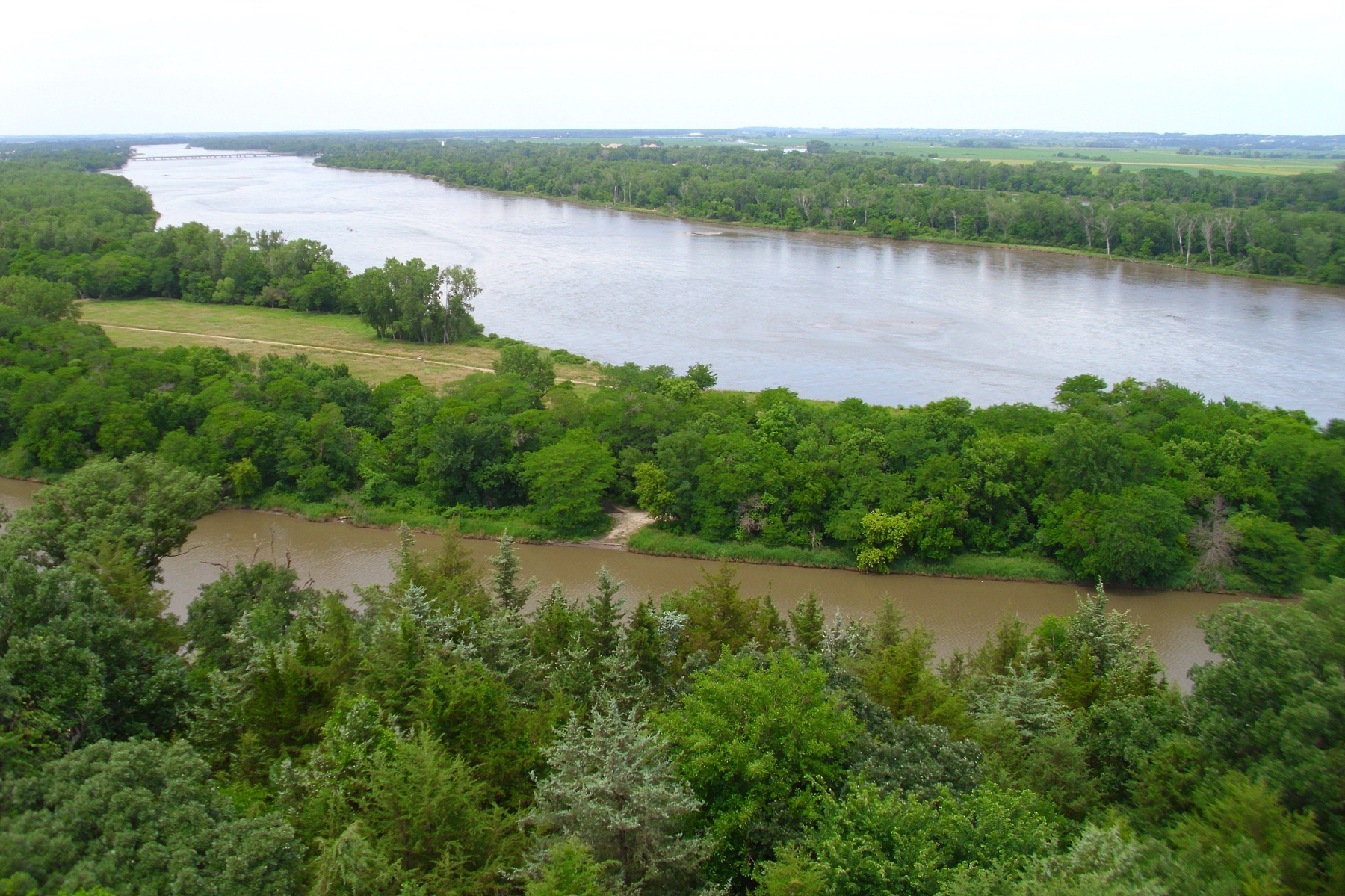
Platte River
River in NebraskaWikipedia
38
MENTIONS
27
EPISODES
26
PODCASTS
Search complete. 38 mentions across 27 episodes found for "Platte River".
Nov 20, 2026

Douglas SpaleGUEST
Do you guys know where that term comes from?
Jeff StanfieldHOST
The Platte River.
Douglas SpaleGUEST
Correct, La Platte.
Douglas SpaleGUEST
La Platte.
Jeff StanfieldHOST
know?
Douglas SpaleGUEST
So let's just make that make sense for a second.
Douglas SpaleGUEST
Nebraska is named after the Platte River.
Jeff StanfieldHOST
With a French word.

Mark Labriola IIHOST
Yeah.
Mark Labriola IIHOST
I mean, you might be thinking like Platte River, maybe.
Mark Labriola IIHOST
I don't know.
Mark Labriola IIHOST
But then we have.
Mark Labriola IIHOST
Yeah.
Mark Labriola IIHOST
So we're not the Platte River is a little bit more like kind of west of us.
Mark Labriola IIHOST
But.
Mark Labriola IIHOST
Oh, OK.

Sherry LarsonGUEST
We can be in Omaha downtown in about 20 minutes.
Sherry LarsonGUEST
So it's located right next to the confluence of the Missouri River and the Platt River.
Sherry LarsonGUEST
It's a historic town.
Sherry LarsonGUEST
We've had a couple of different presidential candidates, Taft and Roosevelt, go through here.

W. Scott OlsenHOST
Looking at your work, I'm also impressed, you know, because of all the the backstory in some ways, like your Sandhill Cranes pictures.
W. Scott OlsenHOST
I remember being out on the Platte River, taking pictures like that and realizing I'd brought the wrong type of deal.
W. Scott OlsenHOST
I needed a microphone because I sort of knew what Sandhill Cranes looked like.
W. Scott OlsenHOST
And it was a challenge as it got darker and they all came in.
W. Scott OlsenHOST
Oh, yeah.
Stephen WilkesGUEST
It's an extraordinary place.
Stephen WilkesGUEST
I tell a lot of people, Scott, that if you said to me that the Platte River in Nebraska, shooting the Sandhill Cranes, would be one of the most extraordinary, beautiful things you'd ever see in your lifetime, I would say, really? Nebraska? Seriously? It's kind of flat, isn't it? But man, I tell you what, I tell people all the time, you got to put that one on your bucket list.
W. Scott OlsenHOST
Okay.

Dan SnowNARRATOR
The expedition began its long journey westwards.
Dan SnowNARRATOR
LeBlanc and his men crossed the Great Plains, lightly followed the course of the Platte River, and entered the Rocky Mountains.
Dan SnowNARRATOR
The Frenchmen found themselves alone in a vast, untamed land.
speaker_4SOUNDBITE_SPEAKER
The West of the 1790s is, it's the frontier to the people who live in the East.

Lisa PedersonGUEST
And they had, I believe both of my mom's parents were born in Russia and came to the U.S. as babies.
Lisa PedersonGUEST
And so they were Germans from Russia, much like the Platte River Valley, all the way through Nebraska into Colorado, farmers who fed cattle and had a lot of German-Russian heritage behind them.
Lisa PedersonGUEST
So in the Dakotas, there's a lot of that Scandinavian-German-Russian heritage.
Lisa PedersonGUEST
And so it kind of all fits in.

Elliott SniderHOST
where I'm going to be hunting like crazy.
Elliott SniderHOST
And at the end of that, going to Flatlander Kennels to hunt the Platte River with Chris Jobman.
Elliott SniderHOST
So it's like, I love Thanksgiving.
Elliott SniderHOST
I love Christmas.

John EarlNARRATOR
Today, how did Biddy Mason go from enslaved to one of the wealthiest Black women in the country? And how does her story challenge comfortable notions about where slavery took root in America? It's June, 1848.
John EarlNARRATOR
A wagon train moves along the grassy banks of the Platte River in eastern Nebraska.
John EarlNARRATOR
The caravan is straight out of the Oregon Trail, a line of covered wagons rattling along, followed by a herd of horses, sheep, and cattle.
John EarlNARRATOR
One traveler called it a gigantic, moving, mooing mob.
John EarlNARRATOR
Today, how did Biddy Mason go from enslaved to one of the wealthiest Black women in the country? And how does her story challenge comfortable notions about where slavery took root in America? It's June, 1848.
John EarlNARRATOR
A wagon train moves along the grassy banks of the Platte River in eastern Nebraska.
John EarlNARRATOR
The caravan is straight out of the Oregon Trail, a line of covered wagons rattling along, followed by a herd of horses, sheep, and cattle.
John EarlNARRATOR
One traveler called it a gigantic, moving, mooing mob.

Jenny RoughCORRESPONDENT
Walking the trail, he developed a deep appreciation for America's heartland.
Dave WhitsonSOUNDBITE_SPEAKER
I loved walking along the Platte River across Nebraska, which was really the first interstate highway in America, like all the pioneer wagons rolling through.
Dave WhitsonSOUNDBITE_SPEAKER
Of course, then you're also tapping into Oregon Trail, Pony Express, all kinds of other sites.
Dave WhitsonSOUNDBITE_SPEAKER
The Katy Trail in Missouri, you're right on the heels of Lewis and Clark.
17 more episodes mention Platte River.
Create an account to see the whole feed, search across every transcript, and follow the entities you care about.