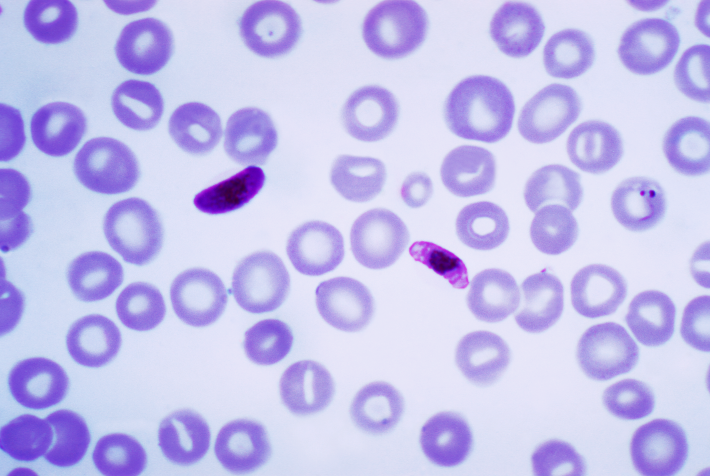
Plasmodium
24
MENTIONS
7
EPISODES
6
PODCASTS
Search complete. 24 mentions across 7 episodes found for "Plasmodium".
Sep 16, 2026

Jacob RignerGUEST
So there's a couple of different kinds of malaria.
Jacob RignerGUEST
First is Plasmodium falciparum.
Jacob RignerGUEST
Again, these are the Latin names.
Jacob RignerGUEST
I don't speak Latin.
Delaney FlorenceHOST
it's you and not me.
Jacob RignerGUEST
Let's get back to the types of malaria.
Jacob RignerGUEST
So, Plasmodium falciparum.
Jacob RignerGUEST
It primarily exists in more tropical regions.

Jenny HickmanHOST
There wouldn't be any way back if we did this, if we decided to go through with it.
Jenny HickmanHOST
And so we're actually talking about the extinction of two species here, aren't we? So malaria is caused by Plasmodium parasites, so they're single cell parasites, and they're transmitted through the bite of female mosquitoes.
Jenny HickmanHOST
Four species of Plasmodium are human parasites, so when we talk about malaria extinction specifically, we mean Plasmodium falciparum, which is responsible for over 99% of malaria related deaths, and then Plasmodium vivax, which is widely distributed in rural settings and is estimated to be responsible for 64% of total cases of malaria.
Jenny HickmanHOST
Obviously, this is, uh, there is an argument of making a species extinct being a problem.
Jenny HickmanHOST
Do you think that's what the people in your talks were referring to? What is it that you think makes them say no?
Jenny HickmanHOST
So I agree.
Jenny HickmanHOST
So there's not...
Jenny HickmanHOST
So we're not worried about intrinsic value of the Plasmodium species.

KellyHOST
But the most globally significant protozoan disease is malaria.
KellyHOST
Malaria is caused by several species of Plasmodium and is transmitted by the female Anopheles mosquito.
KellyHOST
When an infected mosquito bites a human, it injects sporozoites into the bloodstream.
KellyHOST
These travel to the liver, invade the cells there, those hepatocytes, and then replicate asexually into thousands of merozoites.
KellyHOST
Since malaria is the topic for your second essay, I'm going to take a moment to discuss how human genetics and infectious disease have shaped one another through natural selection.
KellyHOST
Individuals who inherit one normal hemoglobin gene and one sickle hemoglobin gene have a condition called sickle cell trait.
KellyHOST
They usually don't experience severe symptoms of sickle cell disease, but their red blood cells are slightly altered in a way that makes it more difficult for Plasmodium falciparum, the most dangerous malarial parasite, to complete its life cycle.
KellyHOST
Infected red blood cells in individuals with sickle cell trait are more likely to sickle when there are low oxygen conditions, so they get cleared by the spleen faster.
KellyHOST
Protozoa are unicellular organisms, some of which can cause disease.
KellyHOST
For example, species within the genus Plasmodium cause malaria, and Giardia causes diarrheal disease.
KellyHOST
Remember, these organisms are eukaryotes.
KellyHOST
Their cells are fundamentally different, so they're very different from bacteria, and where that comes into play is when it comes to treatment.

speaker_3HOST
Malaria is not a virus like COVID, and it's not a standard bacterium-like strep throat.
speaker_3HOST
It is a parasite, specifically the Plasmodium parasite.
speaker_3HOST
And this thing is an absolute nightmare for the immune system because it is a shapeshifter.
speaker_4HOST
The biological life cycle of the malaria parasite is staggeringly complex compared to a virus.

speaker_2HOST
They absolutely must have a host to survive and complete their life cycle.
speaker_2HOST
The Plasmodium species, which causes malaria, cannot survive on its own in a puddle of water.
speaker_2HOST
It needs a mosquito and it needs a human.
speaker_4HOST
But not all of them are that dependent.

David HornGUEST
Yeah, I mean, I guess it's an unusual strategy in the sense that they've had to develop this pretty sophisticated mechanism to escape.
David HornGUEST
I mean, you know, Plasmodium actually does expose a lot of its proteins as well to the host.
David HornGUEST
So they're kind of hiding away, but then exposing themselves in a different way.
David HornGUEST
But yeah, African trypanosomes are completely exposed to adaptive immunity.
David HornGUEST
As I said, they have to expose variant proteins on the red blood cell surface.
David HornGUEST
They only have 60 of those genes.
David HornGUEST
So then the question immediately arises, how are these parasites going to persist for long periods of time if they have such a small reservoir of genes? So it's not entirely clear how they do that because recombination and stitching together gene fragments has not really been documented in Plasmodium.
David HornGUEST
And then a similar question arises with T. brucei because only about 300 of those genes are fully intact.