Plagiocephaly
ConditionWikipedia
2
MENTIONS
2
EPISODES
2
PODCASTS
Search complete. 2 mentions across 2 episodes found for "Plagiocephaly".
Sep 25, 2026

Jenna SchultzHOST
That, taking into account basic gravity, can lend to flattening on one side of the head.
Jenna SchultzHOST
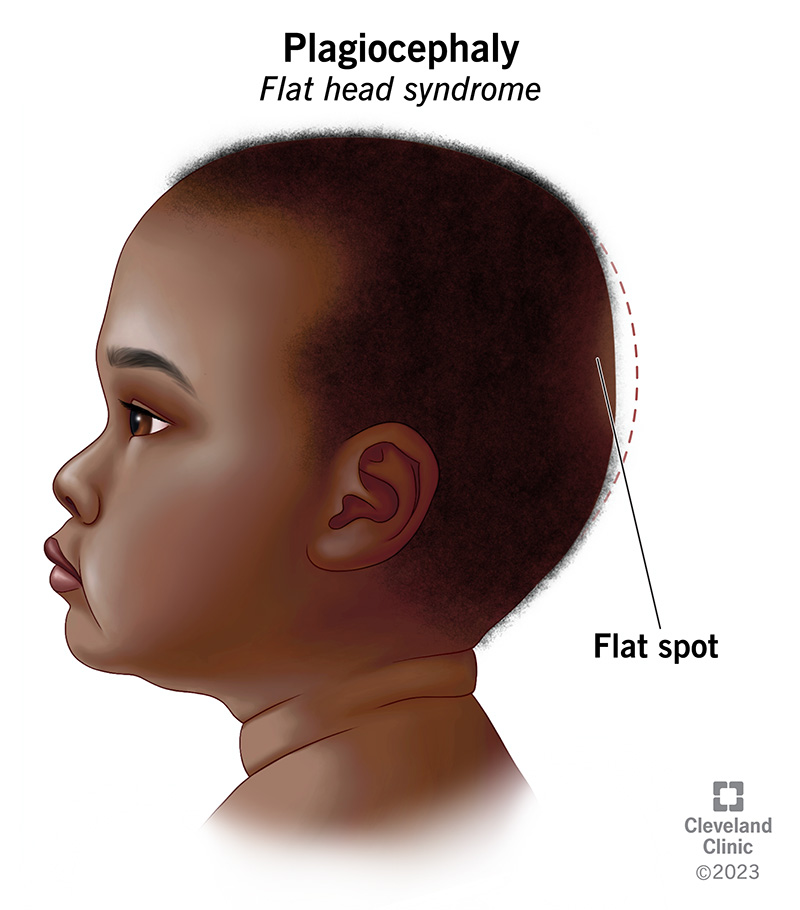
Now, the first head shape I'm going to talk about is plagiocephaly.
Jenna SchultzHOST
Plagiocephaly is when there is flattening across one side of the head or asymmetrical flattening of the skull.
Jenna SchultzHOST
Typically, you'll notice that one side of the back of your baby's head appears flatter than the other.
Jenna SchultzHOST
And when you look down at your baby's head from above, you may notice additional asymmetries.

Paul ChamberlainGUEST
It's very commonly not that muscle contributing to the preference to turn one way and therefore not.
Paul ChamberlainGUEST
Plagiocephaly, it's a whole bunch of other things which we're sort of starting to work through with the nerves.
Paul ChamberlainGUEST
So that muscle, SEM, can contribute to it, and it can, but there are lots of other muscles that can do it as well.
Paul ChamberlainGUEST
So there's another muscle down the side of the neck that's called the scalene muscle, and that in my view is, not my view, in my experience, I guess their form of view, is a way more common contributor to plagiocephaly and torticollis than the SCM.