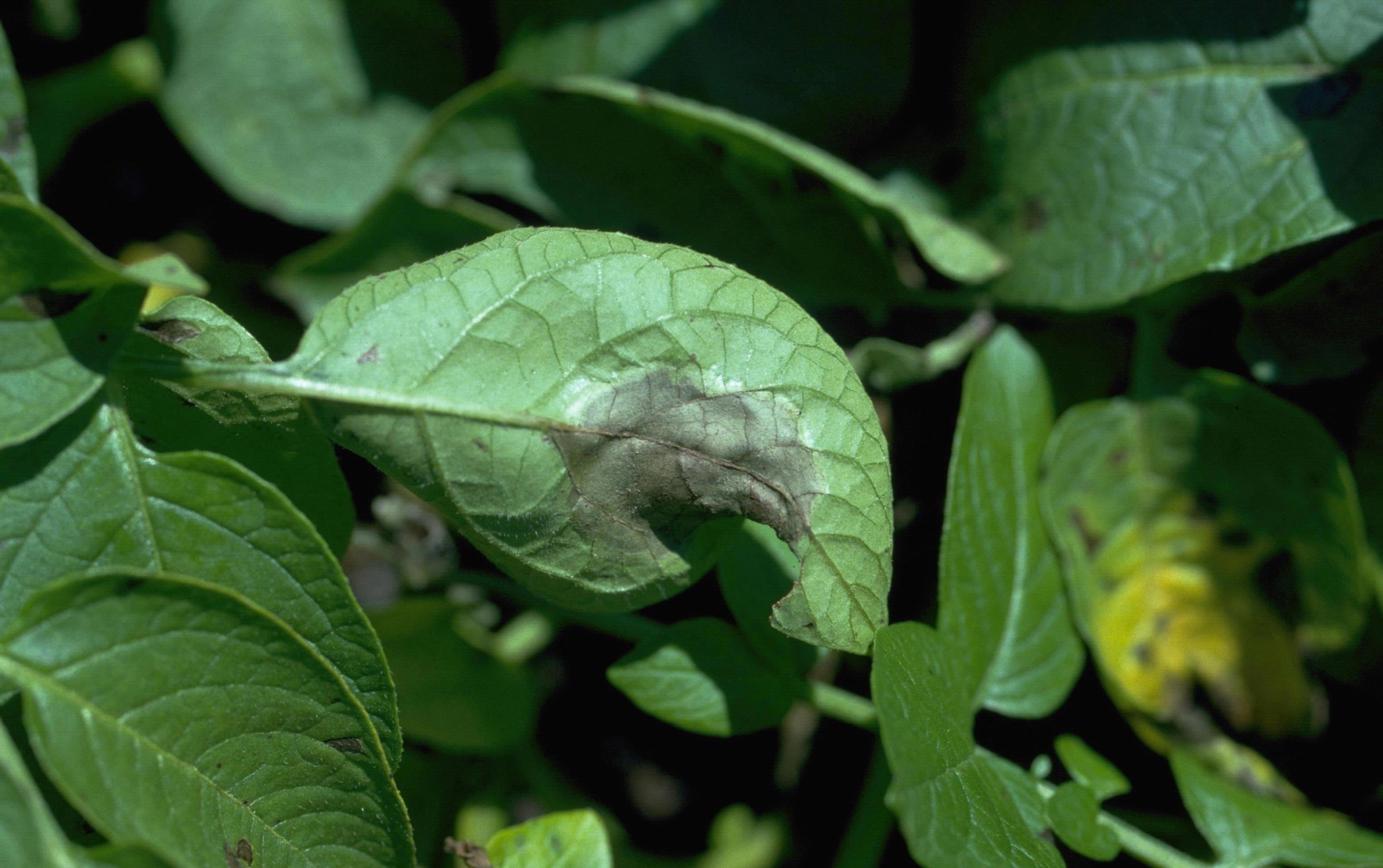
Phytophthora
86
MENTIONS
19
EPISODES
17
PODCASTS
Search complete. 86 mentions across 19 episodes found for "Phytophthora".
Nov 18, 2026

Sprout WeinbergerGUEST
The other main thing that we have, especially on oaks, but then also on a lot of conifers too, are different cankers or lesions, so it'll typically be visible by different sap.
Sprout WeinbergerGUEST
Sudden oak death, Phytophthora remorum, that affects sudden oak death, or coast live oaks and black oaks around here.
Sprout WeinbergerGUEST
The tan oaks as well, but we don't have that many big tan oaks anymore.
Sprout WeinbergerGUEST
they will have a canker that literally looks like red blood.
16 MINS LATER
Sprout WeinbergerGUEST
And again, because we don't have those animals cycling through, there's been a lot of soil loss.
Sprout WeinbergerGUEST
We don't have the fires resetting the system and promoting that intermediate disturbance.
Sprout WeinbergerGUEST
There is a lot of imbalance microbially, and there are a lot of fungal strains like R malaria or Phytophthora root rot that are overtaking because we don't have those beneficials.
Sprout WeinbergerGUEST
So a product that I use is called Hardy Grow Soil Microbial Inoculant and it's got a humic acid base and then Trigoderma strains, Bacillus strains and I think that that could potentially be something that could be experimented with.

Jason ScottHOST
Another cause follows a different pattern.
Jason ScottHOST
Phytophthora mengii, formerly known as Phytophthora citricola, is associated with moist trunks.
Jason ScottHOST
UCANR says its cankers occur roughly 18 inches above the ground and can gradually girdle the tree.
Jason ScottHOST
Although this disease acts more slowly than avocado root rot, it can still kill young trees rapidly.

Brian HeftyHOST
So I may be looking for that.
Brian HeftyHOST
Certainly, Phytophthora root rot is a thing where there are different resistance genes out there and there's nothing perfect.
Brian HeftyHOST
I mean, a lot of these diseases just continue to adapt and evolve.
Brian HeftyHOST
And they basically get different races, different biotypes, and then they work around some of the resistance that we have in these varieties.
8 MINS LATER
Wade WebsterGUEST
That's been our biggest issue for a year in and year out.
Wade WebsterGUEST
We're also dealing with some of our later season diseases this past season, so potted stem blight and thoracnose, which may lead to some seed quality issues, if we're talking seed beans from this past season.
Wade WebsterGUEST
But generally, SCN, Phytophthora, white mold are the big diseases that what we think about when we're making variety selections.
Zach HeftyHOST
Okay, so when you're looking at those like Phytophthora, there's a bunch of different genes you could pick for that too.

Richard CobbGUEST
And so, yeah, that's kind of the path.
Richard CobbGUEST
Now, I mainly work on what's called Phytophthora or Morum.
Richard CobbGUEST
And your viewers may, if you're in Western Australia, may have heard of Phytophthora before.
Richard CobbGUEST
And it's probably more familiar to you under the name Dyback.
Richard CobbGUEST
So that Phytophthora is just the name of the group of organisms.
Richard CobbGUEST
There are many of them.
Richard CobbGUEST
And they have a couple of things in common, which is they're very unpredictable and they can be extremely destructive.
Richard CobbGUEST
They're all over on the other side of the Pacific, on the east coast of Asia, essentially, all of its closest relatives.

Shaun CasteelGUEST
No, variety selection is huge, but what comes with that is the seed treatment, especially when we talk about these earlier plantings.
Shaun CasteelGUEST
And so to understand what are your shortfalls in those systems, right? I think about areas of the state, East Central in particular has a lot of Phytophthora issues.
Shaun CasteelGUEST
And so knowing that you have the Phytophthora issue and if you've got the level of detail with years of experience or samples for that matter and say, okay, there's genetics that help with that.
Shaun CasteelGUEST
So let's make sure we hit that, right? So what resistant genes do we have in our back pocket? So that's one.
Shaun CasteelGUEST
Two is, okay, now what seed treatment do we need to make sure that's layered to help with that particular disease, right? And so those tend to be those soils that are the blount palomas that are cool wet they just don't drain out right so those are the ones i want to make sure that we've got the variety that matches up with the c treatment that helps you in that scenario there's going to be other parts of the state that deal with more nematodes right and so then you have the same kind of storyline okay what sources are resistance all right so probably 95 percent of our resistant cyst beans are from one source so then it's like okay Do we need to be switching that up, going from what's PI-88, 788, most common, to a P-keen or some other combination? So start there and then layer in, okay, is there any evidence? Because the other part is that there's seed treatments out there that have claims that reducing nematode, have nematode suppression and protection.
Shaun CasteelGUEST
And then let's go ahead and throw in there's a mixture of other seedling diseases.
Shaun CasteelGUEST
So whether it's Pythium, whether it's Rhizoc, right? So then to understand those spectrums.
Shaun CasteelGUEST
So By and large, variety that hits your disease pressure, so whether it's Phytophthora or you think about nematodes, next step is if I am one to push the planting dates in the cooler soils, okay, what can I have the extra layer of protection with the seed treatment? Usually I think about those seedling diseases.

Luke MillironHOST
So if we happen to have a quiet October or November, it doesn't necessarily undermine the outlook from Swain and other climate scientists.
Luke MillironHOST
And then that this might be wet and warm, which also has implications for risk from Phytophthora, has implications for snowpack.
Luke MillironHOST
So if it's both wet and warm, that is, that's not great.
Phoebe GordonHOST
Yeah, absolutely.
Luke MillironHOST
And so we want to capture this water if we get it.
Phoebe GordonHOST
Yeah, and then maybe we could talk about what specifically causes trees to die.
Phoebe GordonHOST
You know, I know we talk about Phytophthora a lot when it comes to wet soils, but I don't know about you, Luke, but I think in flooded orchards, root asphyxiation is the much bigger issue.
Phoebe GordonHOST
I think I've seen one Phytophthora case from a flooded orchard, and usually what I see is root asphyxiation.

Mark HoddleGUEST
And fortunately, we have no root feeding bugs either.
Mark HoddleGUEST
But the things that do attack the roots tend to be pathogens, especially, I guess you can call it a fungus, but that's kind of changed a bit now, but it's Phytophthora.
Mark HoddleGUEST
So Phytophthora is the main root problem that we have here and one species of Phytophthora will even do some damage to the trunk as well.
Jules BernsteinHOST
And what about if we go south of the border?
Mark HoddleGUEST
Oh, wow.

Pat SteeleNARRATOR
With support from the United Soybean Board and Missouri Soybean Merchandising Council, researchers began surveying samples for multiple diseases.
Pat SteeleNARRATOR
Bish said that samples containing red-crowned rot frequently test positive for other pathogens, including Phytophthora.
Pat SteeleNARRATOR
The Illinois sample with Fusarium Neo also tested positive for Phytophthora, making it difficult to determine which pathogen caused the observed symptoms, Pliwa said.
Pat SteeleNARRATOR
Bish said that accurate identification matters because management strategies may differ depending on the pathogens present.
Pat SteeleNARRATOR
However, researchers have not yet established how much yield loss Fusarium Neo causes or which management practices might be effective.
Jason ScottHOST
It's Friday, November 6th.
Jason ScottHOST
Liam explains UCCE's guidance on oxygen-starved roots and Phytophthora infections, and why tree symptoms may not appear until spring.
Jason ScottHOST
Jessica follows with UC Davis research on parasites and disease risks facing blue orchard bees, pollinators used in California orchards.
Jason ScottHOST
I'll cover California DPR's new pesticide exposure education materials for workers and employers, then highlight Enterprise Ag Magazine's reporting on irrigation monitoring technology tested in commercial vegetable production.
LiamHOST
More extensive root death can lead to a thinning canopy and continuing decline.
LiamHOST
That is older biological guidance, not a report of current orchard damage.
LiamHOST
Phytophthora root and crown rot takes a different route.
LiamHOST
These pathogens use saturated conditions to infect tree tissue.

Clay ColeGUEST
The second one are the yield stressors.
Clay ColeGUEST
What consistently is robbing the yield of the varieties within the current market? Are you getting more SDS? Are you seeing Phytophthora? Are you seeing iron deficiency chlorosis? So there's several things in there that could actually reduce yield that would be important when you're selecting varieties.
Clay ColeGUEST
And the third thing is the yield opportunity.
Clay ColeGUEST
What are you trying to do with this field? Are you trying to maximize yield and maybe win some yield contests? Or are you looking to actually get an average yield across these? Understanding those three points would help you determine what varieties to select for your farm.
9 more episodes mention Phytophthora.
Create an account to see the whole feed, search across every transcript, and follow the entities you care about.