Phlegraean Fields
Caldera in ItalyWikipedia
19
MENTIONS
9
EPISODES
7
PODCASTS
Search complete. 19 mentions across 9 episodes found for "Phlegraean Fields".
Sep 14, 2026

Danielle OteriHOST
This week, I have a rich conversation to share with you that I had with Joseph Walker, who is the author of Buried Italy.
Danielle OteriHOST
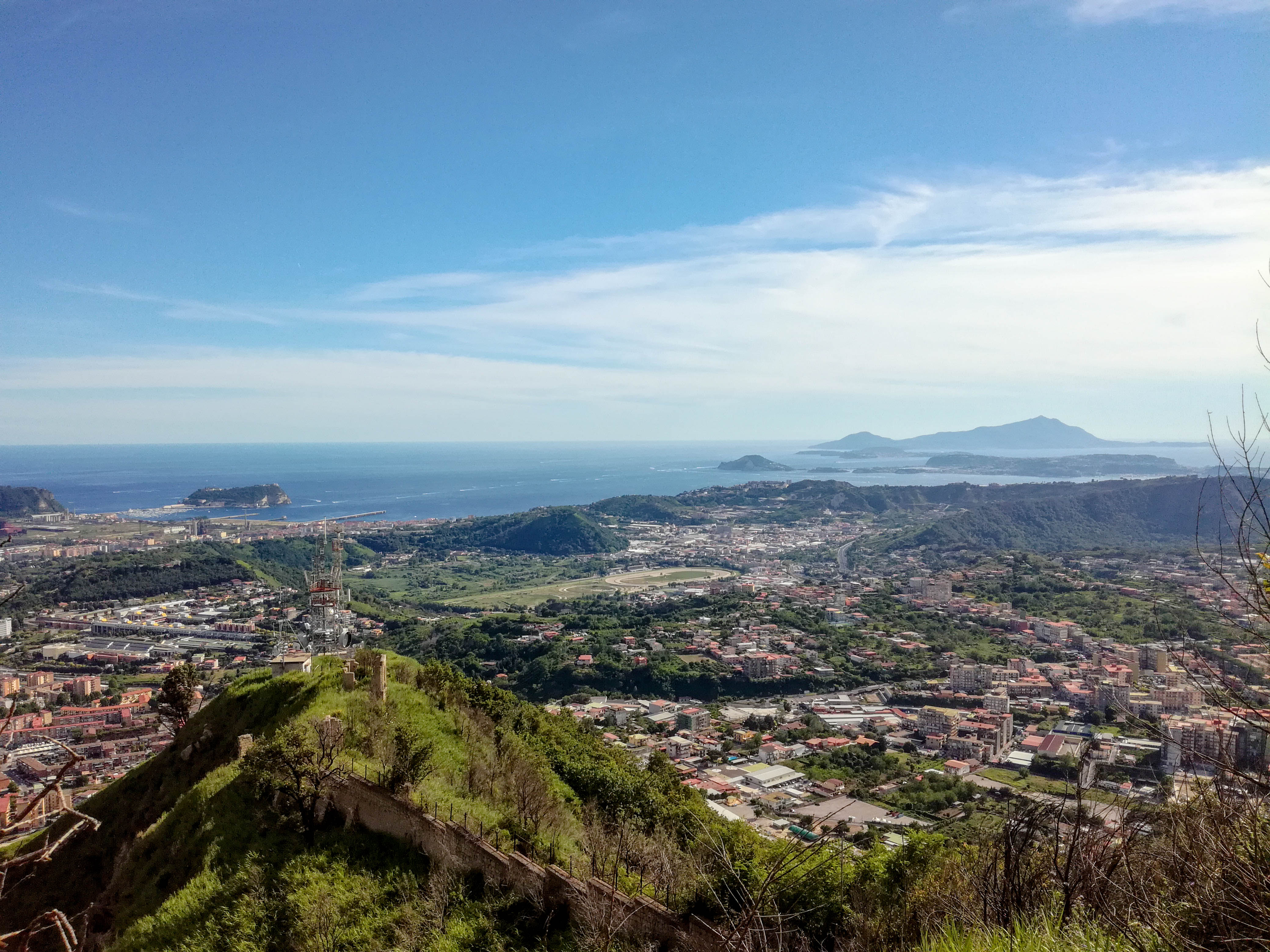
We talked primarily about the Campi Flegrei, which is the volcanic zone that is west of Naples with the city of Pozzuoli at its center.
Danielle OteriHOST
The Campi Flegrei, or the Phlegraean Fields in English, is where you'll find Baia and Cuma, which are two of the most fascinating and beautiful archaeological sites in the world.
Danielle OteriHOST
And they are tragically undervisited because there is simply too much good stuff to do in the Bay of Naples.
Danielle OteriHOST
We'll discuss Baia, which is sometimes called the Atlantis of Italy because it is a partially submerged Roman resort town that I like to call the West Palm Beach of the ancient world.
26 MINS LATER
Danielle OteriHOST
I had a tour guide who had that guy's phone number who could get that door open if we, you know, the timing worked out, which it didn't always, but usually we can make it happen.
Danielle OteriHOST
And it's very, I'm excited that there's much more willingness now on the political level, on the organizational level to bring tourism there, but also tourism.
Danielle OteriHOST
the Indiana Jones opportunities in the Bay of Naples and the Campi Flegrei is just extraordinary, as you know, better than anyone.

Don SullivanHOST
There are many others that are around us.
Don SullivanHOST
We all know of Mount Vesuvius in Italy, but the Campi Flegrei, um, supervolcano, it overwhelms Mount Vesuvius, and it has not erupted.
Don SullivanHOST
It is, it is considered, again, dormant, uh, in Italy.
Don SullivanHOST
Um, and, um, Lake Taupo in New Zealand, um, actually erupted as a supervolcano with a VEI 8 super eruption, uh, only about 27,000 years ago, although it was on the other side of the Earth.

speaker_7NARRATOR
It will erupt again, not tomorrow, probably not for tens of thousands of years, but eventually.
speaker_7NARRATOR
Campi Flegrei, near Naples, Italy, is another active supervolcano.
speaker_7NARRATOR
It's actually showing signs of restlessness right now.
speaker_7NARRATOR
the ground in the caldera has risen by about three metres since nineteen seventy indicating magma movement below earthquake swarms shake the region regularly its last major eruption was thirty nine thousand years ago the campanian ignimbrite eruption which may have contributed to the extinction of neanderthals in europe Lake Toba in Indonesia sits inside the caldera left by the eruption seventy-four thousand years ago.
1 HR 8 MINS LATER
speaker_7NARRATOR
modern humans meanwhile were expanding every century they pushed a little further into neanderthal territory not through warfare necessarily though there probably was some violence mostly through simple demographic pressure modern humans had slightly larger social groups slightly more efficient hunting techniques slightly better long-distance communication networks small advantages that added up over thousands of years But the Neanderthals were still holding on, still maintaining populations across southern Europe, from Spain through Italy to the Balkans and beyond.
speaker_7NARRATOR
They had refuges, territories where they remained dominant, where their specialised adaptations to European conditions gave them advantages over the newcomers.
speaker_7NARRATOR
and then the mountain exploded the mountain was campi flegrei which translates beautifully as burning fields it sits just west of modern naples in southern italy to-day it's a caldera a collapsed volcanic crater filled with towns and suburbs where half a million people live mostly unaware they're residing inside one of the most dangerous volcanic systems on Earth.
speaker_7NARRATOR
39,000 years ago, it unleashed hell.

Ken WohletzSOUNDBITE_SPEAKER
Sure, it's famous for Vesuvius, which has erupted many times in the past and potentially will again in the future.
Ken WohletzSOUNDBITE_SPEAKER
There is also a caldera just on the north side of Naples underlying a metropolitan area of Campi Flegrei and Pozzuoli, where thousands of people live and have lived for a long time.
speaker_0NARRATOR
The last eruption in the Campi Flegri complex was in 1538.
speaker_0NARRATOR
At that time, 3,000 people were killed by the immediate explosion.
speaker_5NARRATOR
And those catastrophes were coming fast during this period.
speaker_5NARRATOR
a volcanic eruption in italy around thirty nine thousand years ago the campi flegrei eruption dumped ash across much of europe the climate impact would have been devastating blocking sunlight killing vegetation disrupting animal migrations Archaeological evidence suggests Neanderthal populations in nearby regions collapsed around this time.
speaker_5NARRATOR
Modern human populations in the same areas took a hit too, but recovered within a few centuries.
speaker_5NARRATOR
The Neanderthals didn't.
speaker_8NARRATOR
except these dominoes were made of civilisations, and perhaps the most frightening aspect of volcanic climate forcing is that we now know it can happen again.
speaker_8NARRATOR
There are volcanic systems around the world capable of producing eruptions as large or larger than what caused the 536 AD event – Yellowstone, Toba, Campi Flegrei near Naples – these are all supervolcano systems that have erupted catastrophically in the past and will erupt again in the future we can't predict when could be next year could be one hundred thousand years from now but when they do erupt they'll inject the same sulphur dioxide into the stratosphere create the same aerosol veil, cause the same global cooling, and despite all our modern technology, despite all our climate models and early warning systems, there's still nothing we can do to prevent the climate disruption that follows.
speaker_8NARRATOR
we can prepare better than the people of five hundred thirty six a d we have food reserves global trade networks agricultural technologies that are more resilient but we're also more dependent on just-in-time supply chains more vulnerable to cascading system failures more numerous and thus requiring more food production a volcanic winter to-day might not kill half the global population like it did in the sixth century but it would still be catastrophic still cause famines still trigger conflicts still test the limits of our social systems the mechanics are universal volcanic sulphur dioxide stratospheric aerosols reflected sunlight global cooling failed harvests famine it's happened before it'll happen again the only question is when and whether we'll be any better equipped to survive it than our ancestors were one thousand five hundred years ago But in 536 AD, the mechanical understanding didn't matter.
speaker_8NARRATOR
What mattered was the human experience of living through it.

Jonti HornerGUEST
Yeah.
Jonti HornerGUEST
Well, they're quite worried about Campi Flegrei, I think it's called, which is the big-
Andrew DunkleyHOST
Mm
Jonti HornerGUEST
... field under Naples that-

Thomas PeterVOICE_ACTOR
Thou join'st us well, my love.
Thomas PeterVOICE_ACTOR
Suppose me come from the Phlegræan plains, where gasping giants lay, cleft by my sword, and mountain tops pair'd off each other blow, to bury those I slew.
Thomas PeterVOICE_ACTOR
Receive me, goddess: let Caesar spread his subtle nets: like Vulcan in thy embraces I would be beheld by heaven and earth at once, and make their envy what they meant their sport; let those who took us blush; I would love on with awful state, regardless of their frowns, as their superior gods.
Thomas PeterVOICE_ACTOR
There's no satiety of love in thee; enjoy'd, thou still art new; perpetual spring is in thy arms; the ripen'd fruit but falls, and blossoms rise to fill its empty place, and I grow rich by giving.

Monique SkidmoreGUEST
So we go to Lake Avernus, which is where in the Odyssey he sails to the end of the world.
Monique SkidmoreGUEST
But more recent scholars, and I mean about the year 0 AD, they've likened it to this deep, dark portal which is a deep volcano crater lake near Naples in the Phlegraean Fields, and it is a really spooky area.
Monique SkidmoreGUEST
So in antiquity it was covered by dark, thick forests around it, and it had really toxic poisonous sulfur emanating from it, hot springs, volcanic activity.
Monique SkidmoreGUEST
And this area had a strong association with the dead.
Monique SkidmoreGUEST
Then Virgil, when he wrote the Aeneid, he describes Aeneas descending into Haiti here.
Monique SkidmoreGUEST
So that's really what cemented it for Italians as the entrance to the underworld.
Katie ClarkHOST
Well, you can go in that area, and I've been there for a day and I really wanna go back and, and do some more exploring there because that's very close to Pozzuoli which is right, as you said, on the Phlegraean Fields.
Katie ClarkHOST
And this, for those of you who don't know, it's a area of very high seismic and volcanic activity even today.