Philippine English
Language varietyWikipedia
14
MENTIONS
3
EPISODES
3
PODCASTS
Search complete. 14 mentions across 3 episodes found for "Philippine English".
Oct 9, 2026

Danica SalazarGUEST
... uh, is largely due to colonialism, um, because English was in, in, in many ways enforced, you know, um, in, in some of, uh, in, in many places in, in, in the world, and including where I'm from, you know? So, um, I'm from the Philippines, and we, and we became English speakers because my country was an American colony for, for a time.
Danica SalazarGUEST
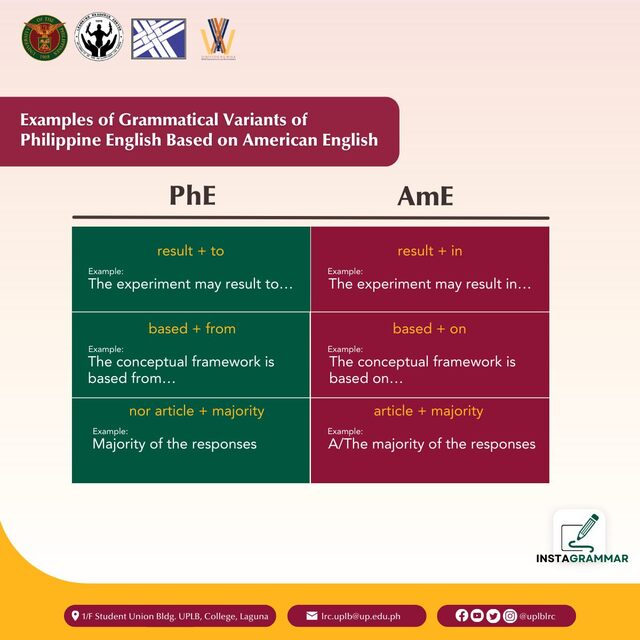
But when we became an independent nation, um, we've decided that, okay, we want to retain English as a language, and that's why, uh, there's now an, a variety of English called Philippine English, which is what we speak in the Philippines.
Danica SalazarGUEST
And so people are aware of that, and they, and, and, and we do, um, get some- Uh, comments sometime that because, um, of what, uh, w- why do we need, uh, to include these words in the, in the dictionary-
Kate RodgerHOST
Mm-hmm

Danica SalazarGUEST
...
Danica SalazarGUEST
I also applied the same techniques into, um, doing studies on, on Philippine English, which is the native v- uh, my native variety of English.
Danica SalazarGUEST
And then when I finished the PhD and I was looking around for a job, I found an advert for, um, postdoctoral fellowship at the University of Oxford, and the instructions were very broad.
Danica SalazarGUEST
They just said, you know, "Propose a project that involves-
12 MINS LATER
Danica SalazarGUEST
[chuckles]
Fiona McPhersonHOST
No. That's, that's, that's very true.
Fiona McPhersonHOST
Um, and I remem- I was gonna say, I remember also I think learning, um, in Philippine English, I think you probably told me this, the adjective advanced is used when someone's talking about a watch or a clock showing a time that's later than it is.
Fiona McPhersonHOST
So what we would probably say is, as fast.