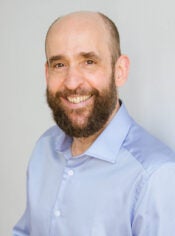
Philip J. Cozzolino
Researcher
7
APPEARANCES
5
PODCASTS
Oct 28, 2026

Philip CozzolinoGUEST
Pho is the person who the mother and father both apparently were visited by in their dreams.
Philip CozzolinoGUEST
When Ian got involved with this case, the parents, the mother and father here, were already dead.
Philip CozzolinoGUEST
So this is what he was told from multiple sources that they had said occurred before Ting, their son, was born.
17 MINS LATER

Ky DickensHOST
Okay, so just pausing for a second, like who was Buakai? Because it's hard for me to believe that he was like the beloved town science teacher if he was shot in the head.
Philip CozzolinoGUEST
Pho is the person who the mother and father both apparently were visited by in their dreams.
Philip CozzolinoGUEST
When Ian got involved with this case, the parents, the mother and father here, were already dead.
Philip CozzolinoGUEST
So this is what he was told from multiple sources that they had said occurred before Ting, their son, was born.
17 MINS LATER
Kai DickensHOST
Okay, so just pausing for a second, like who was Buakai? Because it's hard for me to believe that he was like the beloved town science teacher if he was shot in the head.

Philip CozzolinoGUEST
If we want our relationship with mortality to have beneficial consequences for us, if we're looking for more satisfaction in our lives, in our relationships, in our wellbeing, the onus is on us to do some hard work.
Philip CozzolinoGUEST
The default path is a fear and denial path, right? I mean, it's obviously more nuanced than this, but evolutionarily speaking, there's a reason you and I are here today is that when our ancestors went out hunting and they heard a scary noise come out of a cave, they didn't go, let's go in, right? They kind of said, wait, wait, we don't know.

Dacher KeltnerHOST
What would you advise people to do just for five minutes a week, just to deepen their death reflection, stop avoiding it, and gain the wisdom that you've documented in the lab? What should we do?

Andrea DukakisCORRESPONDENT
Now, is there any way that he could have found out this information in another way?
Philip CozzolinoGUEST
I mean, it's obviously, I mean, and we're all in a healthy manner skeptical here at DOPS too, but the thing that's really interesting about the Ryan Hammons case, one of the reasons I think it's one of the strongest cases, not saying that this is a case of reincarnation, I can't claim that, but one piece of evidence that I've already mentioned, which falls into the category of private knowledge, which is that Ryan Hammons insisted that he had died at the age of 61.
Philip CozzolinoGUEST
And at that when this started happening, when this case was being investigated, all signs suggested that Marty Martin was actually 58 when he died, maybe 59.
Philip CozzolinoGUEST
And it was years after that claim had been made that Jim Tucker had actually uncovered marty martin's official birth certificate and the truth was that marty martin died at the age of 61. in fact there's even records of marty martin's surviving family saying we didn't know that he was 61 we thought he was 58 59 whatever he'd been saying one of the other reasons i think ryan hammonds is a strong case, simply meaning difficult to explain naturally or easily, is there was a period of time where his case started getting a little bit of attention and his family was paid to fly out to Hollywood by a film crew to kind of tell his story.

Kai DickensHOST
Xenoglossy means an actual identified language, and in their database, there are 40 cases of young kids speaking a language they've never been taught, and the kids in these cases could just be using random words or full-on sentences.
Philip CozzolinoGUEST
sentences.There was an interesting case where there was a boy who claimed to be Japanese in his past life, and any time the boy fell, like at the park or at home, would say a word that they didn't understand.
Philip CozzolinoGUEST
And it turns out they found out that he was saying the Japanese word for ouch.
Philip CozzolinoGUEST
And the other thing this one boy did that was really interesting, so the parents, they were American, and they would say sukiyaki, the Japanese food sukiyaki.
Philip CozzolinoGUEST
And the kid corrected their pronunciation as to how you say that, which is remarkable to me, because who in the world would know that?
Kai DickensHOST
It's something deeply personal, like a phobia or a skill, a way of behaving, even a vice.

Philip CozzolinoGUEST
The tabled... statements and recognitions, behaviors of the child under investigation.
Philip CozzolinoGUEST
So the person, in this case, we're looking at Dizna, she started talking early, about two and a half, three.
Philip CozzolinoGUEST
The first thing she started talking about was, I'm not from here, that she lived in this village, Widowa.
15 MINS LATER

TimHOST
And coming onto your area of research specialism and, you know, going back to the work that Ian Stevenson did, can you just talk a little bit about the methodology that you use to sort of interrogate and investigate these past life claims and kind of, you know, what the scale of that research is at the moment?
Philip CozzolinoGUEST
Myself and my colleague, Marietta Pelevanova, we're taking it in a new direction, so I'll, I'll, I'll start historically, and I'll tell you what we're doing now.
Philip CozzolinoGUEST
So historically, the bulk of this work has been case study approach, right? So, um, it is not traditional research in the sense of, like, clinical trials.
Philip CozzolinoGUEST
You can't, you can't create a control condition compared to making people randomly have a past life memory if, or whatever it appears they're having, or a near-death experience, right? We can't kill people.
32 MINS LATER
TimHOST
So can you just explain what that is and kind of some of the cases that illustrate this?