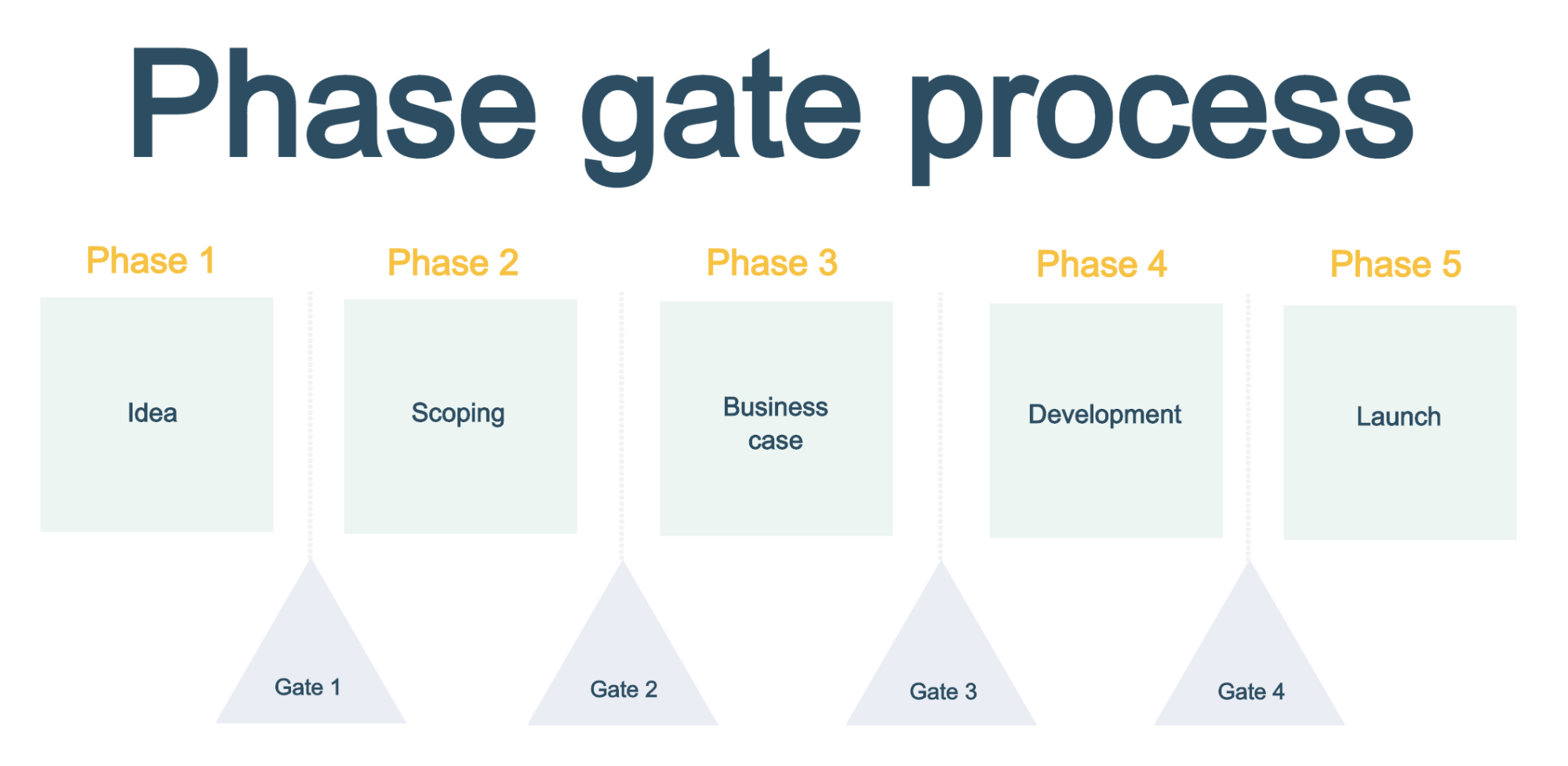
Phase-gate process
11
MENTIONS
3
EPISODES
3
PODCASTS
Search complete. 11 mentions across 3 episodes found for "Phase-gate process".
Oct 7, 2026

Andrew CheungHOST
Some of those decisions work out, others don't, and in almost every case, the root cause, when you trace it back honestly, is that the decision to commit to that launch date was made before the development process had generated enough evidence to support it.
Andrew CheungHOST
That is the problem in the Stage-Gate framework that was designed to solve, and it's what we're building on today.
Andrew CheungHOST
[upbeat music] What's up, everyone? And welcome back to Manufacturing Made Simple.
Andrew CheungHOST
I'm Andrew Cheung, and this is episode twenty-one.
Andrew CheungHOST
But before that, remember to hit the follow button on Spotify and also on Instagram at manufacturingmadesimplepod to support this podcast.
Andrew CheungHOST
A huge shout-out to those who have already done so, 'cause we see you, and the support has been huge on keeping us going.
Andrew CheungHOST
Episode twenty-one is the process architecture, the Stage-Gate framework, what the go and no-go decision criteria looks like at each gate, how scale-up fits into development timelines, and how to structure the contract manufacturer relationship to support rather than constrain the launch.
Andrew CheungHOST
Episode twenty-two next week is about what happens when launches go wrong, the most common failure modes across both industries, and how the postmortem thinking can become a proactive design tool rather than just a retrospective exercise.

Phil McKinneyHOST
At HP, we funded innovation in stages.
Phil McKinneyHOST
An idea had to earn its next round of money at a checkpoint we called StageGate.
Phil McKinneyHOST
where the team answered a set of questions before anything moved forward.
Phil McKinneyHOST
We ran four gates, market validation, customer validation, a limited launch, and then a full launch.

Trisha PillayHOST
And I think that distinction becomes even more important as we move towards AI systems that are just analyzing information, right, but increasingly capable of taking action themselves.
Trisha PillayHOST
But we spoke about this throughout, and that's the human element about this, right? Where does the human fit into that process as AI becomes more autonomous? You know, could visualization act as a decision gate, or does it give humans the context they need before AI actually takes that action?
Dan WilliamsGUEST
Yeah, I mean, it's fascinating watching all this play out.
Dan WilliamsGUEST
We took a kind of agnostic position on this.
Dan WilliamsGUEST
You're going to have to find a way to work with that AI.
Dan WilliamsGUEST
It needs to be able to tell you what it recommends in a clear, easy to understand way.
Dan WilliamsGUEST
So I think the decision gate aspect is one of these things where It really depends on what you're doing.
Dan WilliamsGUEST
If you need a decision gate, then some human is going to have to make that choice.