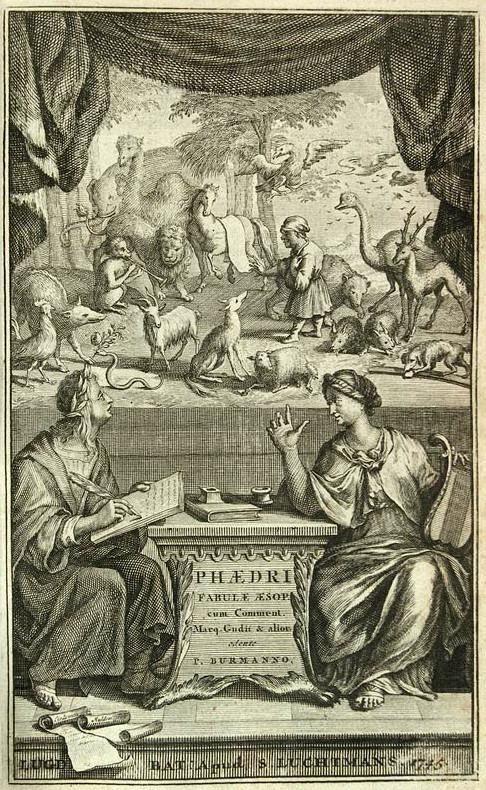
Phaedrus
FabulistWikipedia
50
MENTIONS
15
EPISODES
14
PODCASTS
Search complete. 50 mentions across 15 episodes found for "Phaedrus".
Sep 12, 2026

Michael ArmentaNARRATOR
The fabulist is to create a laugh, but yet, under a merry guise, to convey instruction.
Michael ArmentaNARRATOR
Phaedrus, the great imitator of Aesop, plainly indicates this double purpose to be the true office of the writer of fables.
Michael ArmentaNARRATOR
The continual observance of this twofold aim creates the charms that accounts for the universal favor of the fables of Aesop.
Michael ArmentaNARRATOR
The fable, says Professor K. O. Müller, originated in Greece in an intentional travesty of human affairs.
5 MINS LATER
Michael ArmentaNARRATOR
Socrates is mentioned by Plato as having employed his time while in prison, awaiting the return of the sacred ship from Delphos, which was to be the signal of his death, in turning some of these fables into verse, but he thus versified only such as he remembered.
Michael ArmentaNARRATOR
Demetrius Valerius, a philosopher at Athens around 300 BC, is said to have made the first collection of these fables.
Michael ArmentaNARRATOR
Phaedrus, a slave by birth or by subsequent misfortunes and admitted by Augustus to the honors of a freed man, imitated many of these fables in Latin iambics about the commencement of the Christian era.
Michael ArmentaNARRATOR
Abthonius a rhetorician of Antioch, A.D. 315, wrote a treatise on and converted into Latin prose some of these fables.

Michael ArmentaNARRATOR
The fabulist is to create a laugh, but yet under a merry guise to convey instruction.
Michael ArmentaNARRATOR
Phaedrus, the great imitator of Aesop, plainly indicates this double purpose to be the true office of the writer of fables.
Michael ArmentaNARRATOR
The continual observance of this twofold aim creates the charms that accounts for the universal favor of the fables of Aesop.
Michael ArmentaNARRATOR
"The fable," says Professor K O Müller, "originated in Greece in an intentional travesty of human affairs.
5 MINS LATER
Michael ArmentaNARRATOR
Socrates is mentioned by Plato as having employed his time while in prison awaiting the return of the sacred ship from Delphos, which was to be the signal of his death, in turning some of these fables into verse, but he thus versified only such as he remembered.
Michael ArmentaNARRATOR
Demetrius Valerius, a philosopher at Athens around 300 BC, is said to have made the first collection of these fables.
Michael ArmentaNARRATOR
Phaedrus, a slave by birth or by subsequent misfortune and admitted by Augustus to the honors of a freed man, imitated many of these fables in Latin iambics about the commencement of the Christian era.
Michael ArmentaNARRATOR
Aphthonius, a rhetorician of Antioch AD 315, wrote a treatise on and converted into Latin prose some of these fables.

Eric SanchezGUEST
A couple of things.
Eric SanchezGUEST
Benjamin, you know, the first century poet Phaedrus once said, things are not always as they seem, right? And as you know, wineries can be large facilities.
Eric SanchezGUEST
Some take 10,000 plus square feet on the small side, 50 to 100,000 feet on the medium size.
Eric SanchezGUEST
And there's several wineries that get bigger than that.

Michael ArmentaNARRATOR
The fabulist is to create a laugh, but yet under a merry guise to convey instruction.
Michael ArmentaNARRATOR
Phaedrus, the great imitator of Aesop, plainly indicates this double purpose to be the true office of the writer of fables.
Michael ArmentaNARRATOR
The continual observance of this twofold aim creates the charms that accounts for the universal favor of the fables of Aesop "The fable," says Professor K. O. Müller, "originated in Greece in an intentional travesty of human affairs.
Michael ArmentaNARRATOR
The ainos, as its name denotes, is an admonition, or rather a reproof, veiled, either from fear of an excess of frankness or from a love of fun and jest, beneath the fiction of an occurrence happening among beasts; and wherever we have any ancient and authentic account of the Æsopian Fables, we find it to be the same.
Michael ArmentaNARRATOR
Socrates is mentioned by Plato as having employed his time while in prison, awaiting the return of the sacred ship from Delphos, which was to be the signal of his death, in turning some of these fables into verse; but he thus versified only such as he remembered.
Michael ArmentaNARRATOR
Demetrius Phalerius, a philosopher at Athens around 300 BC, is said to have made the first collection of these fables.
Michael ArmentaNARRATOR
Phaedrus, a slave by birth or by subsequent misfortune, and admitted by Augustus to the honors of a freedman, imitated many of these Fables in Latin iambics about the commencement of the Christian era.
Michael ArmentaNARRATOR
Aphthonius, a rhetorician of Antioch, A.D. 315, wrote a treatise on and converted into Latin prose some of these Fables.

Michael ArmentaNARRATOR
Demetrius Valerius, a philosopher in Athens around 300 BC, is said to have made the first collection of these fables.
Michael ArmentaNARRATOR
Phaedrus, a slave by birth or by subsequent misfortunes, and admitted by Augustus to the honors of a freedman, imitated many of these fables, in Latin iambics, about the
Michael ArmentaNARRATOR
commencement of the Christian era.
Michael ArmentaNARRATOR
Apthonius, a rhetorician of
11 MINS LATER
speaker_6ADVERTISER
And right now, save up to $2,500 during our massive Labor Day event.
speaker_6ADVERTISER
Hurry into your local Sleep Number store today because we have your number.
Michael ArmentaNARRATOR
It also contained the Latin versions of the same fables by Phaedrus, Avinis, and other authors.
Michael ArmentaNARRATOR
This volume of Neverlay forms a complete corpus fabularum aesopicera, and, to his labors, Aesop owes his restoration to universal favor as one of the wise moralists and great teachers of mankind.

Maricel QuieNARRATOR
Originally they were in prose, but in time were put into verse by various Greek and Latin poets.
Maricel QuieNARRATOR
The most famous of these Latin poets was Phaedrus, who lived at Rome in the first century A.D.
Maricel QuieNARRATOR
Mere scraps of these early versions, however, remain.
Maricel QuieNARRATOR
In the fourteenth century the monk, Maximus Planudes, made a collection which he gave out as Aesop's.

Michael ArmentaNARRATOR
The fabulist is to create a laugh, but yet under a merry guise to convey instruction.
Michael ArmentaNARRATOR
Phaedrus, the great imitator of Aesop, plainly indicates this double purpose to be the true office of the writer of fables.
Michael ArmentaNARRATOR
The continual observance of this twofold aim creates the charms that accounts for the universal favor of the fables of Aesop.
Michael ArmentaNARRATOR
The fable, says Professor K. O. Müller, originated in Greece in an intentional travesty of human affairs.
5 MINS LATER
Michael ArmentaNARRATOR
Socrates is mentioned by Plato as having employed his time while in prison, awaiting the return of the sacred ship from Delphos, which was to be the signal of his death, in turning some of these Fables into verse; but he thus versified only such as he remembered.
Michael ArmentaNARRATOR
Demetrius Phalerius, a philosopher at Athens about 300 B.C., is said to have made the first collection of these Fables.
Michael ArmentaNARRATOR
Phaedrus, a slave by birth or by subsequent misfortune, and admitted by Augustus to the honors of a freedman, imitated many of these Fables in Latin iambics about the commencement of the Christian era.
Michael ArmentaNARRATOR
Athonius, a rhetorician of Antioch, A.D. 315, wrote a treatise on and converted into Latin prose some of these Fables.

Maricel QuieNARRATOR
Originally, they were in prose, but in time were put into verse by various Greek and Latin poets.
Maricel QuieNARRATOR
The most famous of these Latin poets was Phaedrus, who lived at Rome in the first century AD.
Maricel QuieNARRATOR
Mere scraps of these early versions, however, remain.
Maricel QuieNARRATOR
In the fourteenth century, the monk Maximus Planudes made a collection which he gave out as Aesop's.

Michael ArmentaNARRATOR
Demetrius Valerius, a philosopher at Athens around 300 BC, is said to have made the first collection of these fables.
Michael ArmentaNARRATOR
Phaedrus, a slave by birth or by subsequent misfortune and admitted by Augustus to the honors of a freed man, imitated many of these fables in Latin iambics about the commencement of the Christian era.
Michael ArmentaNARRATOR
Athonius, a rhetorician of Antioch AD 315, wrote a treatise on and converted into Latin prose some of these fables.
Michael ArmentaNARRATOR
This translation is the more worthy of notice as it illustrates a custom of common use both in these and in later times.
Michael ArmentaNARRATOR
The rhetoricians and philosophers were accustomed to give the fables of Aesop as an exercise to their scholars, not only inviting them to discuss the moral of the tale but also to practice and to perfect themselves thereby in style and rules of grammar by making for themselves new and various versions of the fables.
Michael ArmentaNARRATOR
Ausonius, the friend of the Emperor Valentinian, and the latest poet of eminence in the Western Empire, has handed down some of these Fables in verse; which Julianus Totanius, a contemporary writer of no great fame, translated into prose.
Michael ArmentaNARRATOR
Avenius, also a contemporary of Ausonius, put some of these Fables into Latin elegiacs, which are given by Nevelet, in a book we shall refer to hereafter, and are occasionally incorporated with the editions of Phaedrus.
Michael ArmentaNARRATOR
Seven centuries elapsed before the next notice is found of the Fables of Æsop.

Mike ArmentaNARRATOR
Demetrius Valerius, a philosopher in Athens around 300 BC, is said to have made the first collection of these fables.
Mike ArmentaNARRATOR
Phaedrus, a slave by birth or by subsequent misfortunes, and admitted by Augustus to the honors of a freedman, imitated many of these fables, in Latin iambics, about the commencement of the Christian era.
Mike ArmentaNARRATOR
Apthonius, the rhetorician of Antioch, AD 315, wrote a treatise on, and converted into Latin prose, some of these fables.
Mike ArmentaNARRATOR
This translation is the more worthy of notice, as it illustrates a custom of common use.
5 more episodes mention Phaedrus.
Create an account to see the whole feed, search across every transcript, and follow the entities you care about.