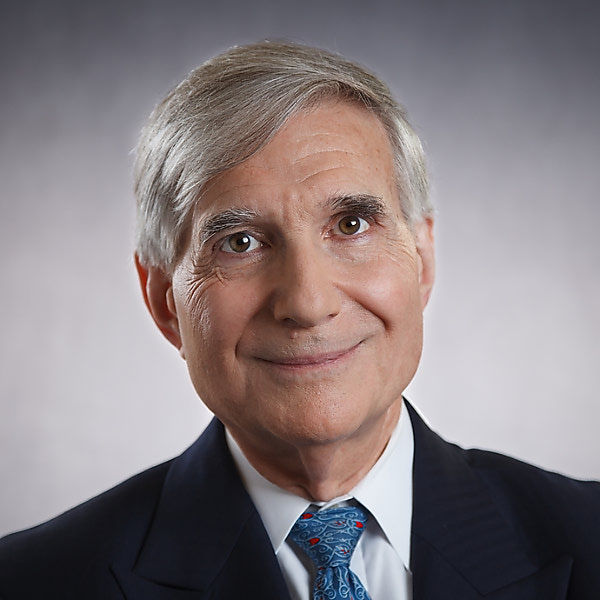
Peter Libby
American physicianWikipedia
4
MENTIONS
3
EPISODES
3
PODCASTS
Search complete. 4 mentions across 3 episodes found for "Peter Libby".
Oct 16, 2026

Jennifer AbbasiGUEST
It's a well-established risk marker for atherosclerotic cardiovascular disease, and there's strong epidemiological and genetic evidence suggesting that it's actually an important causal factor.
Jennifer AbbasiGUEST
One expert I spoke with, cardiologist Peter Libby at Brigham and Women's Hospital, said that if LDL is bad, Lp little a is horrible.
Jennifer AbbasiGUEST
But it's important to note that many have been waiting for the clinical trial results to conclusively prove that Lp little a is a causal risk factor and not just a risk marker.
Kate SchweitzerHOST
And that brings us to the clinical trial.

Davide CapodannoHOST
My name is, uh, Davide Capodanno from Italy.
Davide CapodannoHOST
I have the privilege, uh, now to have a conversation with Professor Peter Libby, cardiovascular specialist, uh, from Mass, uh, Brigham, Boston, and a professor of Medicine at Harvard Medical School.
Davide CapodannoHOST
Welcome.
Davide CapodannoHOST
Thank you for being with us.
8 MINS LATER
Davide CapodannoHOST
Now, this sounds encouraging and inspiring, particularly with this audience, because we are interventionists.
Davide CapodannoHOST
Sometimes we focus really on focal lesions, but, uh, uh, as I said, it's important to think, uh, uh, of treating atherosclerosis, uh, at large, and we have many, many pathways and many molecules, particularly in the inflammatory pathway, that we can target.
Davide CapodannoHOST
So with that, uh, I would like to thank, uh, uh, all the audience that watched this video, and thank you so much, uh, Peter Libby.
Peter LibbyGUEST
Great to work with you, Davide.

Geoff McDonoughGUEST
And in the case of cardiovascular medicine, the field has ticked through a series of risk factors that today we're all very well aware of, high blood pressure, high lipids, LP little A, and a variety of other, um, elements that, that increase risk of cardiovascular disease, which today remains the number one, uh, killer of, uh, people worldwide.
Geoff McDonoughGUEST
And about three decades ago, uh, a young professor at, at Harvard Medical School and at the Brigham and Women's Hospital here in Boston, Paul Rieker, he and his colleagues, Peter Libby and others, started to recognize that a reasonably high proportion of sometimes young and otherwise well patients were turning up in emergency rooms and operating theaters and cath labs with major cardiovascular events, heart attacks and other things.
Geoff McDonoughGUEST
But in the absence of the three or four well-established risk factors and drivers of disease, and that led to what came to be known as the inflammation hypothesis, the idea that our natural system that protects against infection and protects against signals of internal damage to the body had somehow become locked in the on position and was another risk factor that before that time really had not been recognized.
Geoff McDonoughGUEST
So over the past three decades, that hypothesis has moved through a series of really large clinical trials that have established not only that that chronic inflammation is present, but that it is also directly linked to an increased lifetime risk of cardiovascular events, and that it can be intervened upon with drugs that lower that inflammation risk.