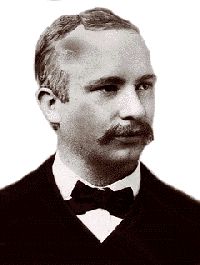
Peter J. McGuire
American labor leaderWikipedia
28
MENTIONS
18
EPISODES
16
PODCASTS
Search complete. 28 mentions across 18 episodes found for "Peter J. McGuire".
Sep 9, 2026

Josh LevsHOST
Here in the United States, we have just had Labor Day, which is a holiday officially to celebrate the social and economic achievements of American workers.
Josh LevsHOST
By the way, there are two different guys who are credited with creating it with similar names, Peter J. McGuire and Matthew Mugwire.
Josh LevsHOST
It's not quite clear which of them gets the credit, maybe both.
Josh LevsHOST
But I was thinking about labor over the holiday.

Aaron MahnkeHOST
Two different men are said to have been responsible for this parade, and it's extra confusing because they have almost exactly the same name.
Aaron MahnkeHOST
One was Peter J. McGuire and the other was Matthew McGuire, both from New Jersey, both heavily involved in the union.
Aaron MahnkeHOST
Peter was a carpenter and Matthew was a machinist, which is someone who works with machines that shape metal.
Aaron MahnkeHOST
They had other differences too.

Sarah Beth TerryHOST
Over 130 years.
Sarah Beth TerryHOST
Nobody is completely certain who invented Labor Day, but two men, Peter McGuire and Matthew McGuire, both have historical claims to it.
Sarah Beth TerryHOST
So we know that it was a McGuire or a Mugwire.
Sarah Beth TerryHOST
McGuire or a Mugwire.

Todd GleasonHOST
It's adapted from a story found on the United States Embassy to Sweden's website.
Todd GleasonHOST
Eleven-year-old Peter McGuire sold papers on the streets in New York City.
Todd GleasonHOST
He shined shoes and cleaned stores and later ran errands.
Todd GleasonHOST
It was 1863, and his father, a poor Irish immigrant, had just enlisted to fight in the Civil War.
Todd GleasonHOST
Workers were tired of long hours, low pay, and uncertain jobs.
Todd GleasonHOST
They spoke of organizing themselves into a union of laborers to improve their working conditions.
Todd GleasonHOST
In the spring of 1872, Peter McGuire and 100,000 workers went on strike and marched through the streets of New York City demanding a decrease in the long working day.
Todd GleasonHOST
This event convinced Peter that an organized labor movement was important for the future of workers' rights He spent the next year speaking to crowds of workers and unemployed people, lobbying the city government for jobs and relief money.

XOHOST
As some historians believe, his radical politics made him an inconvenient figure for the labor establishment to publicly credit.
XOHOST
So the more moderate Peter McGuire got the credit.
XOHOST
And Matthew McGuire, who apparently sent out the invitation to lead the parade, barely talked about his role.
CDAHOST
Okay.
9 MINS LATER
XOHOST
The relationship between Black workers and the labor movement.
XOHOST
because while white workers were marching in Labor Day parades and striking for better conditions, the major labor organizations of the late 1800s were often explicitly excluding black workers.
XOHOST
The American Federation of Labor, under Samuel Gompers, the same Samuel Gompers who co-founded the AFL with Peter McGuire, allowed affiliated unions to exclude black workers, and many did.
AZHOST
Wow.

NickHOST
We know that President Cleveland signed the bill, but nobody agrees on who invented the Labor Day holiday.
NickHOST
The official story credits Peter J. McGuire, a carpenter and co-founder of the American Federation of Labor.
NickHOST
The evidence increasingly points to Matthew McGuire, a machinist from Patterson, New Jersey, who may have been written out of the story because his politics ran too radical for the labor establishment's comfort.
NickHOST
144 years later, it's still disputed.
NickHOST
The other thing that I think is very funny is that nobody can agree who invented Labor Day and the two candidates are one letter apart.
NickHOST
Peter J. McGuire, the AFL's official story, is the carpenter and co-founder of it.
NickHOST
People say he invented the idea of this.
NickHOST
But it's pretty clear if you actually look at contemporaneous evidence that Matthew McGuire, not McGuire, McGuire.

Don NorcrossGUEST
And I think that has given a big breath of fresh air to the labor movement, to the close to 100 international unions that work day in and day out, to just give them a chance.
Don NorcrossGUEST
What Peter McGuire, the founder of Labor Day, said almost 150 years ago is, 40-hour work week, an eight-hour work day, and two days in a row that you can enjoy with your family.
Don NorcrossGUEST
We all want to work hard and make it, but you shouldn't have to work every day of the week, 10, 15 hours, in order to just pay your kids.
Don NorcrossGUEST
So that's why we're so passionate and why we started the labor caucus in Congress.

David WolinHOST
But on the American side, there is a bit of controversy.
David WolinHOST
For many years, Peter Maguire was considered the father of Labor Day, but turns out there was another Maguire, first name Matthew, and recently unearthed historical evidence points to Matthew as the one whose idea it was originally to create a holiday for honoring labor, especially those whose hard work is rarely recognized.
David WolinHOST
But the principle behind all of this, it's not secular, it's Christian.
David WolinHOST
The God of the Bible worked before we ever did.

speaker_4HOST
Notice the slight difference in spelling.
speaker_3HOST
Let's break down the heavyweight champion first, Peter J. McGuire.
speaker_3HOST
For decades, he was the guy in all the history books.
speaker_4HOST
Right.
8 more episodes mention Peter J. McGuire.
Create an account to see the whole feed, search across every transcript, and follow the entities you care about.