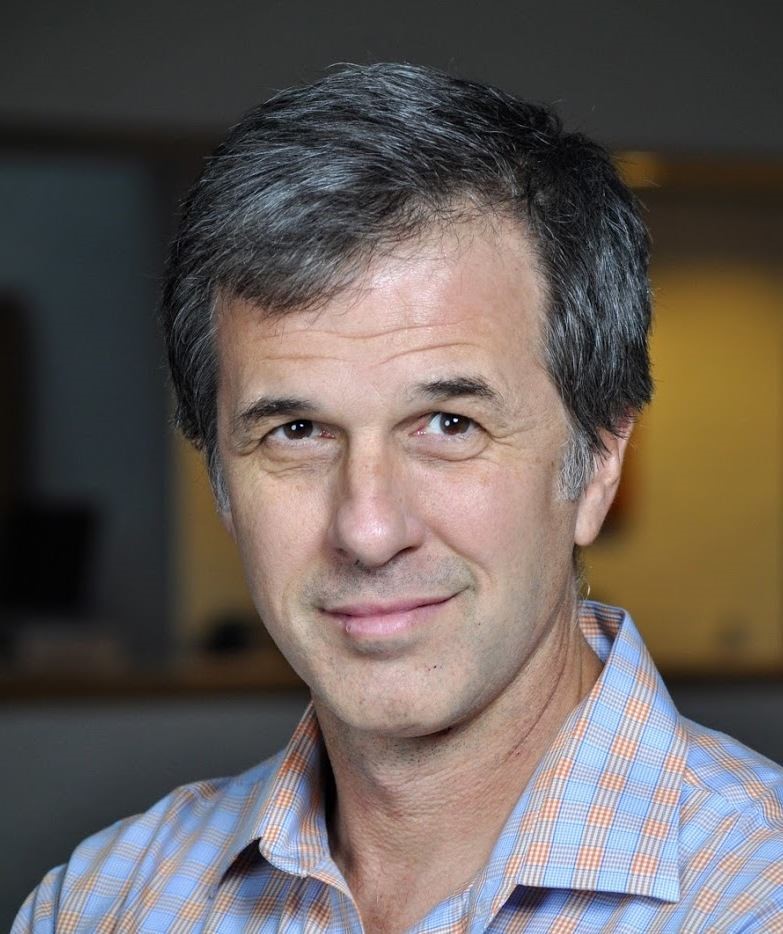
Peter J. Carroll
Occultist and writerWikipedia
14
MENTIONS
8
EPISODES
8
PODCASTS
Search complete. 14 mentions across 8 episodes found for "Peter J. Carroll".
Oct 23, 2026

Sanhre DaffowtGUEST
Yeah, there are many, many different types of witchcraft and many practices and even religions like Wicca that, you know, are distinct.
Sanhre DaffowtGUEST
I was a student of Peter J. Carroll, who was kind of the founding father of what's called chaos magic.
Sanhre DaffowtGUEST
And Pete and I ended up having some disagreements in our, you know, as student and teacher do eventually at some point.
Sanhre DaffowtGUEST
And our disagreements are basically about which interpretation of quantum physics we think is actually at play here, but also about the existence of what I would call spirits.

James EllisHOST
So this is from this picture, um, I found this just when I was creating this and I-- 'cause I wanted to use this page.
James EllisHOST
'Cause this like this is the uh page of sigil creation you could say, okay? We, we-- I will look at Austin Osman Spare in a bit, but in terms of the f- you know, the infamy of sigils as this magical technique, this is from Peter Carroll's Liber Null, you know, which really just completely popularized the sigil creation method.
James EllisHOST
And this is, uh, his draft page, okay? And him going through how you create a sigil.
James EllisHOST
And honestly, not that much has changed since then.
James EllisHOST
And what I basically want to do before we get to a bit more of the history is I want to unpack each term, each part, so you can just-- you go, "Right, now I understand what a sigil is." Okay? So let's unpack the definition.
James EllisHOST
Okay? So compressed, right? So from sentence to shape, right? From, from language, from something that we linguistically understand, like I'm talking right now, and you can understand it.
James EllisHOST
If I was talking in compressed glyphs, like let's just pop back, uh, here, these, these, um, little, uh, seeming squiggles on the right, okay, these are sigils, finished sigil right there on the right from, uh, Peter Carroll's page.
James EllisHOST
Okay? So that's a sigil.

Angel MillarGUEST
But I think there was only one woman present.
Angel MillarGUEST
And, uh, I was initiated by Peter Carroll.
Angel MillarGUEST
Ian Read was the Magister Templi of the temple.
Angel MillarGUEST
And then later joining Freemasonry and the Societas Rosicruciana in Anglia and other little things here and there.

Simon DydaGUEST
Do you really need that? I, I don't think so.
Matt HadfieldHOST
So I remember, I think it must have been very early 2000s, um, I was reading, uh, the late Peter J. Carroll's Liber Chaos, and he describes, uh, how he journeyed across India, I think it was India, um, in his youth, and had some of the most profound experiences of his life.
Matt HadfieldHOST
Um, he makes a point of it and suggests that the experience is, uh, crucial and formative to the sorcerer, and that really made a, a deep impression on me as a kid when I was, uh, you know, when I was s- first started reading about magic and, uh, specifically in this case, chaos magic.
Matt HadfieldHOST
Um, and I think it's one of the, one of the main reasons that I was really so inspired to travel when I was younger.

Lua AstorGUEST
We don't have the same books.
Lua AstorGUEST
We don't have libertails written by Peter Carroll.
Lua AstorGUEST
We don't have the amount of knowledge it is available for people who speak English.
Lua AstorGUEST
And here in Brazil, where I am right now, only 5% of population speak English and people like me, we have a heavy accent, right? Because it's not very common here.
Lua AstorGUEST
But of course, they want to know if it's worth buying or if it's just another book.
Lua AstorGUEST
And I told him, listen, I think the most different part of the book is adding stoicism and practice such as Prodigy Tatum Malorum to this book and also adding the journeys and the ordeals and the spells in such a way that I didn't see in English speaking world.
Lua AstorGUEST
Now, what is Chaos Magic? Chaos Magic, with this name, started in the 70s by Peter Carroll, Ray Sherring, and all the people, and they founded the Illuminatis of Thanatos, the love and death order in the UK.
Lua AstorGUEST
And it is about experimenting with the occult.

TomHOST
And then, uh, chaos magic, which is, uh, uh, occultism is kind of making a comeback, and it has these ties into quantum physics now.
TomHOST
And, and a lot of that was Peter Carroll, who wrote these chaos magic books in the '80s.
TomHOST
And one of the things that they use to, I guess, uh, energize a sigil is, is sexual energy.
TomHOST
So you could have sex-

Rob RubinHOST
It's kind of like what happened when chaos magic became popular and everybody learned about sigil magic.
Rob RubinHOST
The original theme of Peter Carroll was chaos magic is the end result of a lifetime of study of magic.
Rob RubinHOST
So now that you've studied magic for a lifetime, now you can cut corners.
Rob RubinHOST
Now you can do the shortcuts.

Christopher W. LittleHOST
It is this iconoclastic attitude that distinguishes chaos magic from more traditional occult traditions and positions it as a path of profound self-empowerment.
Christopher W. LittleHOST
The origins of chaos magic are firmly rooted in the late 20th century occultism, with its emergence marked by the publication of two seminal texts in 1978, Peter J. Carroll's Libre No and Ray Sherwin's The Book of Results.
Christopher W. LittleHOST
While Carol and Sherwin are widely considered the founders, the movement owes a significant debt to the earlier work of artist and occultist Austin Osman Spare.
Christopher W. LittleHOST
Spare, often called the grandfather of chaos magic, pioneered the use of sigils and the concept of gnosis as tools to empower them.
6 MINS LATER
Christopher W. LittleHOST
By embracing and working with the inherent unpredictability of life rather than resisting it, the magician learns to find calm within the storm and harness the energy of chaotic situations to actively sculpt their reality.
Christopher W. LittleHOST
A central application of the belief-as-a-tool philosophy is the practice of magical paradigm shifting.
Christopher W. LittleHOST
This technique involves deliberately adopting and inhabiting a different worldview for a set period of time, as suggested by Peter J. Carroll, who proposed using a die to randomly select a paradigm like paganism or monotheism for a week or a month.
Christopher W. LittleHOST
The purpose of this demanding practice is not mere intellectual exercise, but a profound spiritual application, to thoroughly decondition the magician from the ingrained mesh of beliefs, attitudes, and fictions that constitute their ego.