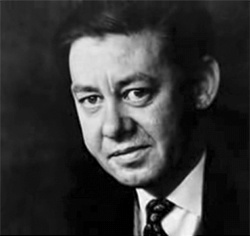
Peter George
Author
11
APPEARANCES
10
PODCASTS
Sep 13, 2026

Peter GeorgeGUEST
So I'll ask all of you, have you ever been to a meeting, let's say an hour long, and then after that meeting, you're walking down the hall thinking to yourself, I'll never get those 60 minutes back in my life.
Peter GeorgeGUEST
Granted, you have a bit more information, but if it's only information, whoever facilitated that meeting could have created a document and sent that off to us.
7 MINS LATER
Daniel LycisHOST
What's the practical technique for doing that in 30 seconds before you are on stage?
Peter GeorgeGUEST
You've been to meetings before, and I'm sure a good percentage of your listeners have too.
Peter GeorgeGUEST
So I'll ask all of you, have you ever been to a meeting, let's say an hour long, and then after that meeting, you're walking down the hall thinking to yourself, I'll never get those 60 minutes back in my life.
Peter GeorgeGUEST
Granted, you have a bit more information, but if it's only information, whoever facilitated that meeting could have created a document and sent that off to us.
7 MINS LATER

Peter GeorgeGUEST
[laughs] The ones who are like, "Yes, I was always hoping someone was gonna tell us why and maybe how public speaking will help our careers." But then you have people who go, "Really? I gotta listen to this guy.
Peter GeorgeGUEST
Otherwise, I'd be out on the golf course." I used to think when I was young that when all these people showed up, it's like, "Wow, these people are here for me." It didn't take long to learn, eh, a good portion of them, could be the majority, aren't here for me.
Peter GeorgeGUEST
The vice president say, "You gotta go." So when you know that some people aren't gonna want you there, talk to them and ask them why.
8 MINS LATER

Ian GatzkeHOST
Like, what advice do you have on, like, designing a great opening that earns the attention of the audience?

AbrahamHOST
Yeah.
AbrahamHOST
Now, the question is, how can someone use communication as leverage to increase their influence, opportunity and income?


Sarah NicastroHOST
So before we dive into Alfa Laval's journey, uh, related to, to service, and the, the transformation and the innovation that you've been leading, can you start with just telling everyone a little bit more, more about yourself, anything you'd like to share, uh, your role, and then for anyone who might not be familiar with Alfa Laval, just a little bit about the business.
Peter GeorgeGUEST
Um, yeah, so I've, uh, I've been working, um, in the engineering field or engineering domain for 38 years now, um, primarily within service.
Peter GeorgeGUEST
Um, and I've held, you know, sort of numerous roles within that, um, starting off as an apprentice and, um, I was a service center technician, then a field service engineer.
Peter GeorgeGUEST
Um, I currently work for Alfa Laval, uh, as you said, which is a, which is a Swedish company.
41 MINS LATER
Sarah NicastroHOST
And what about the R&D piece? Can you share a little bit more about the, the creation of that and, and the role that it serves?

Peter GeorgeGUEST
When you have an adrenaline rush, one of the things the brain does is recede in the part that governs memory.

Joy SekaniHOST
So in today's world of like social media and should I say short attention spans, What separates a truly memorable speaker from someone who is just simply sharing information?

FerdinandHOST
Now, can you tell us how our speakers should balance storytelling with facts and data? Should it be something that they've prepared already or should it just go with the flow as they are presenting?
Peter GeorgeGUEST
And storytelling and facts, again, people will not remember facts, but they'll remember concepts and they'll remember stories.
Peter GeorgeGUEST
So you can wrap up a fact in a story, but don't try to do that for the first time on stage or in the front of a room.
8 MINS LATER
FerdinandHOST
And can you tell us, with this new advent of AI and speech generation, what part of human communication skills will become even more valuable?

MosesHOST
So can you share one simple technique listeners can immediately use to become more engaging speakers?
Peter GeorgeGUEST
One is when you start speaking, get their attention right away, the audience's attention right off the bat.
Peter GeorgeGUEST
And the reason you want to do that is if you don't get their attention right away, You'll spend the rest of your talk trying to get their attention.
Peter GeorgeGUEST
And so don't get up there and say, I'd like to thank Peter for having me here today and allowing me to speak.
MosesHOST
How can people transform nervous energy into positive energy instead of allowing fear to control them?

JackHOST
nathan horrid so i've got the scorecard in front of me okay oh there you go run out by cheshua pajara who debuted also in that test match as well for him right
Peter GeorgeGUEST
yeah yeah that's right so um yeah i remember that going to third umpire and and thinking And I think that's the first ever game I played with a third umpire.
Peter GeorgeGUEST
So it was interesting to kind of be like, oh, I can see on the replay, oh, it looks like this is going to be out.
Peter GeorgeGUEST
Just my whole body just like froze up because I wasn't even that nervous later that obviously not very long later because I didn't last very long with the bat, nor did I usually.
Peter GeorgeGUEST
um but uh yeah i wasn't even that nervous when i had the ball in my hand just because i'd know how to bowl i just as my stats show i did not know how to bat so walking out to bat for australia in a test match um with this you know indian crowd cheering and making noise and you know the heat and the humidity and everything it was yeah like just unbelievable uh to think back on that and managing to hit osha for a little loopy bunt over mid off for a couple of runs um which is probably two more test runs than anyone thought i'd ever be able to get so i'm happy with that and uh that yeah so you know the memory of that that game then when we were um We obviously took the field very shortly after that.
Peter GeorgeGUEST
And, yeah, so we had Hilfenhaus and Mitch Johnson open the bowling and they... uh pointing gave me the nod pretty early i think johnson only bowled a couple of overs before i got the nod to come on from his end because they're like we want to keep him fresh because um uh dravid is his bunny so keep him fresh and once we get the first wicket then bring mitch johnson back on to take on dravid so i found myself bowling to say we're having my first over of test cricket I say I wasn't that nervous.
JackHOST
If you always get too worried about the could have, should have, you'll go insane.

Mariah TaylorHOST
And what is UnityPoint Health doing to redesign heart failure disease management? And how are you getting clinical and administrative leaders aligned on a new model?
Peter GeorgeGUEST
So what we're doing here at UnityPoint Health is really trying to build on some of the, um, uh, care, uh, care work that was, uh, you know, in a transformation phase the last several years.
Peter GeorgeGUEST
So in around twenty twenty-two, there was a heart failure transformation project that started here.
Peter GeorgeGUEST
Um, and they really incorporated things like HealthSnap, which is, um, an app for, uh, and a, and a company that deals in re-remote patient monitoring and chronic care management.
Peter GeorgeGUEST
There are A-drive, AI-driven, excuse me, care management protocols that can be utilized, things like patient education resources, support groups.
Mariah TaylorHOST
What aspect of this redesign has been the most difficult, and how have you overcome it?

Mariah TaylorHOST
And what is UnityPoint Health doing to redesign heart failure disease management? And how are you getting clinical and administrative leaders aligned on a new model?
Peter GeorgeGUEST
So what we're doing here at Unipoint Health is really trying to build on some of the care work that was, you know, in a transformation phase the last several years.
Peter GeorgeGUEST
So in around 2022, there was a heart failure transformation project that started here.
Peter GeorgeGUEST
And they really incorporated things like HealthSnap, which is an app and a company that deals in robotics.
Peter GeorgeGUEST
There are AI driven, excuse me, care management protocols that can be utilized, things like patient education resources, support groups.
Mariah TaylorHOST
What aspect of this redesign has been the most difficult and how have you overcome it?