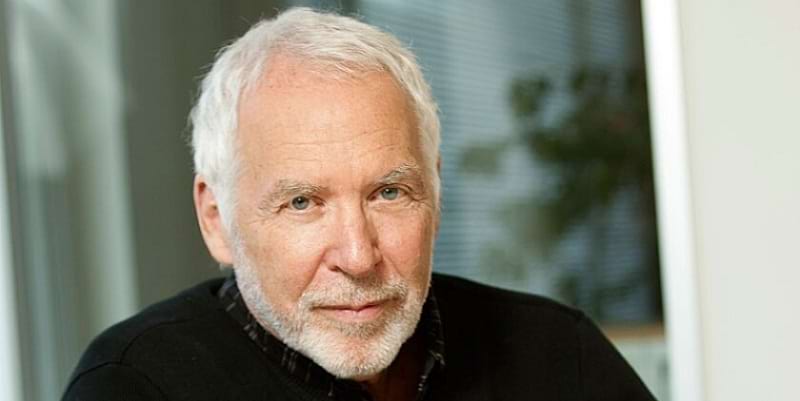
Peter Block
American author and consultantWikipedia
16
MENTIONS
7
EPISODES
6
PODCASTS
Search complete. 16 mentions across 7 episodes found for "Peter Block".
Sep 11, 2026

Tim FisherHOST
is where i got all my pearls of wisdom from it's like um i did look um i i read uh one on um And he says, I've done one in it.
Tim FisherHOST
I looked at Flawless Consulting with Peter Block.
Tim FisherHOST
But I actually read that book all the way through.
Tim FisherHOST
I didn't just do.
Rich DevineHOST
The fun days are gone.
Rich DevineHOST
You've realised there's not much to attract or achieve in life, so now you're trying to figure out what it's all about.
Rich DevineHOST
You're Peter Blocky.
Rich DevineHOST
You're trying to relive a brilliant conversation that we had with Peter Block.

Michael Bungay StanierGUEST
I'll always have somewhere between one and three questions just for the audience to make a mindful choice about how they want to be.
Michael Bungay StanierGUEST
So the ones I tend to go to and Peter Block was the guy who first told me this is a wonderful writer and a kind of mentor to me in many ways.
Michael Bungay StanierGUEST
First is how active and engaged do you plan to be over the next hour? How much risk are you willing to take over the next hour? How much do you care about the experience of other people in the room over the next hour? And what's the one thing you're looking to get from this experience with me over the next hour? So those are my kind of four go to, and all of them are invitations to show up to be courageous, to not be selfish, but also, you know, so to give as much as you take in the in the in the thing and to have a reason for being in the room.
Michael Bungay StanierGUEST
Because I'm a fan of that so called two foot rule, facilitator rule, which is like, if you're not learning anything, and if you're not contributing anything, use your two feet and go somewhere else.
11 MINS LATER
Michael Bungay StanierGUEST
Coaching can be succinct and part of what it means to work.
Michael Bungay StanierGUEST
And from that came the Coaching Habit book 10 years ago, and I've written other books since then.
Michael Bungay StanierGUEST
But 20 years ago or thereabouts, shortly after moving to Canada and Toronto, I worked on kind of what the hell am I here for? What's the why of the work? What's the purpose here? the language i use is to infect a billion people with the possibility virus that sounded slightly better before covert um but whatever i'm sticking with it the idea is i am trying to give people what peter block would say is responsibility for their own freedom we face choices all the time i'm trying to help people make the more courageous choice and i'm trying to put stuff out into the world that facilitates and enables and encourages that The virus metaphor works for me because I don't need to be the hero of this journey.
Michael Bungay StanierGUEST
I don't need to be the star.
Tim FisherHOST
And so finding the way of, yeah, asking that question.
Tim FisherHOST
It's like the question that... peter block was asking in our interview with with him rich you know what is your part in this what role do you want to play in this and asking that question and gently but consistently and so it's not enough to go oh you know here's the thing you've got to do it that's not part of the way and it's not enough either to just go oh hello you know you don't have to do this but it's quite good that's not going to work either is it so it's like trying to generate that informed consent and trying to take the family on a journey of what is possible and doing it and I think being invitational is like from your first conversation Whether that's on the phone or whatever, when you're sitting on the sofa.
Tim FisherHOST
I remember years ago, this very experienced manager had this thing called the sofa test.
Tim FisherHOST
And she would say, she would ask you as a worker to imagine yourself sitting.
8 MINS LATER
Rich DevineHOST
Yeah, I really like those four hesitations.
Rich DevineHOST
And also, I suppose what you're pointing to...
Rich DevineHOST
And this is something that we talked about with Peter Block a couple of weeks ago in terms of like organizational changes, like to expect a level of resistance and and to have that to be part of the process.
Rich DevineHOST
And it sounds like.

Randy WhiteGUEST
So these are concepts that have been kind of collected and compressed by people who've had to think through these things.
Randy WhiteGUEST
So Peter Block, Scott McKnight, these are real forces in the area of asset-based community development.
Randy WhiteGUEST
It's a big topic, probably not something we can cover in full today.
Randy WhiteGUEST
And so I'll get into kind of the philosophy and the process of ABC in a minute, but let's just take a step back a little bit and talk first about neighborhoods.
8 MINS LATER
Randy WhiteGUEST
In the second model, programs are the answer.
Randy WhiteGUEST
So it's really a different way of, it's a core philosophy that you have to decide, okay, which, if we're seeking the peace of a city as a church or as a faith-based nonprofit, or even as individuals, kind of what do we believe about community and about people? That's an important question to start with before you ever get to the process of what ABC looks like.
Andrew FeilHOST
Well, and what John McKnight and Peter Block have identified is that we're in a movement as a people that we are moving from the people are the solution, the community is the solution, to we need to export or outsource all of our problems to institutions.
Andrew FeilHOST
And they have a really good article I could link to where it talks about what schools are expected to do.

Katie AndersonHOST
it's really important to have clarity on roles and expectations.
Katie AndersonHOST
And I'm just thinking back to some of my earlier days of being an internal change leader, too, and and learning some of the skills of actually I learned from Peter Block about how to contract for roles and who owns what and how critically important that is, because not only hold ourselves accountable, but also for clarity, because a lot of times people expect the internal consultant to come in.
Katie AndersonHOST
And to do the doing and that your role maybe isn't just guiding and teaching and facilitating.
Katie AndersonHOST
And so how do you think about that? And how have you helped your team get better at that role of clarity in the organization?

Chad LittlefieldGUEST
Most meetings, most gatherings take on the format of one person talks and everybody else, one person holds the mic and everybody else just holds their breath.
Chad LittlefieldGUEST
waiting for like what they're gonna say or they don't speak up for fear of speaking, right? And so a lot of my work, another mentor, Peter Block, likes to joke that if his kids are asked, what does your dad do? They say, well, he breaks large groups up into smaller groups
Claire GrayHOST
for a living.
Chad LittlefieldGUEST
I think that I've followed in Peter's footsteps.
8 MINS LATER
Chad LittlefieldGUEST
And I'm going to need your help for that.
Chad LittlefieldGUEST
But I want to end 10 minutes early so you all have time to take a break before your next meeting.
Chad LittlefieldGUEST
that's your intent your context hook you're acknowledging someone's purpose you're being really clear on what we're not going to accomplish today and then i would say being very shaped by mentor peter block that who said without relatedness no real work can occur so even if you are an intact team who knows each other intimately have setting aside a moment for some connection before content which is you're inviting someone's humanity into the doing.
Chad LittlefieldGUEST
You're inviting somebody's human being into what is typically just a culture of doing,

Neil SpearsGUEST
We become known.
Neil SpearsGUEST
Peter Block says that every time we gather, we're creating the world we want to create.
Neil SpearsGUEST
So that can be around a Shabbat dinner table.
Kate MishkinHOST
Yeah.