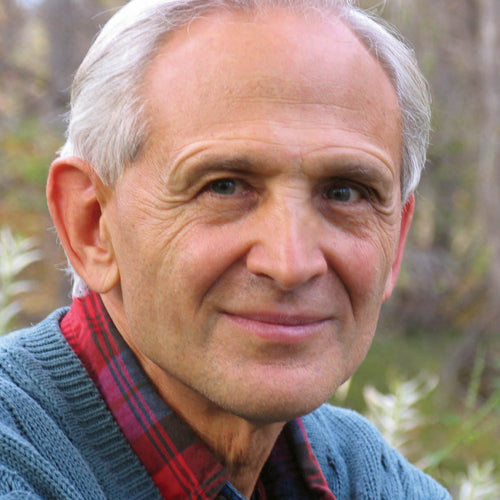
Peter A. Levine
Clinical psychologistWikipedia
83
MENTIONS
63
EPISODES
60
PODCASTS
Search complete. 83 mentions across 63 episodes found for "Peter A. Levine".
Nov 9, 2026

Benjamin HardyGUEST
I think it's almost impossible not to in life because a trauma isn't, you know, I can't compare my traumas to yours because trauma is a perspective.
Benjamin HardyGUEST
Uh, there's actually a good quote from Peter Levine.
Benjamin HardyGUEST
He's a, he's a trauma, um, Researcher, he said, trauma isn't what happens to you.
Benjamin HardyGUEST
It's what you hold inside in the absence of an empathetic witness.

Lorne BrownHOST
on a material level only, Newtonian, or you can go kind of quantum, which I think the mind-body part is.
Lorne BrownHOST
It just reminded me, when we were at that conference in California together, it was either Levine or Dan Siegel said that we now confirm that our reality has two dimensions, Newtonian and the quantum.
Lorne BrownHOST
Do you remember who said that one?
Peta StapletonGUEST
No, I don't.
Lorne BrownHOST
you hear that or did you hear that or did I only hear that?
Peta StapletonGUEST
Yes, yes, yes.
Peta StapletonGUEST
It was probably Peter Levine.
Peta StapletonGUEST
I'm trying to think.

Paula EngebretsonHOST
We're often constantly racing the clock and convinced we do not have enough time.
Paula EngebretsonHOST
Or our body might have thrown on what Peter Levine calls the emergency brake, where we drop into the dorsal vagal state.
Paula EngebretsonHOST
And this is where the body is so flooded by overwhelm or whatever emotions are coursing through the body that we get into a That freeze state, that shutdown state.
Paula EngebretsonHOST
So we struggle to make a decision on where to begin.

John DelonyHOST
I got laid out on a counter and my, the, the trained therapist sat behind me as we went through some of my childhood stuff and she just would touch my shoulder.
John DelonyHOST
And I mean, it was a whole body process out of the, like Peter Levine's work.
John DelonyHOST
Um, it was, it's to say it's astounding to, is an understatement.
John DelonyHOST
And so there are trauma-informed therapists that not only will talk to you about it, but will help your body heal and they'll do it alongside you.

John DelonyHOST
At the end of the day, I've started reexamining what I thought about trauma.
John DelonyHOST
And it's informed by Peter Levine, who we'll link to these books in the show notes, wrote an extraordinary book called Waking the Tiger.
John DelonyHOST
And I think that's the title of the book.
John DelonyHOST
Is that the title of the book? I think that is.
John DelonyHOST
At the end of the day, these – I've started re-examining what I thought about trauma.
John DelonyHOST
And it's informed by Peter Levine, who we'll link to these books in the show notes, wrote an extraordinary book called Waking the Tiger.
John DelonyHOST
And I think that's the title of the book.
John DelonyHOST
Is that the title of the book? I think that is.

Julie MerrimanHOST
A wave of feeling crests, it crests y'all, and it passes if you let it.
Julie MerrimanHOST
Peter Levine, who built somatic experiencing, calls this titration.
Julie MerrimanHOST
Small doses of something hard that your body can handle.
Julie MerrimanHOST
It's going to handle it.

Kat Caldwell MyersHOST
I believe The Body Keeps the Score or something like that.
Kat Caldwell MyersHOST
And there's another one, Waking the Tiger by Peter Levine.
Kat Caldwell MyersHOST
Ah,
Jason ConnellGUEST
yes.
Jason ConnellGUEST
I've been studying Peter Levine's intervention for the last three years.
Jason ConnellGUEST
So
Kat Caldwell MyersHOST
powerful.
14 MINS LATER
Jason ConnellGUEST
But if I was working with a client that was in your niece's situation, which is not unusual at all, first of all, we try to put it on easy mode.
Julie MerrimanHOST
Slower than that.
Julie MerrimanHOST
Peter Levine, who developed the somatic experiencing, calls this titration.
Julie MerrimanHOST
Taking in only as much sensation as a nervous system can hold.
Julie MerrimanHOST
So the body learns it can stay open.

Shoshana KrohnerGUEST
We also live in a society that kind of forces us to override a lot of our natural behaviors physiological and emotional responses to difficult experiences or traumas.
Shoshana KrohnerGUEST
I remember reading this book written by Peter Levine, who founded somatic experiencing therapy, and it was like a great example of how our like just normal medical experiences can lead to a blocking of these natural responses.
Shoshana KrohnerGUEST
He was recounting getting into An accident, a car hit him while he was walking.
Shoshana KrohnerGUEST
He was a pedestrian.
53 more episodes mention Peter A. Levine.
Create an account to see the whole feed, search across every transcript, and follow the entities you care about.