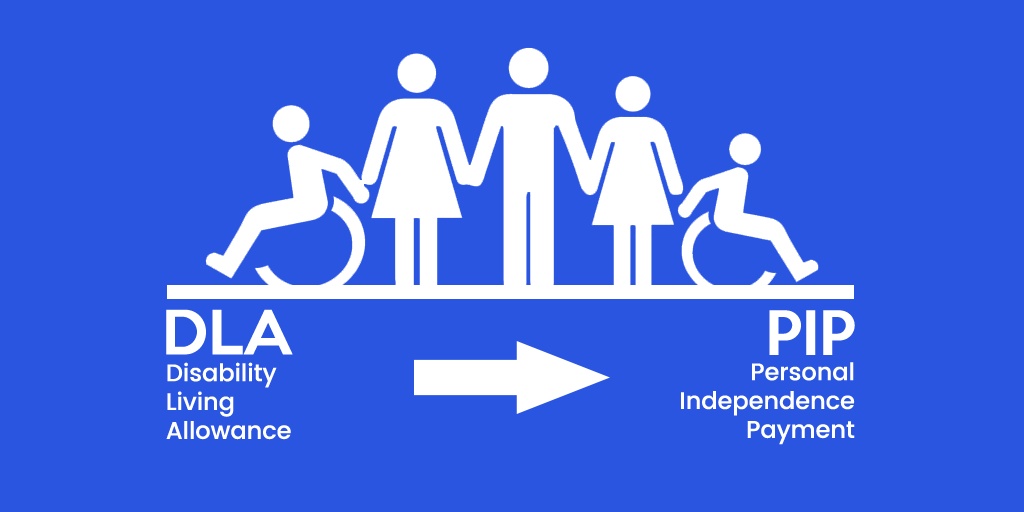
Personal Independence Payment
73
MENTIONS
16
EPISODES
14
PODCASTS
Search complete. 73 mentions across 16 episodes found for "Personal Independence Payment".
Oct 7, 2026

Steve MarshallGUEST
And once the clinician has done that, that then enables the patient or with support from their family or with support from a benefits advisor to actually access increased benefits.
Steve MarshallGUEST
So in the case of people under state pension age, that would be personal independence payment.
Steve MarshallGUEST
Uh, and for those over state pension age, that would be attendance allowance.
Steve MarshallGUEST
And, um, it's a significant amount of money for people.
Steve MarshallGUEST
Personal independence payment is a hundred and ninety-four pound a week.
Steve MarshallGUEST
So, um, and it's not means tested, so people can still be working.
Steve MarshallGUEST
It won't affect their pension.
LivHOST
And you mentioned that for a lot of people, that means they'd get those payments within two to three weeks.

Helen BarnardGUEST
So people's fear is if they take steps to, whether it's getting into work, whether it's getting out into their community, that that will be used to take away the support, which is their only means of survival.
Helen BarnardGUEST
And that is a well-founded fear because even though something like PIP is not supposed to be me- is not supposed to be linked to something like employment status, there are lots of examples where people have lost PIP because they did what everyone is telling them to do, which is try and get into work.
Helen BarnardGUEST
So reducing that fear is crucial to getting a system which actually gets the outcomes we want.
Helen BarnardGUEST
The third thing, really quickly, is when we're connecting people with support, it needs to actually work.
Helen WhatelyGUEST
Uh, it's not working for those who are seriously sick and disabled, who are often really struggling.
Helen WhatelyGUEST
We're talking about some examples of that.
Helen WhatelyGUEST
It's also not working for those who are less, uh, sick and disabled, but finding that, uh, having an income through a combination of Universal Credit, Universal Credit Health, uh, and PIP, uh, even though, of course, as you just said, Helen, that PIP is a benefit that you can get whether you are in or out of work.
Helen WhatelyGUEST
The reality of it is that people really worry that they will lose, uh, their PIP if they do work, and there are examples of people, in fact, for whom that has happened.

Allan RussellHOST
For some time now, RNIB, along with other charities, have been petitioning and questioning the UK government over its plans for a shakeup of the welfare system, and in particular, we're looking at personal independence payments today.
Allan RussellHOST
Now, they only form about eight percent of the overall DWP budget.
Allan RussellHOST
Fraud is very low, so why do the government want to make these changes? We've got, uh, Ross Megan from RNIB with us now.
Ben PaxtonGUEST
And some of that evidence base, those evidence gaps have led to some of the kind of disagreements we've seen between, for example, the OBR and the Treasury at some of the previous attempts to reform various parts of the social security system.
Ben PaxtonGUEST
In terms of what we can learn from the past, if we go back to spring 2025, setting aside the content of the reforms for a moment, there was a real problem of government not laying the groundwork and trying to explain why they were doing various parts of reform there, as well as the relatively crude approach that was taken to the cuts to PIP in that, which were unpopular on their own merits.
Ben PaxtonGUEST
there was also a real problem with political communication.
Ben PaxtonGUEST
And the lesson here is not that it's not possible to reduce spending on the social security system if that's your objective.
Tom PopeHOST
What would you like to see in this government's approach to tackling health-related inactivity? And maybe what is it that would make you and other Labour MPs more likely to support reforms?
Meg HillierGUEST
Well, first of all, I should say very clearly, we need to tackle health related inactivity.
Meg HillierGUEST
It is shocking that so many young people aged 18 are going straight on to PIP when they've got perhaps a mental health problem where the NHS needs to be stepping in and supporting them.
Meg HillierGUEST
So this solution isn't just one part of government.

Peter WhiteHOST
But first, with the party conference season now in full swing, and with welfare reform on just about all their agendas, it's still very hard to figure out what shape that reform might take.
Peter WhiteHOST
For instance, you would scan the government's interim report on its review of PIPs, or personal independence payments, in vain for any specific mention of visually impaired people – let alone any indication of what changes might be proposed to who is eligible and how much they might be entitled to.
Peter WhiteHOST
All we know for sure is that just about everyone is saying that the welfare budget needs to be cut.
Peter WhiteHOST
What we do know is that according to a report just out from the RNIB, only 13% of those interviewed think that PIPSC covers the extra costs that being blind or partially sighted imposes on them and that things are getting worse.
Mike WordinghamGUEST
So we're not driving the rise in the welfare bill.
Peter WhiteHOST
So are you in a position, do you think, to influence the government specifically from the perspective of visually impaired people? I mean, we were told in an interview we did a little while ago, there was just...
Peter WhiteHOST
One person on the 15 person steering committee, which has been considering the future of PIPs, who was actually visually impaired.
Peter WhiteHOST
So what contacts are you having which make you think that the government is listening to you?

GerardAUDIENCE
Why not just, for a start, put £25 a year on everybody's rate belt? which generates about 50 million, give or take, a year.
GerardAUDIENCE
And another thing, which would be slightly controversial, but again, wouldn't really hurt anyone, the likes of PIPs, which is non-means-tested benefit, reduce it by £5 a week for everyone.
GerardAUDIENCE
That generates another something like 70 million a year.
GerardAUDIENCE
So you're talking about targeting...
Stephen NolanHOST
It hasn't hurt anyone? You want to reduce PIP? You want to reduce benefit payments? People who are on a disability benefit, who you want to target?
GerardAUDIENCE
Even some people on the Gilex PIPs on the high rate of it, it's £800 a month, give or take.
GerardAUDIENCE
And some
Stephen NolanHOST
people are on a high rate of disability benefits because you need every penny of it in order to survive in this country.

Helen MillerHOST
Edwin, what are the terms of reference for that review? What are we expecting it to be talking about?
Eduin LatimerGUEST
So it's looking at- Options for reforming the disability benefit system, so that's personal independence payment for working age adults.
Eduin LatimerGUEST
Um, and it's broadly been set an envelope to not increase spending relative to current projections.
Eduin LatimerGUEST
So we're probably expecting it to either bring forward proposals which change how the system works, but roughly keeps the spending at the same level or bring forward proposals which they expect, um, might save money.
Helen MillerHOST
Um, but they've also said some other things of what they may or may not do, so maybe worth starting with one of those.
Helen MillerHOST
They've said they're not going to means test the benefit, although notably other people, Reform UK, for example, do still want to, uh, means test it.
Helen MillerHOST
Tom, I think this speaks to basically what personal independence payments are for.
Helen MillerHOST
Um, and in the chapter that you guys wrote, there was, uh, we spent a lot of time writing about the, the rationales for such a benefit.

NickAUDIENCE
And surely we're going to support people like that.
NickAUDIENCE
But that's different from just handing out PIPs.
NickAUDIENCE
left, right and centre.
NickAUDIENCE
It's

OliverGUEST
Thankfully, it was never tested.
Barry BurrellHOST
From BBC Radio 4's In Touch programme, We hear a little more about the review that's being carried out by the government into personal independence payments.
Barry BurrellHOST
Among the offerings from TNF Soundings, Roger Brooks will be along with another of his quizzes.
Barry BurrellHOST
There is also a feature about the visit of Laurel and Hardy to the UK back in the early 1950s.
6 MINS LATER
Eric MathisGUEST
Yes, myself some good news to share.
Eric MathisGUEST
Thanks, Toby.
Barry BurrellHOST
We'll hear next about the current situation into the government's review into personal independence payments.
Barry BurrellHOST
This comes from InTouch, which was broadcast on BBC Radio 4 on the 18th of August and was presented by Peter White.

Jeremy KyleHOST
Yeah
Thomas GodfreyGUEST
... need to be on, uh, personal independence payment.
Thomas GodfreyGUEST
But I just don't accept that the rates at which we're seeing it climb, uh, can be realistic, can be a genuine reflection of, uh, something wider going on in the country.
Thomas GodfreyGUEST
We know this morning a report out saying that autism and ADHD diagnoses, which lead to payouts for up to £10,000 a year for PIP, are rising fastest in wealthy areas.
6 more episodes mention Personal Independence Payment.
Create an account to see the whole feed, search across every transcript, and follow the entities you care about.