periodontitis
ConditionWikipedia
24
MENTIONS
6
EPISODES
5
PODCASTS
Search complete. 24 mentions across 6 episodes found for "periodontitis".
Nov 2, 2026

speaker_1GUEST
That is very true.
speaker_0HOST
Let's move from the tooth itself to the foundation, preventing periodontal disease.
speaker_0HOST
In the past, I've heard this described to patients like the foundation of a house slowly washing away.
speaker_0HOST
But that feels a bit, I don't know, passive.
speaker_0HOST
It's not just erosion, is it? It's more like friendly fire.
speaker_1GUEST
Friendly fire is a vastly more accurate biological analogy.
speaker_1GUEST
Periodontal disease is essentially an autoimmune-like response.
speaker_0HOST
Oh, really?

Gerald P. CuratolaGUEST
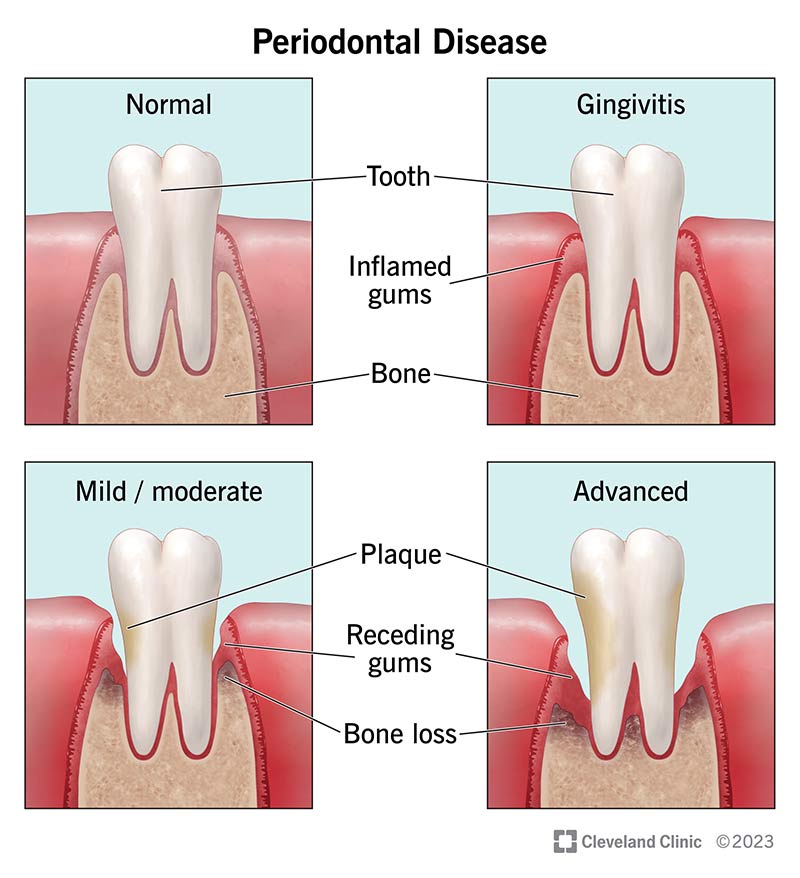
And starting with gingivitis, which is bleeding gums, which is not normal, to advanced periodontitis, which is you're losing your teeth.
Gerald P. CuratolaGUEST
So periodontitis and gingivitis, two different types of gum disease.
Gerald P. CuratolaGUEST
Periodontitis, destruction of the periodontal ligaments, a more invasive form of gum disease than gingivitis.
Gerald P. CuratolaGUEST
But gingivitis is a source of chronic inflammation.
Gerald P. CuratolaGUEST
Root canal infections, cavitations, we'll talk a little bit more about that.

Ian DunnGUEST
... anniversary celebration in the summer for them.
Ian DunnGUEST
And it's, it's been a real epiphany because, I, I mean I say this on the courses, and I said it when we were in Ireland, when we play that sound of periodontitis video, we fall into the trap as clinicians of, "Oh, it's just another patient with that same disease as the last one.
Ian DunnGUEST
I'll treat it the same and I'll move on," and, and it becomes a bit robotic and you forget the human side of perio.
Ian DunnGUEST
And-

Matt BennettHOST
It comes from the Romanian Journal of Diabetes Nutrition and Metabolic Diseases.
Matt BennettHOST
The title is Heart Rate Variability as a Predictor of Autonomic Dysfunction and Cardiovascular Risk in Periodontitis.
Matt BennettHOST
The authors are Vinitha Semmanathan, Saravanan Ayavu, Jayabano Murugiah, Kalyana Praba Prem Sundar, Rohini Pushparaj, and Thamara Selvi Kanagaraj.
Matt BennettHOST
Periodontitis is a chronic inflammatory disease of the supporting structures of the teeth, the gums, the periodontal ligament, and the bone of the jaw beneath the gums.
Matt BennettHOST
It is driven by the immune response to bacterial biofilm accumulation, and its epidemiology shows strong links to systemic cardiovascular disease.
Matt BennettHOST
The proposed mechanisms include bacteremia, bacteria entering the bloodstream from inflamed gum tissue, systemic elevation of inflammatory cytokines, and endothelial dysfunction driven by chronic peripheral infection.

Lucy MasukaGUEST
Established, it means that there were some studies which were done and evidence was found.
Lucy MasukaGUEST
So in terms of the diabetes, definitely there is a high risk of the patients who are having periodontitis making your diabetes worse.
Lucy MasukaGUEST
So in a sense that you get, um, the bac- the bacteria that is growing in your mouth, that is caused by this disease called a periodontal disease, and then what then happens is that your body starts getting an inflammation.
Lucy MasukaGUEST
That inflammation then gets transmitted to the system, which is now referred to as a systemic inflammation.
Lucy MasukaGUEST
So now that will affect the way your body controls the glucose, and then that now worsens your diabetes.
Lucy MasukaGUEST
So same ap- uh, uh, will apply with the other way around.
Lucy MasukaGUEST
When your diabetes is not controlled, it can also make the periodontal disease worse.
Lucy MasukaGUEST
It can also cause the bacteria to be, um, imbalanced in your body.
speaker_5HOST
And the pathogenesis behind that transition is highly complex.
speaker_5HOST
Periodontitis basically acts as an opportunistic infection.
speaker_5HOST
Plaque bacteria accumulate in the subgingival biofilm under the gum line.
speaker_4HOST
Underneath, yeah.
15 MINS LATER
speaker_4HOST
Let's do a quick recap of the entire deep dive.
speaker_5HOST
Sounds good.
speaker_4HOST
Periodontitis is a host destructive opportunistic infection.
speaker_4HOST
The plaque bacteria start the alarm, but your immune system's overreaction causes the physical damage.