Perfusion
20
MENTIONS
10
EPISODES
9
PODCASTS
Search complete. 20 mentions across 10 episodes found for "Perfusion".
Nov 1, 2026

Gabrielle Hutcheson DonaldsonHOST
Don't be ungrateful to a healthy body that God gave you, okay? But what are the six Halloween limb salvage lessons we should take away from this? Tissue viability is not determined by appearance alone.
Gabrielle Hutcheson DonaldsonHOST
Perfusion is fundamental for wound healing.
Gabrielle Hutcheson DonaldsonHOST
That's why we love vascular I love vascular, but this gentleman was a very bad person.
Gabrielle Hutcheson DonaldsonHOST
And I'm just going to call it like it is, okay? If you don't agree with me and say, oh, we have to be sympathetic towards them, don't contact me.

Laura DemingGUEST
You can think about...
Laura DemingGUEST
Perfusion, you can think about building just so many different types of hardware for every part of the protocol that you can imagine.
Laura DemingGUEST
For every one of those, there's multiple angles.
Laura DemingGUEST
It's like folks building the perfusion devices.

Giacomo ClericiGUEST
The waveform gives us important hemodynamic information, while toe pressure can provide additional information about distal perfusion.
Giacomo ClericiGUEST
Also, TCPO2 can be extremely useful.
Giacomo ClericiGUEST
Perfusion is not a number.
Giacomo ClericiGUEST
It is a clinical condition.
Justin WoolgarHOST
Yes, no, absolutely.

Michael DevineHOST
And with that, you can actually cut off the blood supply to the muscle.
Michael DevineHOST
So the treatment of that is basically releasing all of that tension, all that pressure, so that the muscles can breathe and get more oxygenation and blood flow.
Michael DevineHOST
And so that's a really, unfortunately, a common problem, but if it's addressed early, it's very fixable.
Kim McNicholasHOST
And Brett, so from your perspective?
Brett FreedmanGUEST
Rather than just accepting problems, we tried to come up with a solution.
Brett FreedmanGUEST
And we spent the time since 2008 and 2009 when we first met and started working on that other grant uh developing our solution to negative pressure wound therapy and wound therapy in general and that's uh where we're at today that's what we call the prevent uh because it prevents a lot of the negative effect of negative pressure wound therapy and in doing so it delivers a level of care that's been unmatched and we've been so happy to see that it's like uh our baby uh our baby's finally got legs and starting to walk and We're seeing amazing clinical responses for the thing you talked about, peripheral artery disease or peripheral vascular disease.
Brett FreedmanGUEST
And these wounds really thrive with the prevent because we do it at low negative pressure, which really helps with the blood flow to the wound base.
Brett FreedmanGUEST
But even where it came from, what's its trauma? In Ukraine right now, they're using our dressing to save soldiers injured in that war front with large open wounds like the ones we treated when I was in the army.

Maureen OsunaHOST
Turning the patient prone or on their stomach shifts the heart and abdominal contents so that their weight, their presence is off the lungs, allowing previously compressed areas to reopen and participate in gas exchange.
Maureen OsunaHOST
We also get with that better ventilation perfusion
speaker_1ADVERTISER
matching.
Maureen OsunaHOST
Now, if you've not heard this term before, ventilation perfusion matching, you've probably also then never heard of a VQ mismatch.
Maureen OsunaHOST
And V stands for ventilation, Q stands for perfusion.
Maureen OsunaHOST
And when we have a mismatch, the patient is not doing well respiratory-wise.
Maureen OsunaHOST
Now, if you want to dive into this in more detail, Go and check out episode 46, so an episode from the way back time machine, and you definitely want to dive into that so that you can understand this type of respiratory problem.
Maureen OsunaHOST
Basically, there's a mismatch between the patient ventilating and the perfusion that is going on.

Matthew BartonHOST
It's not saying what's been delivered at the tissue bed.
Matthew BartonHOST
So what's been delivered at the tissue? Because by definition, shock is inaccurate tissue perfusion and oxygenation.
Mike TodorovicHOST
Inadequate, yeah.
Matthew BartonHOST
Yeah.
Matthew BartonHOST
Only for so long.
Matthew BartonHOST
That's right.
Matthew BartonHOST
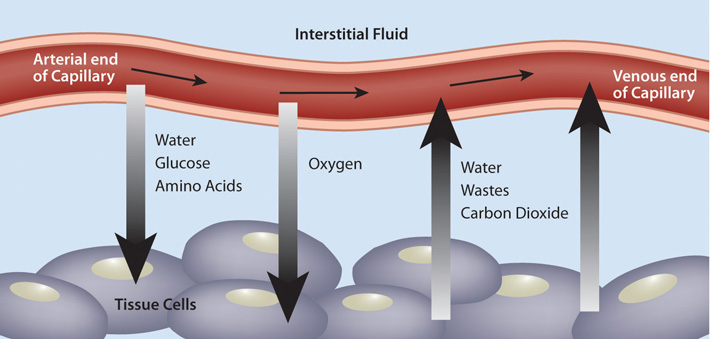
But that's not telling you necessarily at the tissue level because the tissue perfusion is a combination of the pressure difference between the arterial and the venous end.
Matthew BartonHOST
Yes.

Matthew SunHOST
This is Matthew Sun, Assistant Professor of Neurosurgery, brain tumor surgeon, and at UT Southwestern in Dallas, Texas.
Matthew SunHOST
Today, I have the pleasure of speaking with Dr. Alexandra Toldea and Dr. Riccardo Ludovichetti at University Hospital Zurich about their paper recently published in Neuro-Oncology Advances titled Prediction of Treatment Failure in Patients with Glioblastoma with Perfusion MRI and Molecular Biomarkers.
Matthew SunHOST
Alexandra and Ricardo, thank you for joining us today.
Matthew SunHOST
First, I'll just start out with an introductory question.
Riccardo LudovichettiGUEST
MGMT methylation, not early imaging progression, predicted long-term survival.
Riccardo LudovichettiGUEST
So this suggests a hierarchical approach.
Riccardo LudovichettiGUEST
Perfusion MR reflects early failures for closer monitoring, while MGMT status determines who actually lives longer.
Matthew SunHOST
Thank you so much for that summary, Ricardo.
Gabrielle Hutcheson DonaldsonHOST
That's such a big deal.
Gabrielle Hutcheson DonaldsonHOST
What do you believe is the most overlooked factor in wound healing? Perfusion, infection, pressure, nutrition, or something else? I'll use that oxygen.
Jayesh ShahGUEST
Oh, offloading, I think, is another overlooked factor.
Jayesh ShahGUEST
I think what in clinical practice I have found is most wounds don't heal when they're not properly offloaded 'cause, you know, you could use all advanced technology, but if you can't offload the wound, then that wound doesn't heal.

DHOST
Why? This drug only works on the blood that can get to the nephron.
DHOST
So if the patient has decreased perfusion...
DHOST
What does perfusion mean? Perfusion is the ability of the body to actually, um, um, use those resources, use up the oxygen, the vitamins, the nutrients, the minerals that are in the blood.
DHOST
Okay? That's what perfusion is.
DHOST
So if the patient's perfusion is decreased, the drug's not gonna work because only the blood that can get to the nephron will only, will, will, uh, be effective, okay? Let me make this bigger for you.