transcatheter aortic valve replacement
112
MENTIONS
32
EPISODES
19
PODCASTS
Search complete. 112 mentions across 32 episodes found for "transcatheter aortic valve replacement".
Oct 28, 2026

Christopher PfingstenHOST
There are other versions of the surgery that is usually not used in emergency situation where very similar to, you know, other vascularly inserted meshes for other vessels.
Christopher PfingstenHOST
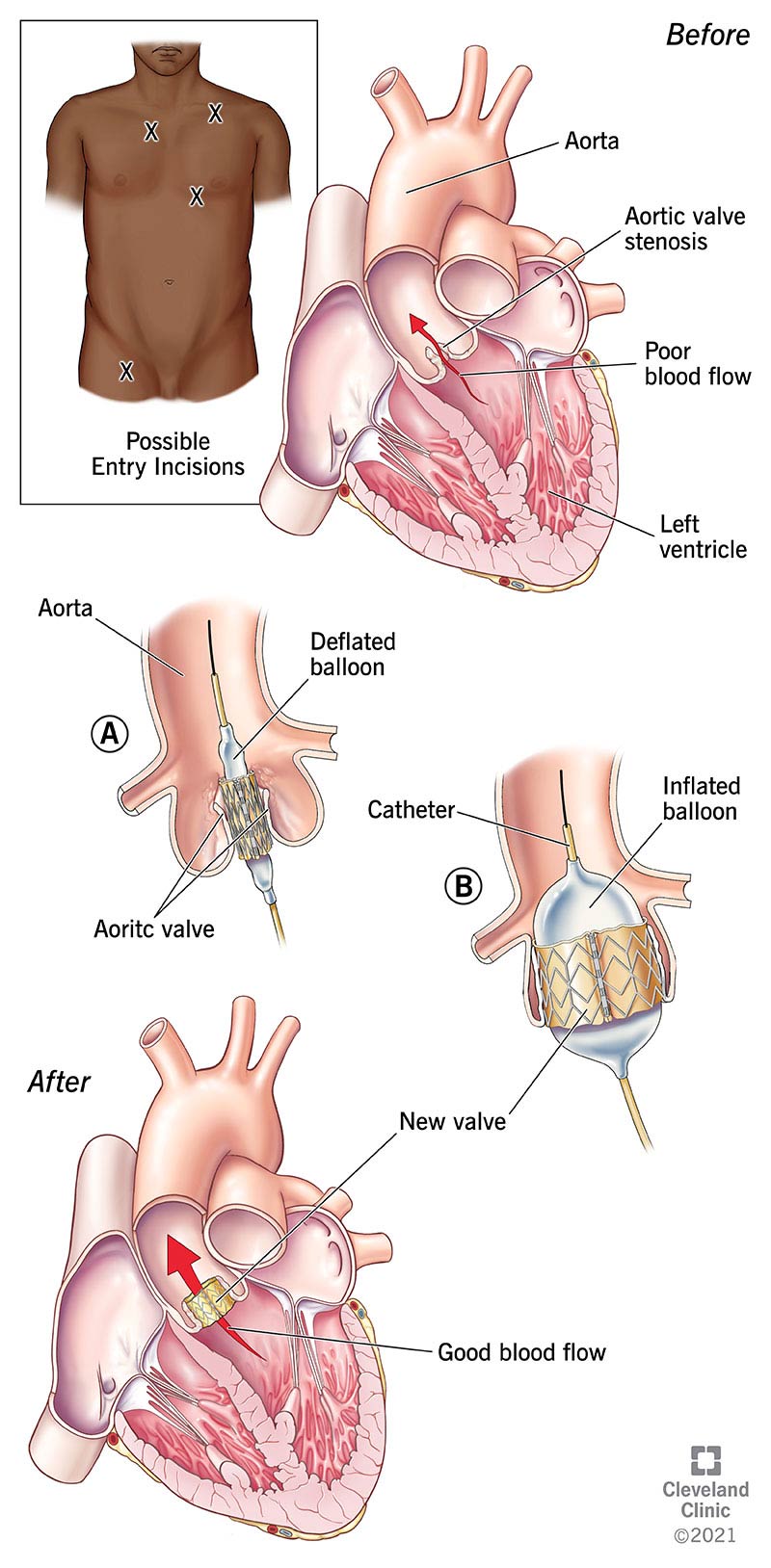
You have one that basically goes in, I believe it's called TAVR.
Christopher PfingstenHOST
I forget what it's called.
Christopher PfingstenHOST
But anyway, there's a there's a surgery where it's less invasive.

Akiva RosenzveigHOST
And then just as a final request, as the CardioNerds tradition, after every episode, we like to ask our experts, what makes your heart flutter about the future of not just the surgical management, but the management in general of pulmonary embolism, where the field is going, especially those with the highest risk presentations?
Joshua GoldbergGUEST
I think that up until really recently, the highest risk patient population, and we talked about high risk, we're not talking about TAVR in terms of high risk.
Joshua GoldbergGUEST
We're talking about the massive PE, those who are unstable, about to be unstable.
Joshua GoldbergGUEST
Those patients, even though we've had a lot of advancement in our understanding and technology, they still have an exceedingly high mortality rate.

José Luis PomarGUEST
So as a matter of fact, there was already something from Europe important pushing the cardiovascular surgery, I believe.
Mia LehtinenHOST
If we go back to those early conferences of IACs, the early annual meetings of 1980s, what were the topics that you had the most heated discussions on? You know, we have TAVR versus SAVR discussions or double memory discussions.
Mia LehtinenHOST
Were we talking about Bain against Lima or what were the things that were the hot topics in 1980s?
José Luis PomarGUEST
What do you think?

MarkHOST
So let me tell you guys about the past medical history.
MarkHOST
So she has a history of aortic stenosis, and she actually got a TAVR one year prior to admission.
MarkHOST
She has atrial fibrillation, and she's actually on a Pixaban and amiodarone for that.
MarkHOST
She has hypertension, hyperlipidemia, not obstructive coronary artery disease, chronic kidney disease with a baseline creatinine around 1.2, Heart failure with improved EF, and now the most recent EF, was 60 to 65, and a remote history of breast cancer, and she got a mastectomy and lumpectomy many years ago.
RahulGUEST
Was there any other headache in review of systems? Any positional change in the headache? Did anything change in this patient's life recently in terms of medication changes? Thinking about those hyperacute schemas, we think about any obstruction or hyperacute electrical discharge, but really understanding the problem.
RahulGUEST
Of course, we're going to give the volume, we're going to get an EKG, and you're worried about the bleed.
RahulGUEST
getting the you know hemoglobin and all those basic laboratory thing of course we can get that but trying to understand the problem if this because this patient has more vulnerability in the heart and she has got TAVR so definitely does this patient really have any complications of TAVR I mean, that doesn't cause, that should cause some kind of subacute to chronic manifestation, but that actually is kind of very unusual, but getting that EKG, making sure that we're going to look at all the leads.
RahulGUEST
I'm sure if she went to the ED, they're going to get the troponins.

Nima AghiliGUEST
I am an interventional cardiologist, a structural cardiologist at St. Anthony Hospital with Colorado Heart and Vascular.
Nima AghiliGUEST
I started our TAVR program about 10 years ago.
Nima AghiliGUEST
Started off obviously slow.
Nima AghiliGUEST
First year, I guess we did anywhere between 25 to 50.
Ashwin MurthyHOST
And we're going to be talking about HALT.
Ashwin MurthyHOST
And just to go over it definitionally, HALT stands for Hypoattenuating Leaflet Thickening, which really just describes an imaging finding.
Ashwin MurthyHOST
So Dr. Aguile, when you hear the word HALT, Well, what does that mean to you and others in the TAVR space?
Nima AghiliGUEST
You know, it's a very interesting question.

Jerry Wayne LongmireHOST
Because the grief affected me in a profound way.
Jerry Wayne LongmireHOST
I've not talked about it much, but my father was scheduled to have a TAVR procedure.
Jerry Wayne LongmireHOST
His heart is failing.
Jerry Wayne LongmireHOST
And...

Michael ReardonGUEST
Well, I think thinking that TAVR is going to fail and not joining this was the same mistake we made with angioplasty.
Michael ReardonGUEST
Early TAVRs were difficult.
Michael ReardonGUEST
In fact, in the very early, early days, the mortality was 50%, not 30-day mortality, 30-minute mortality.
Michael ReardonGUEST
Either it worked, you did great, or it didn't work, and you died.

Julian HofmannGUEST
It's got a new, um, kind of, uh, automated system that's coming in that can do soft t- tissue surgery, surgery.
Julian HofmannGUEST
It's called, uh, TAVR.
Julian HofmannGUEST
It's reorganizing that in order to make that as the, the main focus of that division.
Julian HofmannGUEST
And yeah, so it, it, it has these operational changes going on in the background, um, a- at the same time as you have certain, um, uh, macroeconomic problems which are affecting it and other med tech companies.

Joel DunningHOST
She describes this process not as a passive calcification, but as active inflammation, fibrosis as a very live and active process.
Joel DunningHOST
She proposed that maybe using systems biology, imaging, computational drug discovery, maybe we could intervene at the early stages so people with mild aortic stenosis seen on early imaging can be intervened with novel drugs and stop that calcification process it sounded pretty crazy but she says this is real this could happen and may actually happen so you know I actually started cardiac surgery saying well you know maybe PCI will take over from CABG this is in 2000 a while ago but you're never going to take away aortic stenosis so I was completely wrong with TAVR because I never thought that would work and And completely wrong about you could never take it away because maybe clever drug therapy will reverse calcification process on people in their 30s and 40s and 50s before it gets severe.
Joel DunningHOST
So well done, Alina Aikawa for scaring the hell out of this if you're a cardiac surgeon.
Joel DunningHOST
Of course, the most well-attended session is always the presidential address, and it was by the wonderful Rafa Sadaba.

Roxana MehranHOST
Uh, but will be a lot of conversation around that.
Roxana MehranHOST
But I think more importantly is some of these controversial issues that I think will be in the hallways talking about the TAVR and CD, where we're going from here, how do we, how do we make sure that the heart team isn't lost.
Roxana MehranHOST
I think that's gonna be a lot of...
Roxana MehranHOST
Because it's fresh and we are talking about it, and hopefully there'll be a session on that.
22 more episodes mention transcatheter aortic valve replacement.
Create an account to see the whole feed, search across every transcript, and follow the entities you care about.