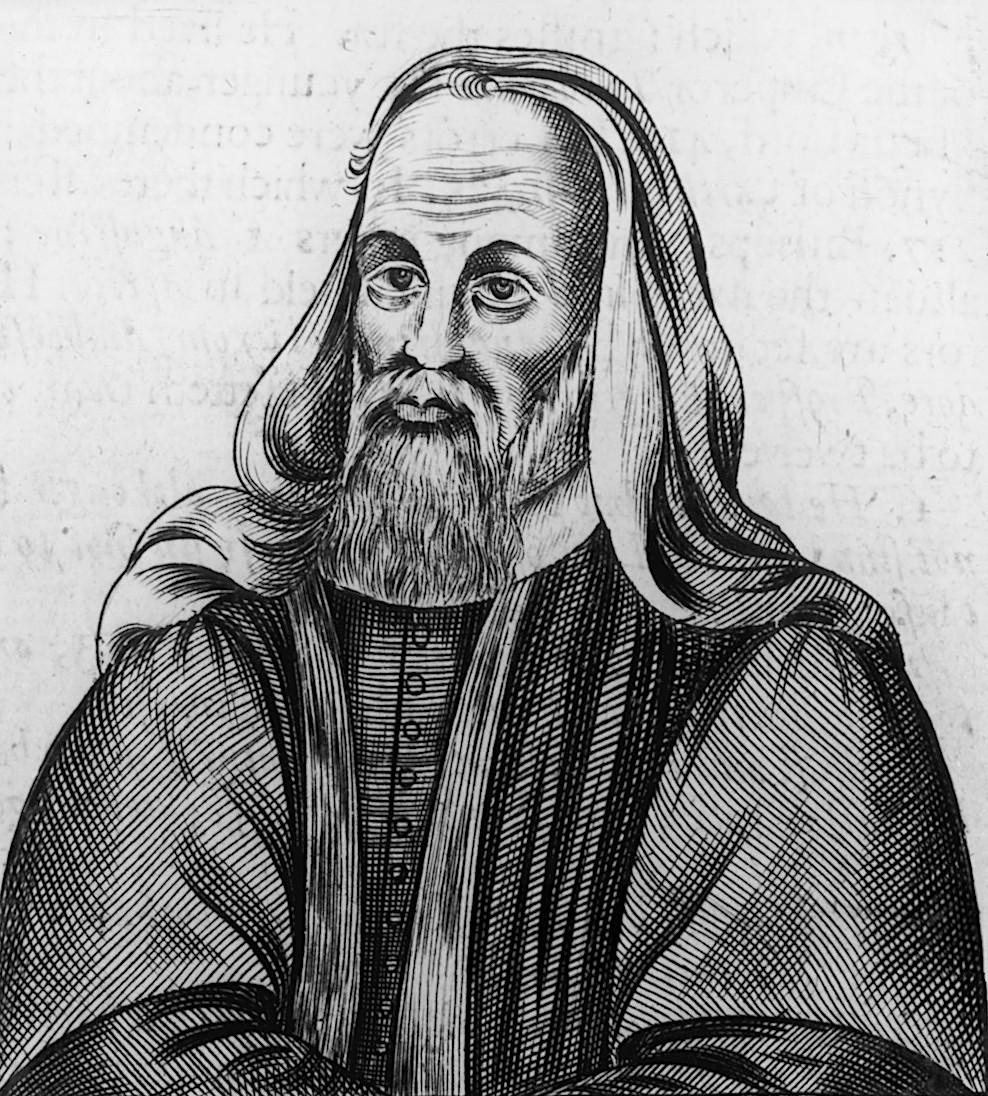
Pelagius
Theologian and christian monkWikipedia
89
MENTIONS
45
EPISODES
39
PODCASTS
Search complete. 89 mentions across 45 episodes found for "Pelagius".
Nov 2, 2026

C. Michael PattonHOST
Those who wished to avert despair and complacency, and to encourage men toward hope and endeavor, attributed more to free choice.
C. Michael PattonHOST
Pelagius taught that, once man's will had been freed and healed through grace, there was no need of new grace, but that eternal salvation could be reached through the resources of free choice.
C. Michael PattonHOST
Yet he taught this in such a way that man's salvation was owed to God, without whose grace man's will was not effectually free toward good.
C. Michael PattonHOST
This very power of the mind by which a man embraces the good he knows, turning himself away from what is contrary to it, is a benefit of the Creator, who might have produced a frog instead of a man.

Junius JohnsonHOST
Maybe it's sacraments versus non or a papal authority or not.
Junius JohnsonHOST
There's a couple of things you could pick from, but yeah, The predestination versus free will is an important one because you see it all the way from Pelagius forward.
Junius JohnsonHOST
It's a long-running argument.
Wesley WalkerHOST
Even before that, you see it in origin.

Justin HolcombPANELIST
That's what, when Augustine started praying like that, like, God, you command, but give what you command.
Justin HolcombPANELIST
Pelagius was like, oh, no, no, no, no, no, no, no, no, no, that's, that's not right.
Justin HolcombPANELIST
And in fact, it is.
Justin HolcombPANELIST
Putting all this together, I'm thinking, how would you shorthand this? Is that grace is not God grading.

Darrell FitzwaterHOST
He's got anything else.
Darrell FitzwaterHOST
Against Pelagius, right? So Pelagius was that British leader, priest, I think he was a priest, who was...
Darrell FitzwaterHOST
who's presented as being anti-grace, that you could save yourself by works.
Darrell FitzwaterHOST
It's a mix of your works and your grace that save you.
Darrell FitzwaterHOST
And then Augustine's arguments against Pelagius.
Darrell FitzwaterHOST
And then it's how he's articulating the doctrine of sin in response to Pelagius that we get original sin, and we get issues around depravity, and we come into all these other concepts.
Darrell FitzwaterHOST
And then, really, if you want to do a good study, a good juxtaposition, it's not Augustine against Pelagius.
Darrell FitzwaterHOST
It's Augustine in comparison to Chrysostom and Irenaeus.

Jordan CooperHOST
Monergism is when there is one worker and monoergos, so one work, one worker.
Jordan CooperHOST
And the notion of monergism versus synergism, as these terms are used in theology, comes from the debates between Augustine and Pelagius, as well as the later Pelagians.
Jordan CooperHOST
At least this is how these terms are used with reference to those debates, not that those are the particular terms that were used at the time.
Jordan CooperHOST
But this really relates to the question theologically of how it is that one converts.

Dave SnowdenGUEST
it's basically...
Dave SnowdenGUEST
I mean, I've made a distinction lately, sorry about this one, between two medieval theologians, all right? Sorry, this is my collective background, Augustine and Pelagius.
Dave SnowdenGUEST
I can't stand Augustine, all right? He wrote The City of God, and he basically spent his entire young life whoring and taking drugs, and then when he got too old for it, decided to become a bishop and stop
Joel MonkHOST
other people going down the same route, all right? Calvin loved him, which tells you everything.
Dave SnowdenGUEST
It's through the God.
Dave SnowdenGUEST
Everything requires a third party.
Dave SnowdenGUEST
Pelagius, who's a poor little Celtic monk, all right, who's just innocently writing stuff and is not a political player like Augustine, says, hang on a minute.
Dave SnowdenGUEST
The solution is out there anyway.

Jacob PraschHOST
Hyper-Calvinists and Reformed people stereotypically accuse people who are not Calvinists of being Pelagians.
Jacob PraschHOST
Pelagius was a heretical monk in England in the 4th century who was opposed by Augustine.
Jacob PraschHOST
One of the few good things Augustine did.
Jacob PraschHOST
Pelagius denied original sin.
Jacob PraschHOST
Denied sin.
Jacob PraschHOST
that an atom will buy.

Jane Sloan PetersGUEST
And he says there that the holy doctors became more precise about theological language as different heresies arose.
Jane Sloan PetersGUEST
The example he gives is Augustine writing before and after his encounter with Pelagius.
Jane Sloan PetersGUEST
So there's this need to become more precise when you have different errors to refute.
Jane Sloan PetersGUEST
And if you're a parent, you know this as well, because you find yourself saying things like, When I said don't touch him, I also meant don't breathe on him.

Aaron EdwardsHOST
And Pelagianism, especially important for Britain, hopefully we'll get time to talk about later.
Aaron EdwardsHOST
Pelagius was from Britain.
Aaron EdwardsHOST
And works, human effort is essential to salvation.
Aaron EdwardsHOST
We are essentially good.

Nick NeedhamGUEST
Yes.
Nick NeedhamGUEST
So we're talking about someone like Pelagius or Arius, you know.
Nick NeedhamGUEST
Yes.
Nick NeedhamGUEST
And I don't like either of them, but the reason I don't like them is because they were heretics.
35 more episodes mention Pelagius.
Create an account to see the whole feed, search across every transcript, and follow the entities you care about.