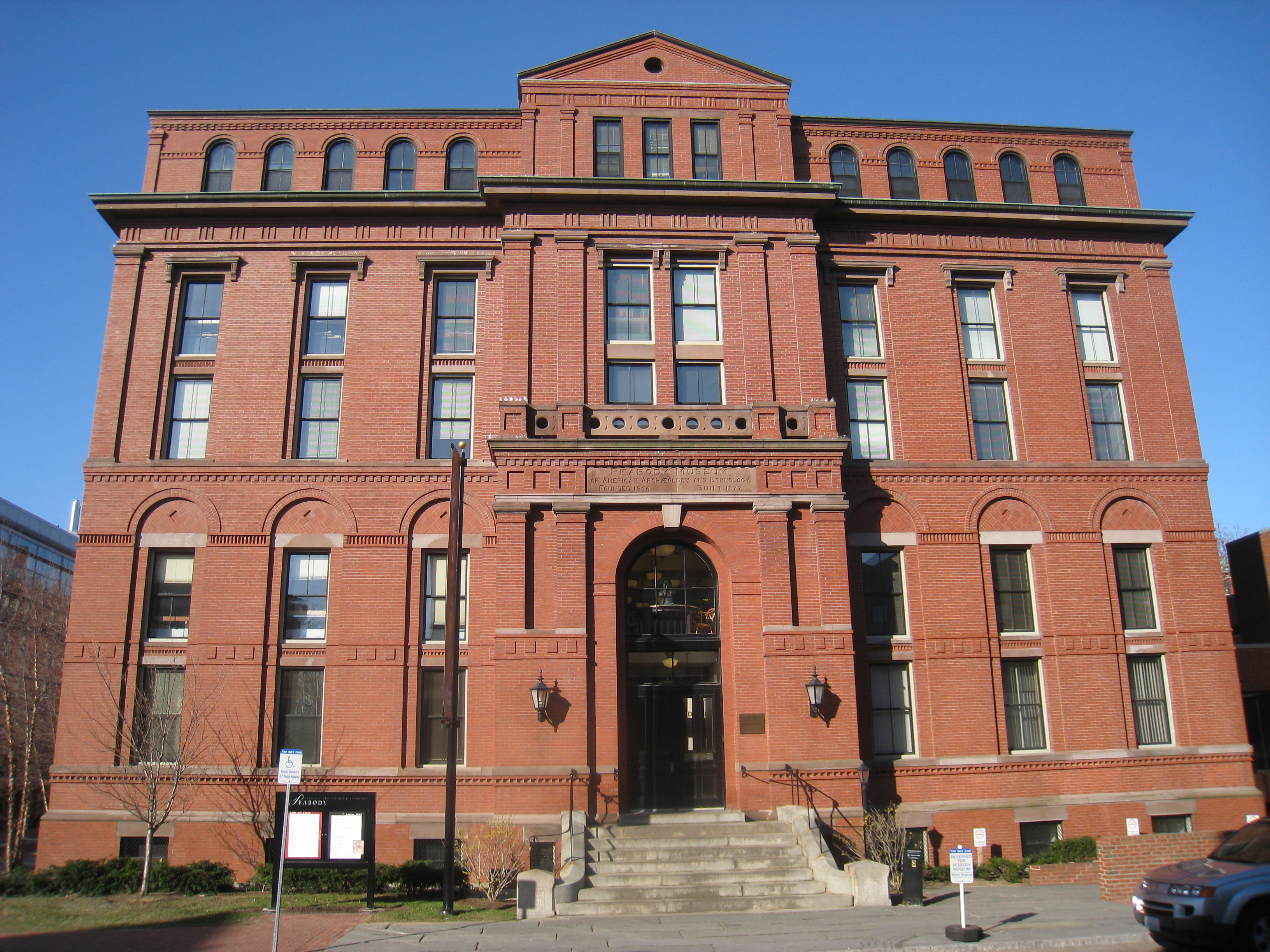
Peabody Museum of Archaeology and Ethnology
Museum in Cambridge, MassachusettsWikipedia
13
MENTIONS
6
EPISODES
6
PODCASTS
Search complete. 13 mentions across 6 episodes found for "Peabody Museum of Archaeology and Ethnology".
Oct 10, 2026

NickHOST
Diné ideas about harmful supernatural practice developed independently of that Christian tradition and carried their own categories, methods, and explanations for how one person might deliberately injure another.
NickHOST
So one of the most detailed later studies of those beliefs came from the anthropologist Clyde Cluckholm, whose Navajo Witchcraft was published by Harvard's Peabody Museum in 1944 after years of work with Diné informants.
NickHOST
Cluckone stressed that there was no single practice that could be neatly translated into the English word witchcraft, and he used English categories such as witchery, sorcery, wizardry, and frenzy witchcraft to separate different kinds of harmful supernatural activity described to him.
NickHOST
Those labels were Cluckone's analytical terms rather than proof that every Diné person in 1878 divided the subject in exactly the same way.

Alex FacianeHOST
It's by a fantastic poet and writer called George S. McHarg.
Alex FacianeHOST
who's from New York and who worked for decades about Golden Press and Doubleday before moving to Massachusetts in her later life to edit history and archaeology reports for the Michaels Institute for Conservation Archaeology at the Peabody Museum in Harvard.
Alex FacianeHOST
So shout out, George S.
Alex FacianeHOST
Seriously, this book is like pretty good.

Alec LitowitzGUEST
Where do these connect? The anthropology I chose was not physical anthropology.
Alec LitowitzGUEST
I did take one class over at Harvard at the Peabody Museum, but most of it was structural anthropology.
Alec LitowitzGUEST
And structural anthropology, for anybody who's listening, uh, was at the time, at any rate, was a lot about Claude Lévi-Strauss, and he thinks in terms of opposites, right? Life versus death, gender, male, female.
Alec LitowitzGUEST
What are those? They're binaries.

speaker_4NARRATOR
There was a famous incident in the department.
speaker_4NARRATOR
Jane had one of her disappearing spells, an unexplained absence that worried her classmates and drew whispered speculation in the hallways of the Peabody Museum.
speaker_4NARRATOR
When she finally resurfaced, she strolled into the Peabody Museum smoking room and announced calmly that the rumors of her death had been greatly exaggerated.
speaker_4NARRATOR
It was the kind of entrance that became legend in a small, tight-knit department where everyone knew each other's business.
speaker_4NARRATOR
Her academic specialty was Near Eastern archaeology, specifically the Neolithic period, roughly 5,000 to 6,000 years before the Common Era.
speaker_4NARRATOR
Agriculture replaced foraging.
speaker_4NARRATOR
Civilization as we would eventually understand it was being invented.
speaker_4NARRATOR
Jane worked at Harvard's Peabody Museum of Archaeology and Ethnology, one of the oldest anthropology museums in the world.

speaker_3NARRATOR
So what's actually documented? There were indeed excavations in the Serpent Mound area in the late 1800s.
speaker_3NARRATOR
The Peabody Museum at Harvard funded work there.
speaker_3NARRATOR
Archaeologists described burials, grave goods, and the structure of the mound.
speaker_3NARRATOR
They mapped post holes, noted hearths, catalogued pottery and stone tools.