PDCA
23
MENTIONS
12
EPISODES
12
PODCASTS
Search complete. 23 mentions across 12 episodes found for "PDCA".
Sep 13, 2026

speaker_1HOST
Exactly.
speaker_1HOST
And the engine driving this continuous improvement at Toyota was something called the PDCA cycle.
speaker_1HOST
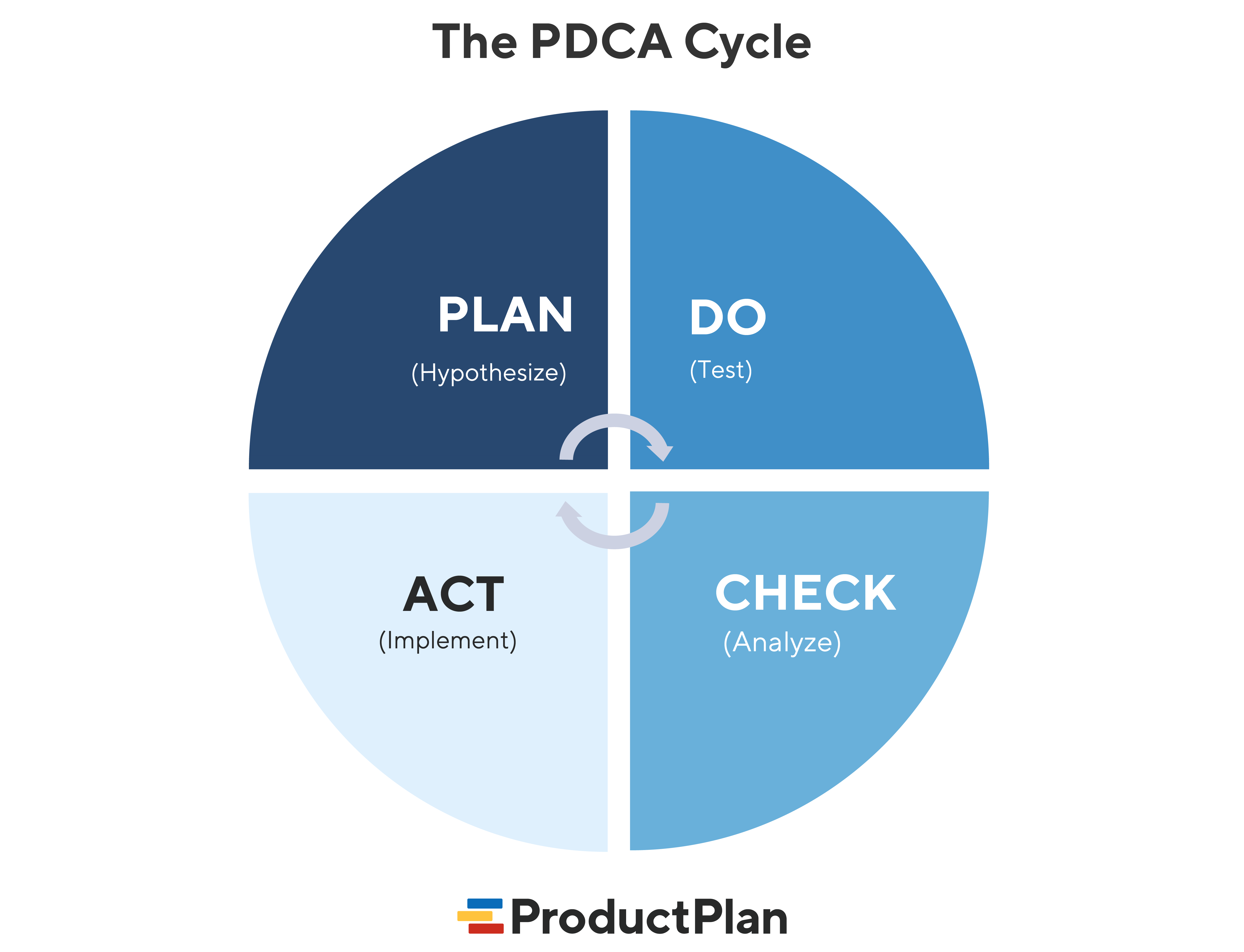
Plan, do, check, act.
speaker_1HOST
It was a rigorous scientific method for testing changes.
speaker_1HOST
But we can adapt this industrial cycle brilliantly for our own personal development.
JonathanHOST
Okay, let's test this.
JonathanHOST
Walk me through what a personal PDCA cycle actually looks like for a normal person in a normal week.
JonathanHOST
Because frankly, the idea of doing a check phase sounds like I'm holding a corporate performance review with myself, which just sounds miserable.

Edwin CarringtonHOST
So treat the refreeze as a checkpoint, not a permanent state.
Claire MunroHOST
and leaner PDCA is the one for smaller iterative fixes.
Edwin CarringtonHOST
Test, learn, standardize.
Edwin CarringtonHOST
Best when you're improving a business process or optimizing a workflow, where learning by doing beats a top-down design document.

Massimo RigottiGUEST
i was getting any better and i think this draws from just my own personal as you pointed out i'm kind of that high achieving type i wanted to continuously find a way that i was going to better myself and for me it just was gone i'm i'm sober but i'm that's just this is it i'm just going to be sober and It came to me all at once, honestly.
Massimo RigottiGUEST
I got the crazy notion that I could run my own brain through the Deming Cycle, which is used in manufacturing, to continuously improve my thought processes and thereby improve my thinking and lessen my dependence on, you know... going back into use of alcohol and so reducing that.
Massimo RigottiGUEST
And so sober stands for stoic, observe, behavior, execute, and restore.
Massimo RigottiGUEST
And since it works on a continuous improvement cycle, you're starting out reflecting upon something by actually embracing the stoic philosophers that that are out there uh you know marcus aurelius always comes up for most people as the initial thought uh because he is the most famous of the stoics um being the emperor of rome and the most powerful man on earth 2 000 years ago who was in his tent out on the battlefield, but reflecting about about all of the things that were wrong with him when he was arguably the most powerful person alive at that moment.

Mark DeLuzioHOST
Isn't that interesting? So you can put all the Japanese stuff you want on your wall and have all the dolls and all the fanfare and throw out and argue about Genba versus Genba or, you know, which, what's the right way to say it.
Mark DeLuzioHOST
You know, you can argue about PDCA versus PDSA.
Mark DeLuzioHOST
You can have those pedantic conversations to make yourself look like, you know, something.
Mark DeLuzioHOST
You could talk about how much sushi he ate last night.

Brian GubernickHOST
When it came back from Japan, though, as plan, do, check, act, he pushed back.
Brian GubernickHOST
He did not want that word check, but PDCA has kind of stuck.
Brian GubernickHOST
In English, check, the word check means to inspect.
Brian GubernickHOST
It means to audit.

Benjamin CarterHOST
A little.
Benjamin CarterHOST
I see 5S, PDCA, and 5Ys as scaffolding for a deeper rewrite.
Benjamin CarterHOST
Shifting the inner script from, if I surface a problem, I'm a nuisance, to, finding a better way is my job, and I'll be backed for it.
Maya CollinsHOST
So we're arguing means versus ends.

Jamie RamsdenGUEST
We do the experiment.
Jamie RamsdenGUEST
So it's in the manufacturing world, it's called plan, do, check, act, the PDCA loop.
Jamie RamsdenGUEST
And, you know, so we do the thing.
Jamie RamsdenGUEST
We have a hypothesis.

Brye SargentHOST
[chuckles] But when you run it on purpose, it actually runs smoothly, and nothing falls through the gaps, and nothing ever gets missed.
Brye SargentHOST
Now, you might be thinking that this is the plan, do, check, act cycle that they teach us in safety management, and the PDCA cycle is way different than what I'm talking about in the safety management cycle.
Brye SargentHOST
The PDCA was actually created as a generic, like, quality and process improvement loop, and we do run it inside of our safety management cycle.
Brye SargentHOST
We don't call it that, but there are pieces of it in there.
Brye SargentHOST
But you can't just run a PDCA and think that it, it's covering your whole safety program.
Brye SargentHOST
The, the safety management cycle, when it is purpose-built for safety, it captures everything involved in safety, even the day-to-day recurring tasks or the month to month or the week to week, all the things to make sure that you're catching all of your gaps and you're not missing anything.
Brye SargentHOST
It includes the people, the behaviors, the coaching.

Alan LothianHOST
If you go back to football, actually at the end of the day, I just see huge amounts of correlation.
Alan LothianHOST
You mentioned PDCA.
Alan LothianHOST
They do PDCA in literally every single facet of football.
Alan LothianHOST
Match to match, the player, the individual, they all have their own individual training programs that get adjusted based on how they've been performing.
Alan LothianHOST
There's so much science, data, information that's used.

Ran ChenHOST
It’s about auditing the concrete pouring process and verifying that the team is using the correct mixture and techniques as defined in the plan.
Ran ChenHOST
Manage Quality is also where continuous process improvement happens, often using models like the Plan-Do-Check-Act, or PDCA, cycle.
Ran ChenHOST
In contrast, Control Quality is also known as Quality Control or QC.
Ran ChenHOST
It is product-oriented and focused on detection.
2 more episodes mention PDCA.
Create an account to see the whole feed, search across every transcript, and follow the entities you care about.