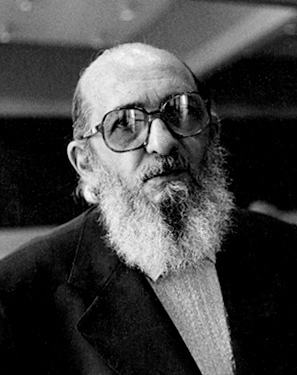
Paulo Freire
Brazilian educatorWikipedia
55
MENTIONS
32
EPISODES
30
PODCASTS
Search complete. 55 mentions across 32 episodes found for "Paulo Freire".
Oct 31, 2026

Chris MunceHOST
And I think that's where we are right now in 2026.
Chris MunceHOST
We also talked about Paulo Freire and his role to play in this problem and the banking model and how you can call teacher-led instruction banking.
Chris MunceHOST
And once you've done that, you've left the pedagogical debate about how kids learn and you've entered the moral one.
Chris MunceHOST
And in a moral debate, evidence doesn't matter.

Andrew LipsonHOST
So I want, this is actually gonna be a four part series.
Andrew LipsonHOST
Like we're going to be reading something from Paulo Freire, Sam Farber as well.
Andrew LipsonHOST
And this guy Gatto, I can't remember his last, his first name, but critics and people who write about education.
Andrew LipsonHOST
And those were the, these four readings are ones that I want to cover.

Mike RapiciHOST
So basically, Ivan Illich kind of comes on the scene as an education theorist and a kind of radical education theorist.
Mike RapiciHOST
Somebody who would be read along with Paulo Freire, just sort of thinking about new ways.
Mike RapiciHOST
You know, there's a critique of the school theory.
Mike RapiciHOST
that he was very famous and critique of the education and a critique, particularly of the bureaucrat, bureaucratization, alienation of modern education systems.
Mike RapiciHOST
Each time it has been a radical analysis that changes our perception of what is really going on.
Mike RapiciHOST
Let me add a little bit more flesh to that boat.
Mike RapiciHOST
Moving from education to medicine to sex roles, actually, I mentioned about Paulo Freire, but one could also say that Michel Foucault, with his historiographical analysis of the medical clinic and the birth of the clinic, the prison and discipline and punish, history of sexuality, sex roles, and the very idea of sex being the formation or the foundation of identity, medical apparatuses, various essays on biopower.
Mike RapiciHOST
He kind of invents these categories.

Adam BojakGUEST
Because I'm going to get really nerdy here for a second, but...
Adam BojakGUEST
It reminds me of Paulo Freire's Pedagogy of the Oppressed, where you can't just walk up to somebody and start just putting things in their brain.
Adam BojakGUEST
That's not how it works.
Adam BojakGUEST
It has to be a dialogue.

speaker_0NARRATOR
sir david sits on the national council of the academic study group asg on israel and the middle east a charity whose main objective is to oppose the boycott divestment and sanction bds movement despite such obvious bias and allegiances making him a questionable candidate for the role sir david's conclusions have received almost no scrutiny by mainstream media or by any official bodies or bourgeois think tanks instead we are being handed down an accepted conclusion that antisemitism belongs at the top tier of the racism hierarchy in britain and has created a red alert situation in our schools conflating anti-zionism with antisemitism the report itself is meant to be about anti-semitism in british schools yet it mentions gaza and israel repeatedly and it explicitly indicates palestinian flags and badges as symbols that make environments more hostile to jewish pupils Just because these flags and badges make Zionists shudder, does that directly mean that they are anti-Semitic? Most people, particularly students, are aware that a genocide is taking place and that it is right to oppose and shun it for the sake of humanity.
speaker_0NARRATOR
The Bell Report, on the other hand, clearly seeks to impose neutrality on genocide, and we recall here the powerful observation of Brazilian philosopher Paulo Freire when he wrote in 1985, Washing one's hands of the conflict between the powerful and the powerless means to side with the powerful, not to be neutral.
speaker_0NARRATOR
The Bell Report recommends that schools should hold impartial debates, particularly those relating to the Israel-Palestine conflict and contemporary antisemitism.
speaker_0NARRATOR
It also suggests that schools should be adopting and utilizing the IHRA's working definition of antisemitism, which conflates anti-Zionism with antisemitism.

GiovanniHOST
Led by a Catholic priest, this ideology insisted that God was on the side of the poor, not the powerful, and that faith demanded political struggle and the liberation of the oppressed here on earth.
GiovanniHOST
It inspired popular education icon, Paulo Freire, Fierce advocate of the poor and martyred Archbishop Oscar Romero and ousted Haitian president Jean-Baptiste Aristide.
GiovanniHOST
It fueled popular movements like the Sandinistas in Nicaragua and the ELN in Colombia.
GiovanniHOST
It organized communities, challenged dictators, and developed leaders who will then seize power.
18 MINS LATER
Claudia de la CruzGUEST
And that's when the transformation happens.
Claudia de la CruzGUEST
And I think a lot of people in that context were transformed by that reality.
Claudia de la CruzGUEST
When you think about the pedagogy of the oppressed and Paulo Freire.
Claudia de la CruzGUEST
You're talking about someone that was very touched by liberation theology and by the way in which these priests and these church communities were organizing themselves.

AaronHOST
The thing that strikes me about the concept of this shift, right, from going from settler versus native to survivor is that it's reflective of the kinds of things that we've read recently, you know, most specifically pedagogy of the oppressed, because that's what ultimately Mahmoud Mandani is saying when he's talking about the Nuremberg process is that what's happening is that we're recreating those old structures, right? We're saying that you know, the perpetrator and the victim, the settler and the native, right? That's still the old dialectical struggle.
AaronHOST
It's still the master and the slave, you know? And just like how Paulo Freire was saying we need to change that from this kind of dialectical relationship, one oppressing the other, into something where both parties are working in tandem here, I think is exactly the same thing as this kind of notion of survivorship.
AaronHOST
And the question really is just, how do you get to that point? As you mentioned earlier, I think that Mamdani is really in favor of the South African model, although he does critique its missteps.
WillHOST
For sure.
AaronHOST
No, no, but that's the thing.
AaronHOST
That's exactly what he's saying.
AaronHOST
He's saying that you have to, right? That's the problem is that the action of not letting them off the hook or whatever is recreating these same systems, right? Just like how Paulo Freire is saying that just having this kind of...
AaronHOST
empty vessel model or whatever.

Michael YoungGUEST
But it tends to neglect the fact that, in fact, students of whatever social class can actually acquire knowledge that empowers them.
Michael YoungGUEST
So that in a sense, somebody like Paulo Freire is talking about the emancipatory potential of knowledge, whereas in fact, somebody like Althusser and Bourdieu is talking about dominating power of
Will BrehmHOST
knowledge.
Michael YoungGUEST
So there are two very, very different notions of knowledge.

Laurence McKeownGUEST
But for a period of time, up until that, while we were still on the no-work protest, we were allowed on books, but they had to be fiction only.
Laurence McKeownGUEST
But what we did was to up with the books that we didn't want and then we got our families outside to buy them to buy trashy novels take the covers off the novels take the covers off the world and put them on you know so you're i think we ended up getting the book that was most influential and it's been the most influential book of my life was pedagogy over the press by paul ferrari i probably had a photograph in the front of a semi-naked woman or something on it you know to get it through the sensor but uh that's a very small book and i had to read it several times but Paulo Freire, he really taught literacy, but he did it in a very revolutionary way, and this whole thing was a bit quiescent.
Laurence McKeownGUEST
Why is this case? Why are your children sick? Well, it's because the factories up there lets out stuff into the water.
Laurence McKeownGUEST
Why is the factory? Well, it's the owners of it, and it's always quiescent.

Katie OrensteinGUEST
I think that the... human culture necessity of performance, music-making, theater-making predates the Aristotelian idea of narrative.
Katie OrensteinGUEST
And the wonderful post-colonial scholar Paulo Freire, who we love, is very critical of Aristotelian ideas of narrative because he views it as a form of societal control and keeping certain class structures intact.
Katie OrensteinGUEST
We can analyze the plays of the Greeks and how very often the guy who did something bad dies in a horrible way.
Katie OrensteinGUEST
The woman who did something bad dies in an even more horrible way.
22 more episodes mention Paulo Freire.
Create an account to see the whole feed, search across every transcript, and follow the entities you care about.