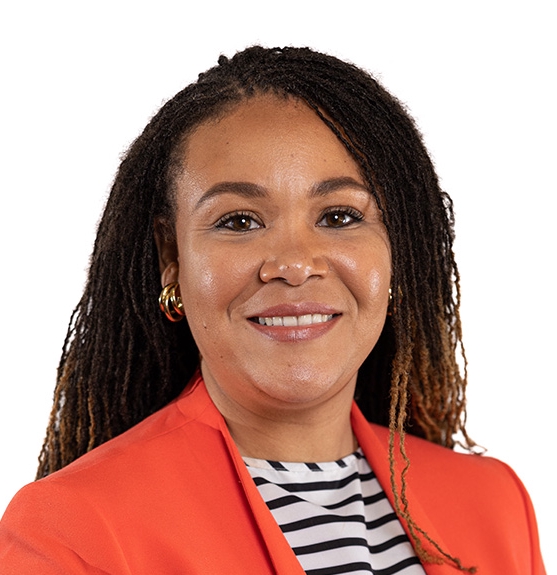
Paula D Atkinson
Liberation-focused psychotherapist (LICSW), body-justice educator, and host of a body liberation podcast; taught Weight & Society at George Washington University.
5
APPEARANCES
5
PODCASTS
Sep 28, 2026

7:51

So I know as a shallow base that fat phobia diet culture beauty culture stemmed from racism can you take us all the way back and and share like how why what when up until the present day of this fucked up society we live in

Paula D. AtkinsonGUEST
So and I'm speaking mostly from in the States, but in the States, I know the history is that around around the time where we.

Paula D. AtkinsonGUEST
And number two is the idea that it, the- Again, the morality around health, that good people take care of their health and bad people don't, right? And this is around, this is also, I have a, a, write a whole thing about this in this book I'm writing about so much of it has to do with death.
Paula D. AtkinsonGUEST
So much of it has to do with our denial of death and m- and then- Hmm ... white supremacist culture's death denial, and this idea that, that everybody, that good peop- again, good people live long, bad people die young, right? That to live a long time is a moral, again, judgment on your character, and people who don't take care of themselves, and they die young, and they smoke, and they eat too much beef, right? That again, that that's some sort of moral, characterological judgment that we can make on them.
Paula D. AtkinsonGUEST
So I, I'm gonna answer your question, but I d- I just think we need to talk more- Yeah ... about what- No, I love it ... health is, right? But yes, there was a time a lot of people who think that they are on a health journey or they think that they are just taking really good care of their health, they actually just have an eating disorder.
Paula D. AtkinsonGUEST
I [laughs] had an eating disorder, but it's just that it's so, again, what is actual health? And the fact that in a materialistic s- society, we worship physical health over mental health, so we don't really think about mental health as an indication of health.
Paula D. AtkinsonGUEST
We think about what are your, what are your biomarkers, what are your metrics, what's your cholesterol, what's your blah, blah, blah.
16 MINS LATER

Paula D. AtkinsonGUEST
So, um, I, to say I got a lot of positive reinforcement is an understatement.
Paula D. AtkinsonGUEST
Uh, went to college and it, um, and I'm from the Bay Area of s- of California.


Paula D. AtkinsonGUEST
I mean, a lot of this, I have to attribute to the brilliance of women of color.
Paula D. AtkinsonGUEST
You know, a lot of it is, you know, Sonia Renee Taylor is Roxane Gay, is Savala Nolan, is Adrienne Marie Brown, pleasure activism.
Paula D. AtkinsonGUEST
You know, a lot of it is, you know, women of color who may or may not be in fat bodies, but, like, were carrying more of the social load than I ever did as a white cis woman.
Paula D. AtkinsonGUEST
And then I allowed that to... coming back to what we were saying in the beginning, the most powerful tool, and nobody talks about this, and I will go down in history as saying like, this is the most powerful tool for me to get myself out of diet culture, was seething feminist rage.
10 MINS LATER
33:59
Some main bullet points that you feel like are important for listeners to know.


Harriet FrewHOST
So can you just tell us a little bit about your journey and how you sort of use that whole wounded healer experience to do what you're doing today? Yeah.
Paula D AtkinsonGUEST
yeah so i was um i was born a big kid i was 10 pounds when i was born almost 11 pounds when i was born and i i just remember being a chubby kid and i didn't really understand you know part of the i think part of my activism work is that i i couldn't and i still don't understand why the grown-ups were so obsessed with the shape of my body because i wasn't overeating, I wasn't, I was an active kid, I was fine.
Paula D AtkinsonGUEST
And I just remember kind of not being until they kind of taught me to be you know, And then I did start overeating.
Paula D AtkinsonGUEST
And I talk about this sort of very innocent experience of not really understanding why everybody was accusing me of overeating because my body was big.
17 MINS LATER