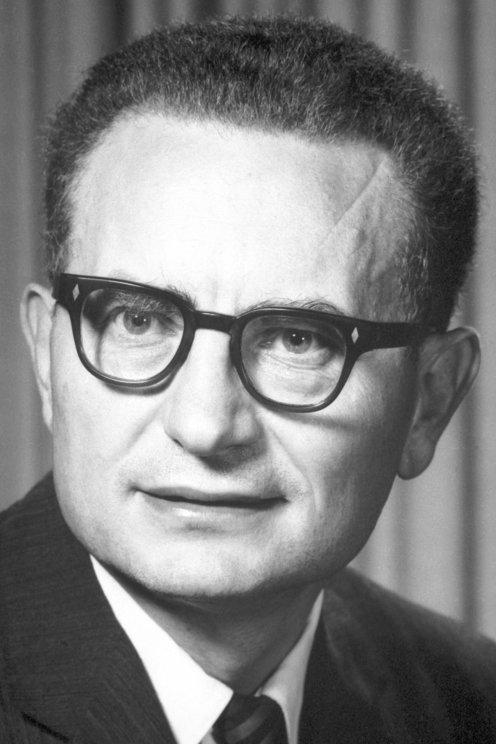
Paul Samuelson
American economistWikipedia
37
MENTIONS
17
EPISODES
17
PODCASTS
Search complete. 37 mentions across 17 episodes found for "Paul Samuelson".
Sep 10, 2026

Eric BalchunasHOST
I think it was called the Portfolio Management Index or publication, one of those journals.
Eric BalchunasHOST
And in there, Paul Samuelson – I believe that's his name – who actually worked in the Kennedy administration.
Eric BalchunasHOST
There was some buzz about active managers maybe not being as good as advertised.
Eric BalchunasHOST
And Paul Samuelson in there said, hey, can someone please launch an index fund so we can grade these active managers? and bogle who had just set up vanguard as a back office company it was not allowed to run money because of a situation with his old colleagues he was like wait why don't we do it and it's not running money because it's an index fund let's try it and that's how the idea was born more out of necessity really than any grand vision um so he launched it and i think the the real bold part was A, nobody had tried to actually put an index fund into action.
Eric BalchunasHOST
There were indexes, but not funds really.
Eric BalchunasHOST
There was one tiny attempt before, but long story short, it was really a new idea.

Steven PinkerGUEST
Uh, he didn't say it, but, uh, I think-
Christof KochHOST
Paul
Steven PinkerGUEST
...
Steven PinkerGUEST
Paul Samuelson probably said it for, uh, first, but it's, it's, it's a very good idea.
Steven PinkerGUEST
[laughs]
Heather BerlinHOST
Yes, I like that.

Ashley LesterGUEST
It's private equity investors, to be fair to them, would say, or private asset investors, to be fair to them, might say, well, look, public markets price all sorts of stuff.
Ashley LesterGUEST
As Paul Samuelson famously said, they've priced in nine of the last five recessions.
Ashley LesterGUEST
And in fact, Bob Schiller, won a Nobel Prize for pointing out that public equity markets move around far more than they should do on the basis of news.
Ashley LesterGUEST
So you could turn all this around, potentially.

Glenn LouryGUEST
My teachers encouraged me to avoid the University of Chicago because they thought it was too rigidly ideological and right.
Glenn LouryGUEST
So I ended up at MIT, and my teachers were people like Paul Samuelson and Robert Solow and Franco Modigliani and Peter Diamond and other people who have been honored for their accomplishments as economics researchers.
Glenn LouryGUEST
They were not Chicago free marketeers, but they were certainly neoliberals in the modern day sense of that word.
Glenn LouryGUEST
I mean, they believed in private property.

Greg SargentHOST
And partly because of that, Republicans are privately warning that their prospects in the midterms look increasingly dire.
Greg SargentHOST
So what now for Trump? Paul Krugman has a great new piece on his Substack arguing that Trump simply does not have the cards in the Iran situation, even though he may not know it.
Greg SargentHOST
So we're talking with Krugman about where all this is going.
Greg SargentHOST
Paul, always nice to have you on.
Paul KrugmanGUEST
Good to be on again.
Greg SargentHOST
So Trump rejected that proposal from Iran to reopen the Strait of Hormuz, perhaps in part because it would not address Trump's demand for total termination of Iran's nuclear program, but The New York Times had an extraordinary detail about the Iranian offer.
Greg SargentHOST
Quote, "A US official also said that accepting it could appear to deny Mr. Trump a victory," close quote.
Greg SargentHOST
Paul, apparently that's the single most important factor in all of this, right?

Paul KrugmanGUEST
It's not, by the way, a good prediction of the future.
Paul KrugmanGUEST
My old teacher, Paul Samuelson, famously said that the market had predicted nine of the last five recessions.
Paul KrugmanGUEST
The market has got its own psychology.
Paul KrugmanGUEST
I think we went through a long period when optimists, people who bought the dips, did very well.

Richard WolffHOST
That was another ploy.
Richard WolffHOST
Paul Samuelson, in order to get around the difficulties, At one point, they thought utility could be measured in utils.
Richard WolffHOST
Then they realized, uh-oh, that gets you into a dead end.
Richard WolffHOST
And so it became, no, no, no, you don't have to know how much pleasure you get.

Richard WolffHOST
That was another ploy.
Richard WolffHOST
Paul Samuelson, in order to get around the difficulties, At one point, they thought utility could be measured in utils.
Richard WolffHOST
Then they realized, uh-oh, that gets you into a dead end.
Richard WolffHOST
And so it became, no, no, no, you don't have to know how much pleasure you get.

Michael KleinHOST
You can learn more about us and see our work at www.econofact.org.
Michael KleinHOST
The Nobel laureate Paul Samuelson once wrote, I don't care who writes a nation's laws or crafts its advanced treaties if I can write its economics textbooks.
Michael KleinHOST
Samuelson did in fact write the best-selling economics textbook of the 1950s and 1960s.
Michael KleinHOST
Since the 1990s, his successor in textbook publishing is Greg Mankiw of Harvard University.

Oren KassHOST
And this is something we're always making the point about.
Oren KassHOST
Go all the way back, whether it's Paul Samuelson or Keynes or Pick your economist even more recently, even look at what Krugman was actually writing about trade.
Oren KassHOST
There's nothing even especially controversial here in questioning some of the dogma of recent decades.
Oren KassHOST
But then there's the orthodoxy of how economists interpret and define.
7 more episodes mention Paul Samuelson.
Create an account to see the whole feed, search across every transcript, and follow the entities you care about.