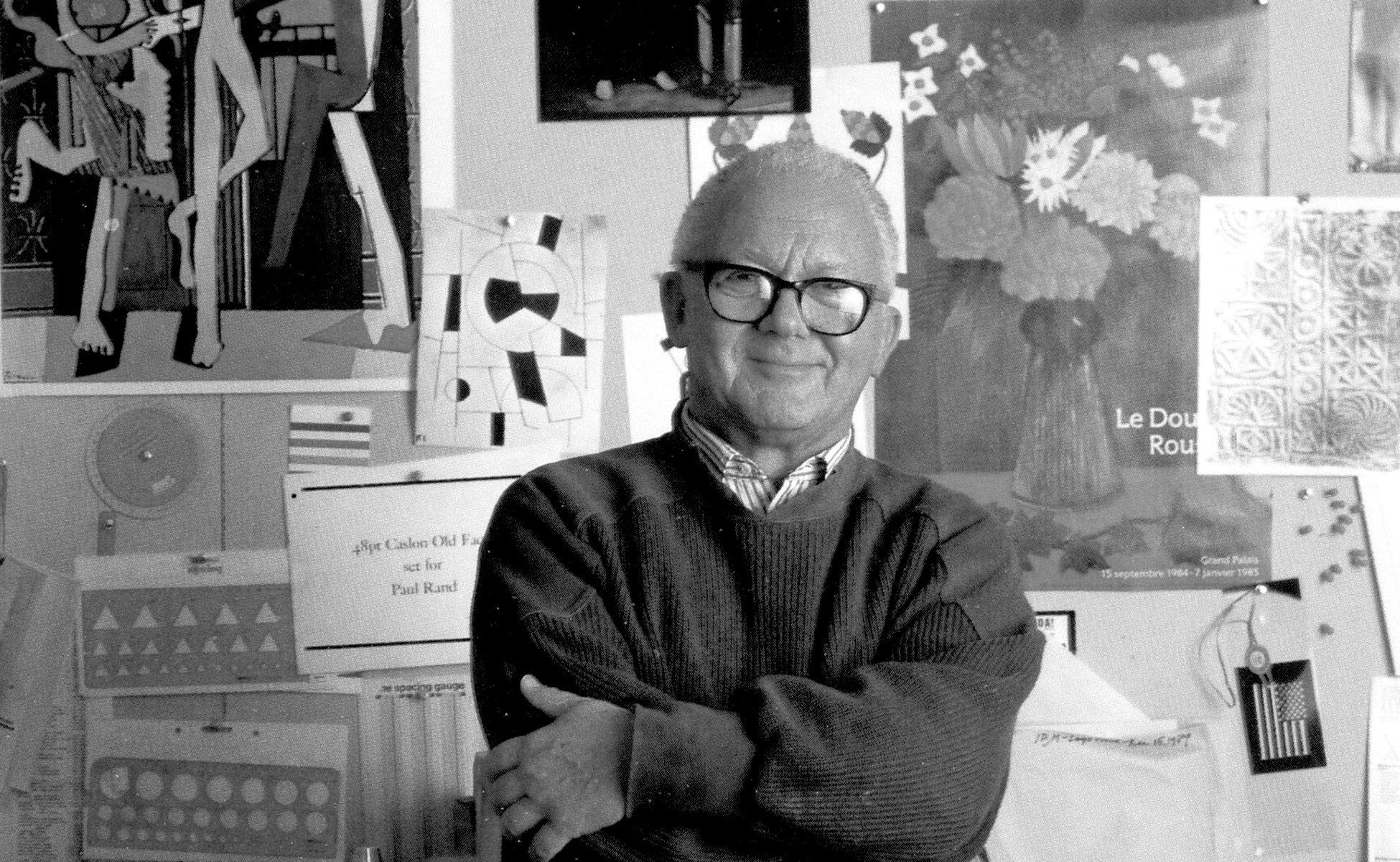
Paul Rand
American art director and graphic designerWikipedia
31
MENTIONS
13
EPISODES
12
PODCASTS
Search complete. 31 mentions across 13 episodes found for "Paul Rand".
Oct 27, 2026

Greg McKeownGUEST
And he wanted a great logo for his next initiative.
Greg McKeownGUEST
And so he brought in the top logoist, arguably in the whole country, Paul Rand.
Greg McKeownGUEST
And- Paul Rand had designed ABC's logo and Bloomingdale's logo and a whole bunch of iconic logos that we all recognize.
Greg McKeownGUEST
So he comes in and they have their first meeting and Steve starts to explain how the relationship will work.
Greg McKeownGUEST
He says, you're going to come up with a bunch of options for me and I'm going to tell you which ones I like and give you feedback and which you use my taste and so on.
Greg McKeownGUEST
He said after the experience, he said...
Greg McKeownGUEST
He said Rand delivered to him a jewel of a logo and added this, which is, I think, the most important part of this story.
Greg McKeownGUEST
He said Paul Rand was the ultimate professional because he had thought through how to create value for me more deeply, more thoughtfully than I had.

PlatonGUEST
Yeah, I mean, as I say, my heroes are designers.
PlatonGUEST
So you start talking about an image creates meaning, then you're moving beautifully into the world of George Lois, Paul Rand, Charles Eames, Alan Fletcher, Scott Dadich.
PlatonGUEST
I was very privileged that I got...
PlatonGUEST
My dad worked with Alan Fletcher.

Kaleb DeanHOST
Philip Burton at UIC.
Kaleb DeanHOST
He actually taught with Paul Rand and Armin Hoffman over in Basel for a lot of years.
Kaleb DeanHOST
They used to drink wine all the time, he would say.
Kaleb DeanHOST
He told me about their initial IBM binders because he used to have like a ton of the originals because He was like, oh, well, Paul's got too many.

Claire BlythHOST
Yeah.
Bryan EdmondsonGUEST
Which was emulated all those years later by IBM and, of course, Paul Rand.
Claire BlythHOST
Yeah.
Bryan EdmondsonGUEST
So, yes.

Josh MillerGUEST
And it's like, we're the browser company of New York.
Josh MillerGUEST
You know, you see the Paul Rand logo is sort of, it was a joke of sorts.
Josh MillerGUEST
And so, and when we started doing behind the scenes, YouTube videos that were not polished and they really were raw about what happened at our board meeting, it was us reacting to the culture in technology and saying, you know, why is everyone so stiff in these PR blog posts no one likes? Like, what if you share the people behind it? We were trying to zig where others zagged.
Josh MillerGUEST
And so I think you fast forward six years, the browser company of New York is, we don't even share that name as much anymore because it kind of feels like it's become the culture.
30 MINS LATER
Josh MillerGUEST
There are a couple of big companies, largely international business machines.
Josh MillerGUEST
that made large, extremely expensive computers for corporations to count things and do very, very productivity-centric tasks.
Josh MillerGUEST
And they try to dress it up and they hire Paul Rand and the Eameses and they try to make it friendly and the World's Fair.
Josh MillerGUEST
It was fundamentally these kind of big, making expensive stuff for businesses.

Steven HellerGUEST
So those are the so-called heroes that I had.
Steven HellerGUEST
Later on, the heroes became modernist designers like Paul Rand, who I did a biography on.
Steven HellerGUEST
Alden Lustig, who I never met, but I did a biography on him.
Steven HellerGUEST
Alex Steinweis, who I did some writing on.

Matthew RoopGUEST
And that's not a very good answer.
Matthew RoopGUEST
So if you're a client and you're out there, think about why are you making this? What are you trying to change in the world for good? Paul Rand has this great quote, which is Paul Rand, the designer, good design is good business.
Matthew RoopGUEST
So when you have good business and you have good design, those two things benefit greatly from each other.
Matthew RoopGUEST
But when one of them is bad, it's a more mediocre result.

Bill GardnerGUEST
He really did.
Michael JandaHOST
It's, it's him and, and Paul Rand and-
Bill GardnerGUEST
Paul Rand.
Michael JandaHOST
Yep, those were the two.
Michael JandaHOST
And-
Michael JandaHOST
That's it.
Michael JandaHOST
Because in that era-
Bill GardnerGUEST
Paul Rand

Andrew KuoHOST
So I think that logic to me is not my taste.
Andrew KuoHOST
I'm not a Paul Rand dude.
Andrew KuoHOST
He's made some great logos.
Andrew KuoHOST
Of course we all know about IBM.

Christian SolorzanoHOST
She tells a story of visiting friends in Chicago over Labor Day weekend and feeling at home for the first time in her life, and quitting her job in Miami the week the recession hits.
Christian SolorzanoHOST
From there, she walks us through her agency work, field research at Gravity Tank, social impact work at Greater Good Studio, and her time working alongside Rick Valicenti and THIRS, helping Columbus, Indiana return to Paul Rand's original identity.
Christian SolorzanoHOST
Elaine speaks openly about identity and representation in design, and why that led her to teaching.
Christian SolorzanoHOST
We also talk about printing and the case for slow and efficient work in the age of AI, building community in the classroom, and what she still carries with her even though she's no longer based in Chicago.
25 MINS LATER
Elaine LopezGUEST
So I spent basically, like, the six months before I went to graduate school working with Thirst as a researcher on the Columbus, Indiana project.
Elaine LopezGUEST
And, and for our listeners, that project was essentially very cool project, uh, and it was to bring back-- It was to basically re- not rebrand Columbus, Indiana, but to re- let's say revisit the brand.
Elaine LopezGUEST
But as, as some of you may know, like, Paul Rand designed a brand for this city already that was incredible, and so the project actually became to convince the community to go back to this, like, iconic branding that Paul Rand had designed and to also, like, modify it a little bit for, you know, modern day, so the different areas of that city, you know, wanted their own identity.
Elaine LopezGUEST
And Columbus, Indiana is just such a unique and, you know, design-forward place that I think, yeah, it was just such a dream to work on that project, um, with Rick and Bud, um, over at Thirst directly.
3 more episodes mention Paul Rand.
Create an account to see the whole feed, search across every transcript, and follow the entities you care about.