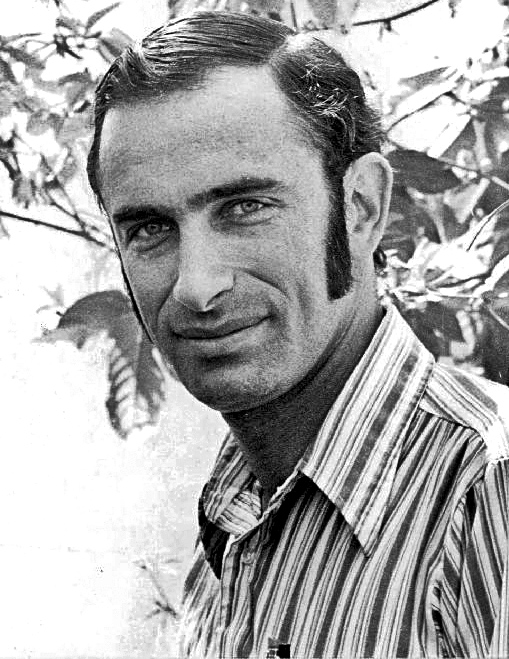
Paul R. Ehrlich
American biologist and authorWikipedia
84
MENTIONS
46
EPISODES
45
PODCASTS
Search complete. 84 mentions across 46 episodes found for "Paul R. Ehrlich".
Nov 5, 2026

Philip PilkingtonGUEST
So the The baby boom happened, and so the baby boom allowed economists to just assume the population question would take care of itself.
Philip PilkingtonGUEST
And then later on, we'd get this, actually the revival of the old eugenic society of the 1930s as the population control people in the 1970s, Paul Ehrlich and so on.
Philip PilkingtonGUEST
continuous lineage from those early eugenics movements, which people don't like talking about for understandable reasons.
Philip PilkingtonGUEST
But basically what happened was, on the one hand, you had this baby boom.

Ryan GableHOST
And of course, and the New York Post even pointed this out, a couple of years after the study was published...
Ryan GableHOST
We get Paul Ehrlich's The Population Bomb, which was very popular but ultimately was a bomb because none of it turned out to be true.
Ryan GableHOST
That's where Paul Ehrlich argued that in his seminal paper that the world was overpopulated.
Ryan GableHOST
and that the whole world was going to collapse, lack of resources, etc., etc., etc.
Ryan GableHOST
And even if you were to statistically play around with the data, it looks like the world didn't end.

Joshua L. HarrisGUEST
would be the one that would be the guide throughout this entire ecology-based version of the land.
Joshua L. HarrisGUEST
And the interesting thing that I was just thinking about when you were saying that is that this was the time during Paul Ehrlich's wonderful, excuse me, not so wonderful trustees about like, you know, like we were going to have a food epidemic that was going to happen with a population bomb and everything.
Joshua L. HarrisGUEST
So it was kind of interesting that they went through this way they went first the ecology way and then they transitioned over uh to something that was about agriculture which is probably something that's a little bit more uplifting at the time period and also acted as a wonderful antidote uh to um his paul's predictions of things and carl hodges he was he was the primary um advisor for all of the land and actually he and he he didn't in I think he either invented or he popularized the term of symbiosis, which is also the name of the movie that's inside of the attraction.
Joshua L. HarrisGUEST
And they still have the dedication plaque outside of the land, which has a lot of his words on there as well.

Will ReitzHOST
Harvard biologist George Wald estimated that civilization will end within 15 to 30 years unless immediate action is taken against the problems facing mankind.
Will ReitzHOST
Paul Ehrlich said, who I don't have his credentials here, but he appeared in a lot of these, so I think he had something to do with maybe the organizing of Earth Day.
Will ReitzHOST
Paul Ehrlich confidently declared in Mademoiselle magazine in April 1970, the population will inevitably and completely outstrip whatever small increases in food supplies we make.
Will ReitzHOST
The death rate will increase until at least 100 to 200 million people per year will be starving to death in the next 10 years, so by 1980.
Will ReitzHOST
Life magazine reported in January 1970, scientists have solid experimental and theoretical evidence to support the following predictions.

Nate HagensHOST
The end of growth has been predicted plenty of times, and the people who predicted it were famously wrong.
Nate HagensHOST
Malthus over two centuries ago, Paul Ehrlich and the population bomb, the limits to growth team back in the 1970s, which wasn't wrong so much as misunderstood.
Nate HagensHOST
It wasn't the underlying logic that was incorrect.
Nate HagensHOST
Each time, something in our economy showed up that actually opened up a whole new pool of real surplus and productivity, which allowed the financial claims to extend their biophysical tether a while longer.
Nate HagensHOST
Malthus could not have known about the carbon pulse, the enormous one-time inheritance of buried ancient productivity that we were about to start burning.
Nate HagensHOST
which grew far more food and far more people than his arithmetic could have envisioned two centuries ago.
Nate HagensHOST
Ehrlich's generation didn't anticipate globalization, the way that we would outsource our resource use to cheaper areas in the world, or the way that debt would allow us en masse to reach into the future and pull tomorrow's consumption forward to today.
Nate HagensHOST
And I think almost nobody saw how long the whole thing could be stretched once central banks stepped up to replace what commercial banks did as the guarantors of last resort for all the new money and claims that started around 2009.

Joe SoucherayHOST
While certainly controversial among demographers, this doomsday forecast seemed to reflect the population trends at the time.
Joe SoucherayHOST
Fears intensified eight years later when biologist Paul Ehrlich published The Population Bomb.
Joe SoucherayHOST
Boy, that fraud got on every television show in the country.
Joe SoucherayHOST
I remember thinking he was right, too.
Joe SoucherayHOST
I was a long-haired hippie, and I thought this Paul Ehrlich guy is right.
Joe SoucherayHOST
He was at the University of California.
Joe SoucherayHOST
Then halfway to the so-called doomsday in 1993, the predictions, because Ehrlich said we're going to die if we didn't.

Craig HaugardGUEST
I mean, the concept was ultimately we would have starvation and famine.
Craig HaugardGUEST
And in 1968, we had Paul Ehrlich come out with the population bomb, again, arguing that population was going to grow to the point of starvation, mass starvation.
Craig HaugardGUEST
And he said that would happen in 1970s.
Craig HaugardGUEST
Well, what that led to was things like China's one child policy.

Craig HaugaardGUEST
I mean, the concept was ultimately we would have starvation and famine.
Craig HaugaardGUEST
And in 1968, we had Paul Ehrlich come out with the population bomb, again, arguing that population was going to grow to the point of starvation, mass starvation.
Craig HaugaardGUEST
And he said that would happen in 1970s.
Craig HaugaardGUEST
Well, what that led to was things like China's one child policy.

Adam HamanHOST
Um, but the people that latched onto the ideologues that latched onto this thing were not at all.
Adam HamanHOST
This was, if you recall the sixties, the height of, uh, Paul Ehrlich, warning of Malthusianism and the Club of Rome talking about the limits to growth and the humans are going – are a cancerous plague upon the earth and we're going to quickly overstrip, overpopulate, overrun our resources and we're all going to die.
Adam HamanHOST
And so – And scientists latched onto this mouse thing, or scientists didn't, ideologues did, and said, see, this proves that we need to address the population problem.
Adam HamanHOST
There was even some clown in the Senate who brought up this mouse thing on the floor of the Senate and said, see, we need to do something about it.

David GottfriedGUEST
And that woke me up to the sun and the power of the sun.
David GottfriedGUEST
We had Paul Ehrlich teaching population and the impact of carrying capacity of Earth as population grows beyond the ability of Earth to sustain and feed those people.
David GottfriedGUEST
So I learned all that.
David GottfriedGUEST
Then career one, real estate development and construction in Washington, D.C., seeing how buildings were built, financed, sold, leased, and then trying to take what I learned as an engineer at Stanford and bring it into buildings.
36 more episodes mention Paul R. Ehrlich.
Create an account to see the whole feed, search across every transcript, and follow the entities you care about.