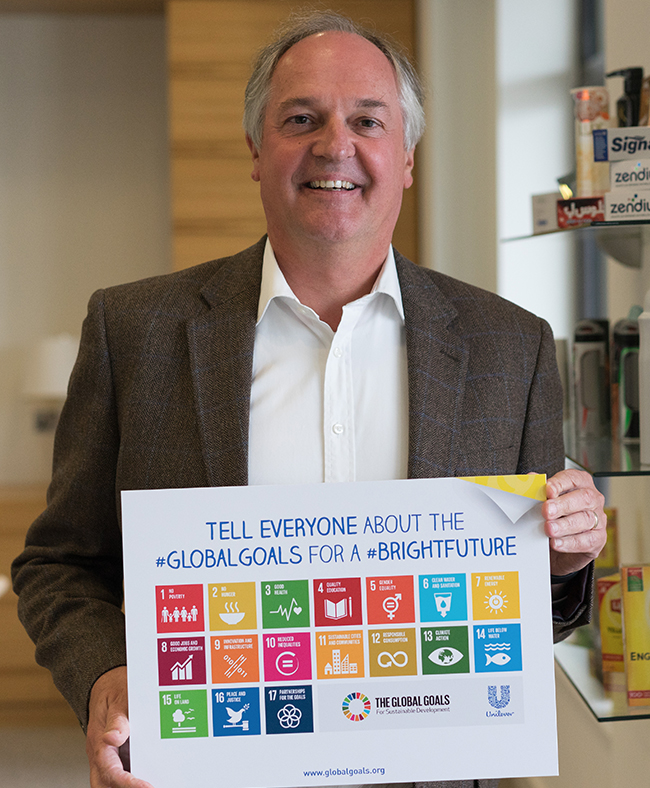
Paul Polman
Dutch business professionalWikipedia
11
MENTIONS
8
EPISODES
8
PODCASTS
Search complete. 11 mentions across 8 episodes found for "Paul Polman".
Sep 18, 2026

Sophie DevonshireGUEST
And one of the big lessons from the book and what I see is an understanding of not how to manage our time but how to manage our energy.
Sophie DevonshireGUEST
So Paul Polman, my ex-boss, who was also a contributor to Superfast and was obviously for years CEO of the world's fourth-largest consumer goods company, he ...
Sophie DevonshireGUEST
I was talking to him about how he could stay so serene when there was so much going on, purpose to avoid purpose, all this happening.
Sophie DevonshireGUEST
And he said to me, "Sophie, time management is not important.

Tommy StadlenHOST
I think it does require leadership.
Tommy StadlenHOST
One of the best stories I've heard about this is Paul Polman, who was the CEO of Unilever, this enormous consumer goods company.
Tommy StadlenHOST
And when he was the first appointed CEO, he was a big believer in all the stuff you were talking about, long-term capitalism and purpose-driven capitalism.
Tommy StadlenHOST
And he really, really hates quarterly reporting.

Mariana MazzucatoGUEST
Let's get the companies that at least are talking the talk [chuckles] and not walking the talk to, to really s- ask what does it mean to govern your organization from the beginning and how it works with others differently, and to start bringing those actors.
Mariana MazzucatoGUEST
I'm thinking of people like Paul Polman when he was the head of Unilever, or the guy who was running Danone before he was sacked, right? There, there have been some leaders of big companies, I'm not saying they were perfect, but who definitely seemed very willing to work in a different way, both internally and with others.
Mariana MazzucatoGUEST
And we need a coalition of those business leaders and to say, "Okay, let's not just make this a dinner table talk," and then you go back to the company and do things as it was before, 'cause everyone loves to talk about purpose and missions.
Nick HanauerHOST
Yeah.

Babs RangaiahGUEST
Even if that meant you should be doing something else, they wanted us to really understand.
Babs RangaiahGUEST
And I think part of that was because Paul Polman, who was the CEO at the time, was very big on purpose for our brands as well.
Babs RangaiahGUEST
That's why you see a lot of the brands under Unilever that had kind of double bottom line goals.
Babs RangaiahGUEST
There was like a sustainability and social good, environmental goals, as well as the revenue goals.

Caroline StokesGUEST
But I was, again, I think I was 50.
Caroline StokesGUEST
And I'd just seen Paul Polman do his thing and everybody else.
Caroline StokesGUEST
And I was like, yep, of course, all of this is logical.
Caroline StokesGUEST
I'd just gone to MIT to do various things.

Ron GonenGUEST
And I'd probably still be holding a lot of fossil fuel stocks, which are now tanking.
Ron GonenGUEST
On the other hand, this other fund that was focused on ensuring that there was value for all stakeholders and how I operate would have companies like a Unilever, where Paul Polman made sustainability and circularity a key of his management style at Unilever and far exceeded the returns of his competitors.
Ron GonenGUEST
You'd have companies in there like SodaStream that Pepsi acquired for $3.4 billion, companies like Seventh Generation and their method cleaning products, so on and so forth.
Ron GonenGUEST
So It's been my view, and I think the data backs this up, that not only are you going to end up investing in companies that outperform the market, equally or more importantly, you're going to screen for companies that are either long-term going to lose significant value because of something that they're doing that they're not exposing the market to, something that you're trying to hide, or because they just don't recognize where the world is

Scott BrickNARRATOR
Behring would prove it emphatically nine years later.
Scott BrickNARRATOR
In February two thousand seventeen, he flew to London and met with Paul Polman, the CEO of Unilever, at the company's Art Deco headquarters.
Scott BrickNARRATOR
Over sandwiches, Behring said that Kraft Heinz, which 3G controlled with Warren Buffett, would like to acquire Unilever for one hundred forty-three billion dollars.
Scott BrickNARRATOR
It would have been the second-largest takeover in history.
25 MINS LATER
Scott BrickNARRATOR
Executives at food companies around the world began studying what 3G was doing.
Scott BrickNARRATOR
They adopted zero-based budgeting and started talking about efficiency and accountability and ownership.
Scott BrickNARRATOR
Even Paul Polman at Unilever, who publicly rejected Bering's approach with disgust, announced a three-year margin improvement plan.
Scott BrickNARRATOR
The industry was 3G-ing itself.