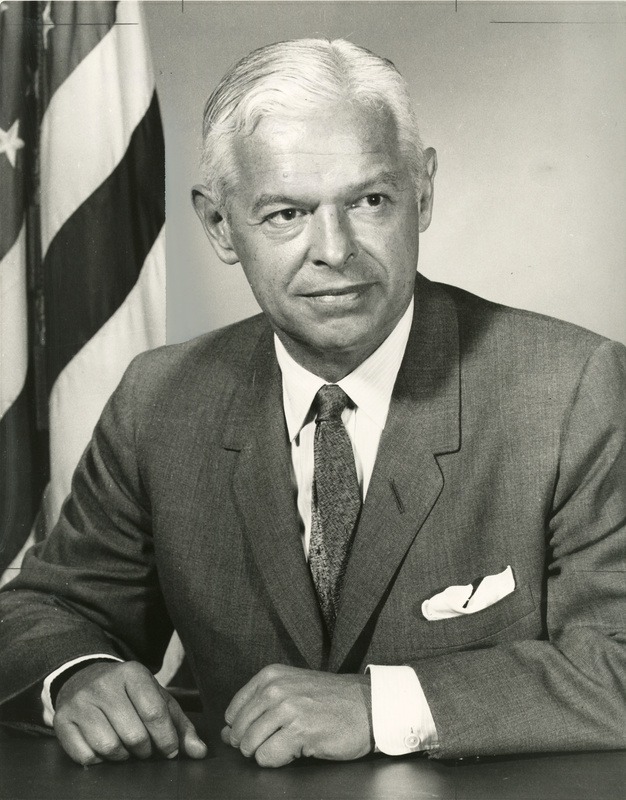
Paul Nitze
Businessman and former United States Secretary of the NavyWikipedia
28
MENTIONS
10
EPISODES
9
PODCASTS
Search complete. 28 mentions across 10 episodes found for "Paul Nitze".
Oct 24, 2026

Dan SnowNARRATOR
Perhaps he could learn lessons that would help America defeat Japan.
Dan SnowNARRATOR
Paul Nitze had to find Speer.
Dan SnowNARRATOR
And fast, before the war crimes investigators could lock him away in prison.
Dan SnowNARRATOR
So Nitze made an immediate play for his target.
Dan SnowNARRATOR
The USSBS had their man.
Dan SnowNARRATOR
News that Speer had been captured was quickly relayed to London.
Dan SnowNARRATOR
Paul Nitzer could scarcely contain his excitement.
Dan SnowNARRATOR
He was soon on board a DC-3, heading for Flensburg.

Peter HuessyGUEST
Can we do this? And the answer will be, yeah, we can, but America will come back and do this, and you're not going to achieve your objectives.
Peter HuessyGUEST
So in the wonderful words of former defense official Paul Nitze, He often told me, he said, I want the Russians, every time they think about attacking us, to come to the conclusion, not today, comrade.
Peter HuessyGUEST
And what's interesting, that phrase has now been used by our...
Peter HuessyGUEST
some of our military commanders in this day and age saying that's exactly what they want Russia and China to come up with is not today, comrade.

Thomas777GUEST
This team was headed by Richard Pipes.
Thomas777GUEST
Uh, it included, uh, Daniel Graham, uh, William Van Cleave, uh, Foy D. Kohler, Seymour Weiss, uh, Paul Wolfowitz, and Paul Nitze, who'd been the creator of the Committee on the Present Danger in 1950, which over, over time in various iterations, all of which basically...
Thomas777GUEST
It's, it's, it's not really relevant now, but that was always kind of the, uh, that, that was always, that, that was kind of the, that was called the Political Action Committee of Cold War Hawks, okay? Now, as you notice from that list I just ticked off, these are like the fathers of neoconservatism, not philosophically, but in policy terms.
Thomas777GUEST
That is not an accident, okay? And these guys basically were saying, "Well, Bush's CIA is totally incompetent, and they do not know what they're doing." Okay? Um, and, uh, thus, when, uh, Bush was, uh, brought on board as Reagan's VP, Reagan was surrounded with neoconservatives as advisors.
7 HRS 17 MINS LATER
Thomas777GUEST
The true successor to McNamara was a guy named Melvin Laird, who's kind of forgotten to history, but Melvin Laird loomed really large over the late Cold War.
Thomas777GUEST
Um, his deputy, uh...
Thomas777GUEST
Or, or what, what was noteworthy about Clifford was one of his d- one of, like, one of his chief, uh, like, assistants was Paul Nitze.
Thomas777GUEST
You know, and Paul Nitze was, you know, he was the co-founder of Team B.

Walter Russell MeadHOST
And neither of us really knows what the sort of next steps on this very adventurous tumultuous journey that we're all on are going to be so in that context i think it's a it's it's a big mistake to think that some summit meeting between the leaders of china and the united states is going to produce a sort of orderly relationship between the two
Jeremy SternHOST
How much of that desire for some sort of comprehensive, holistic, predictable, orderly strategy with regard to America's main international rival comes from the success of containment and George Kennan and Paul Nitze? Does that still influence the way a lot of people think that international issues like this should be approached? Or is there some other source of that?
Walter Russell MeadHOST
Well, I do think that for a lot of people, and I'd say particularly for China hawks, you want to get back to, oh, I worked against the Soviet Union.
Walter Russell MeadHOST
Give me that old-time religion.

Charlie RoseHOST
Thompson has written two books.
Charlie RoseHOST
The first was The Hawk and the Dove, about Paul Nitze, the hawk, and George Kennan, the dove.
Charlie RoseHOST
Nitze was Thompson's maternal grandfather.
Charlie RoseHOST
The second book, published in 2025, is The Running Ground, about Thompson's life as a serious and successful marathon runner.
10 MINS LATER
Charlie RoseHOST
And, and near your maternal grandfather.
Nicholas ThompsonGUEST
Near my maternal grandfather.
Nicholas ThompsonGUEST
Yeah, Paul Nitze.
Charlie RoseHOST
Paul Nitze.

Nicholas ThompsonHOST
... o- one of these things about these historical bots that makes no sense to me, right? And you, you talk about talking to a Steve Jobs bot.
Nicholas ThompsonHOST
Um, somebody made a bot of my grandfather.
Nicholas ThompsonHOST
My grandfather, Paul Nitze, was a well-known arms negotiator.
Nicholas ThompsonHOST
But what's interesting about my, and I, and I talked to it, and it made me very frustrated because Paul Nitze's views in 1981 were quite different from his views in 1978, which were extraordinarily different from his views in 1994, right? So which Paul Nitze are you talking to, right? We're, we're different every day.
Nicholas ThompsonHOST
You can't make a bot.

A. Wess MitchellGUEST
And I think Nixon looked at the global American position strategically, also our economic situation and public mood.
A. Wess MitchellGUEST
You know, in the latter phases of the Vietnam War, there was not a great desire to take on the sacrifices for a very aggressive kind of, you know, NSC 68 Paul Nitze style forward containment policy on all fronts.
A. Wess MitchellGUEST
So I think what he, uh, grasped and what really, it took a lot of courage at that time because he had to go against the prevailing gods of Republican establishment was that America needed a period of what the French call recouement, uh, a, um, A period of recuperation to kind of get our second wind as a great power.
A. Wess MitchellGUEST
And and I think and I think he understood that correctly.

A. Wess MitchellGUEST
And I think Nixon looked at the global American position strategically, also our economic situation and public mood.
A. Wess MitchellGUEST
In the latter phases of the Vietnam War, there was not a great desire to take on the sacrifices for a very aggressive kind of NSC 68 Paul Nitze style forward containment policy on all fronts.
A. Wess MitchellGUEST
So I think what he grasped, and really it took a lot of courage at that time because he had to go against the prevailing gods of Republican establishment, was that America needed a period of what the French call recoulement, a period of recuperation to kind of get our second wind as a great power.
A. Wess MitchellGUEST
And I think he understood that correctly.

A. Wess MitchellGUEST
And I think Nixon looked at the global American position strategically, also our economic situation and public mood.
A. Wess MitchellGUEST
You know, in the latter phases of the Vietnam War, there was not a great desire to take on the sacrifices for a very aggressive kind of, you know, NSC 68 Paul Nitze style forward containment policy on all fronts.
A. Wess MitchellGUEST
So I think what he, uh, grasped and what really, it took a lot of courage at that time because he had to go against the prevailing gods of Republican establishment was that America needed a period of what the French call recouement, uh, a, um, A period of recuperation to kind of get our second wind as a great power.
A. Wess MitchellGUEST
And and I think and I think he understood that correctly.
John BatchelorHOST
But in those days, it would have been understood as God and man at Yale is the book that comes from it.
John BatchelorHOST
But we need to concentrate on a man who doesn't get a great deal of credit given that his genius is still with us, Paul Nitze, who was tasked with constructing NSC-68.
John BatchelorHOST
Nick, who was Paul Nitze and what was NSC-68 to his understanding? Thank you.
Nick BunkerGUEST
Well, Paul Nitsi was a former investment banker.
Nick BunkerGUEST
He'd been an investment banker in the 1930s, and then he'd gone into war service in Washington, where he was very involved in planning and logistics.