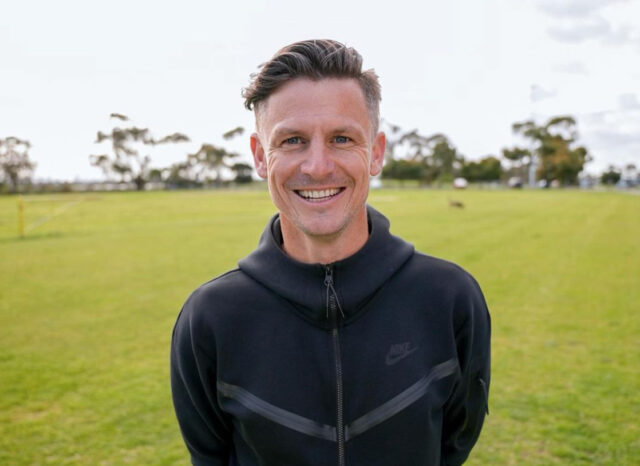
Paul Mackinnon
3
APPEARANCES
3
PODCASTS
Aug 14, 2026

JoostHOST
How do you begin coaching someone? What, what are the things you're noticing or?

Paul MackinnonGUEST
I, I, I mean, if it's sort of from, from first step through to even completion of a first session, it'd be, you know, either an athlete, an individual, you know, whether it's beginner or professional and anyone in between, it's, it's anyone who wants to improve their movement.
Paul MackinnonGUEST
So I always think about it, it's like, you know, if you play golf and you want to get better at it, it doesn't matter if you've just begun or if you're a professional, they get a coach and you can get swing, swing tips.
Paul MackinnonGUEST
Now, not everyone does, but I mean, the best do, and yet we don't with running.
Paul MackinnonGUEST
Again, like going back to that kind of logic brain, it's like, well, hang on, if we wanna be really good at something, wouldn't we get better at, at that something? And that is, you know, the movement.
34 MINS LATER
JoostHOST
Yeah

speaker_3HOST
Yeah
Paul MackinnonGUEST
So like jumping, we throw our arms vertically up in the air to create a vertical force to jump off the ground to either jump higher or get off the ground easier.
Paul MackinnonGUEST
Every single step we're trying to leave the ground and if you're making a sideways movement or in your case a down movement, it's like you're trying to jump but you're throwing your arms down.
48 MINS LATER
speaker_1ADVERTISER
Wayfair, every style, every home.


Jason FitzgeraldHOST
He's obviously has longevity in the sport." But it seems like what I'm hearing is that there's always something that you can improve, and just because you're either having success or your injury rate is very low doesn't mean that you should just automatically think that your running form is beyond reproach, right? So how do you think about this concept of, you know, some people just shouldn't work on their form?
Paul MackinnonGUEST
I think there's a, there's a couple of answers to those, a couple of parts to the answer.
Paul MackinnonGUEST
One being, I think for too long people have relied on, okay, well, don't, don't change it unless, unless it's broke because they're kind of coming from a safe place that they can make changes, you know, when the person is broken rather than actually everyone who is running is on some spectrum of some sort.
Paul MackinnonGUEST
Now, they might be down the back end of that spectrum because they are broken or they're getting, um, recurrent injuries.
Paul MackinnonGUEST
But then if you get to that point where they're not in that area and what they're doing is they're trying to improve performance.
Paul MackinnonGUEST
Like when you're going to improve the technique correctly, and I think that's another part of the, of the answer, you are going to get a performance improvement.
Paul MackinnonGUEST
Now, if that means you can run more because you're not getting injury, you're not getting stressed in certain parts of the body, that is going to be a performance improvement.
13 MINS LATER
Jason FitzgeraldHOST
Can, can you talk about the differences that you might have to incorporate with working with, say, a new runner versus a runner with, you know, a, a quarter of a century of experience?