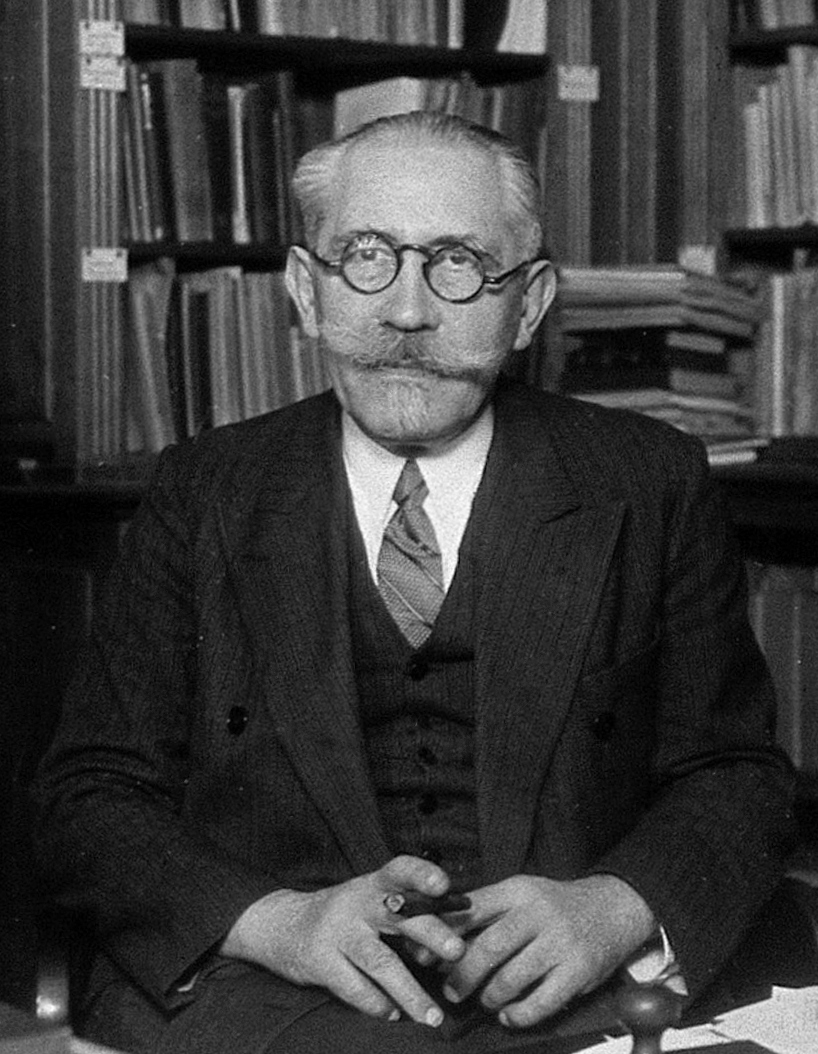
Paul Langevin
French physicistWikipedia
7
MENTIONS
3
EPISODES
3
PODCASTS
Search complete. 7 mentions across 3 episodes found for "Paul Langevin".
Nov 24, 2026

ImanHOST
So you wound the crown one way, and it wound the alarm, and you wound it the other way, and it wound... and set the timekeeping.
ImanHOST
But the absolute genius of this watch is that they hired a physicist called Paul Langevin to work out how to amplify the sound of the buzzing.
ImanHOST
So the alarm mechanism works by a on the inside of the case but it doesn't it isn't very loud of course so what Paul Langevin I think that's how you pronounce his name came up with was to create the hammer to bang on a metal membrane on the inside of the case and But then behind that would sit a perforated case back.
ImanHOST
And over the top of that perforated case back was another case back with cutouts.
ImanHOST
And you can see this if you turn over a cricket.

Walter IsaacsonGUEST
And she's in mourning for four years.
Walter IsaacsonGUEST
But by the time of November 1911, she gets to Brussels and she's with Albert Einstein, her friend, and one of Einstein's favorite students and collaborators, Paul Langevin.
Walter IsaacsonGUEST
And Marie Curie is having a secret and passionate love affair with Paul Langevin.
Walter IsaacsonGUEST
And Paul Langevin's wife, while they're there, discovers their love letters and threatens to expose them.
Walter IsaacsonGUEST
Marie Curie lends Paul Langevin money to try to pay off his wife to stay silent.
Walter IsaacsonGUEST
And Mrs. Langevin doesn't.
Walter IsaacsonGUEST
Their letters explode in the tabloids.

Amanda AlvaradoGUEST
And so as we kind of progress in time, in the early 1900s, after the Titanic sank and World War I broke out, suddenly research is surging on how to detect underwater features like icebergs or submarines.
Amanda AlvaradoGUEST
And so the French government commissioned Paul Langevin, a French physicist, and his colleagues to research the use of high-frequency sound waves to find German submarines.
Amanda AlvaradoGUEST
So although they never quite got it, later on in World War II, the U.S. Navy actually developed the Sound Navigation and Ranging System, or SONAR, as we know today.
Amanda AlvaradoGUEST
And they still use it today.