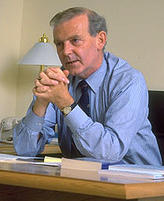
Paul Kennedy
British historianWikipedia
31
MENTIONS
18
EPISODES
16
PODCASTS
Search complete. 31 mentions across 18 episodes found for "Paul Kennedy".
Oct 22, 2026

Paul WhiteleyGUEST
And actually, in the literature on wars.
Paul WhiteleyGUEST
There's a huge book by Paul Kennedy, a big tome, nearly 1,000 pages.
Paul WhiteleyGUEST
And what it shows is this phenomena of the trap and how this has been occurring over time in different eras.
Paul WhiteleyGUEST
But there's a political science database referring to the power of nations and the ability for them to fight wars.
Paul WhiteleyGUEST
And the key argument with Paul Kennedy is pretty simple, that if you fight a war and you don't have the resources of your opponents, You're going to lose it.
Paul WhiteleyGUEST
And this was very quite clear in the Second World War and indeed in the First World War.
Paul WhiteleyGUEST
You know, in the Second World War, Hitler took on Russia, the United States and the British Empire.

John KerryGUEST
And we most significantly contributed to the ability to win that war.
John KerryGUEST
There's a wonderful book by Paul Kennedy, Professor Paul Kennedy at Yale, called The Engineers of Victory, which tells the story of mid-level folks all across our economy who did amazing things to be able to empower us.
John KerryGUEST
So mid-level people stepped up and designed the Higgins boats that got people on the beaches of Normandy, or tanks that could float and move forward, or air superiority, which we gained, which was essential to being able to win the war.
John KerryGUEST
Different techniques to be able to blow up bunkers or blow up to get barriers to your movement out of the way.

speaker_12NARRATOR
It is called imperial overstretch.
speaker_12NARRATOR
Described by Yale historian Paul Kennedy in his 1987 book, The Rise and Fall of the Great Powers, written as a warning specifically about America-
Alex JonesHOST
Read that book
speaker_12NARRATOR
... which became a bestseller and then everyone forgot about it.
speaker_3SOUNDBITE_SPEAKER
And Step 5 has a name, it is called Imperial Overstretch.
speaker_3SOUNDBITE_SPEAKER
Described by Yale historian Paul Kennedy in his 1987 book, The Rise and Fall of the Great Powers, written as a warning specifically about America, which became a bestseller and then everyone forgot about it, Step 5 has never, not once, in 2,000 years of history, failed to arrive.
speaker_3SOUNDBITE_SPEAKER
The only question that has ever mattered is whether anyone in power was paying attention at Step 4.
Alex JonesHOST
Yeah, I read that book when I was 17 because my dad always did geopolitics.
speaker_17NARRATOR
And Step 5 has a name, it is called Imperial Overstretch.
speaker_17NARRATOR
Described by Yale historian Paul Kennedy in his 1987 book, The Rise and Fall of the Great Powers, written as a warning specifically about America, which became a bestseller and then everyone forgot about it, Step 5 has never, not once, in 2,000 years of history, failed to arrive.
speaker_17NARRATOR
The only question that has ever mattered is whether anyone in power was paying attention at Step 4.
speaker_17NARRATOR
Yeah,

speaker_9SOUNDBITE_SPEAKER
And Step 5 has a name, it is called Imperial Overstretch.
speaker_9SOUNDBITE_SPEAKER
Described by Yale historian Paul Kennedy in his 1987 book, The Rise and Fall of the Great Powers, written as a warning specifically about America, which became a bestseller and then everyone forgot about it.
speaker_9SOUNDBITE_SPEAKER
Step five has never, not once, in 2000 years of history, failed to arrive.
speaker_9SOUNDBITE_SPEAKER
The only question that has ever mattered is whether anyone in power was paying attention at step four.

Richard FontaineGUEST
And, uh, when I...
Richard FontaineGUEST
You know, Paul Kennedy writing, uh, The Rise and Fall of the Great Powers and, uh, people saying that, you know, the United States' engagement around the world was just, um, unsustainable and, uh, and that we were in sort of a secular decline because, you know, our share of global GDP was inevitably gonna go down as other countries rose and all of that.
Richard FontaineGUEST
And turns out actually, we've done okay despite all of our mistakes and all of the costs that we've incurred.
Richard FontaineGUEST
So, um, I mean, there are certain things that it would be nice not to do, like get into long, costly, and inconclusive wars in the Middle East that consume lots of our resources.

Andrew HuntGUEST
The surplus countries have been prepared to take that money and send it right back to the West, and that's just as well.
Andrew HuntGUEST
So this is the longest duration chart I've ever done, um, it's based on Paul Kennedy's book and, um, some work by a, a fellow economist I know called Sir John Greenwood.
Andrew HuntGUEST
Um, but it looks at big changes in the s- in the sort of...
Andrew HuntGUEST
They call it supremacy trends or the rise of the great powers.

Seth JonesHOST
You made remarks back in 2024 while you were the deputy secretary at the Ronald Reagan Institute, where you argued that production is deterrence.
Seth JonesHOST
And it's also interesting when you read some of the great books, including The Rise and the Fall of the Great Powers by Paul Kennedy at Yale.
Seth JonesHOST
He moves on to the subject of warfighting where he says, quote, in a long, drawn out, great power and usually coalition war, victory has repeatedly gone to the side with the more flourishing, productive base.
Seth JonesHOST
So you pull those two quotes, both yours and then Paul Kennedy's together, you hit both the deterrence side of this and then also the utility of war fighting.
Seth JonesHOST
So I just wanted to start off from your perspective.
Seth JonesHOST
What's the big strategic value of a strong defense industrial base? And what are the main risks along those lines if the industrial base cannot produce what a military needs when it needs it?

Brandon WeichertHOST
Well, it's
Robert BarnesGUEST
what my old professor, Paul Kennedy, predicted 30 years ago, said that the rise and fall of great empires, one of the signs is a parasitic elite, overextended military, financialization of the economy, disrespect for the actual producers of that economy.
Robert BarnesGUEST
And we've got all of those in abundance.
Robert BarnesGUEST
In
8 more episodes mention Paul Kennedy.
Create an account to see the whole feed, search across every transcript, and follow the entities you care about.