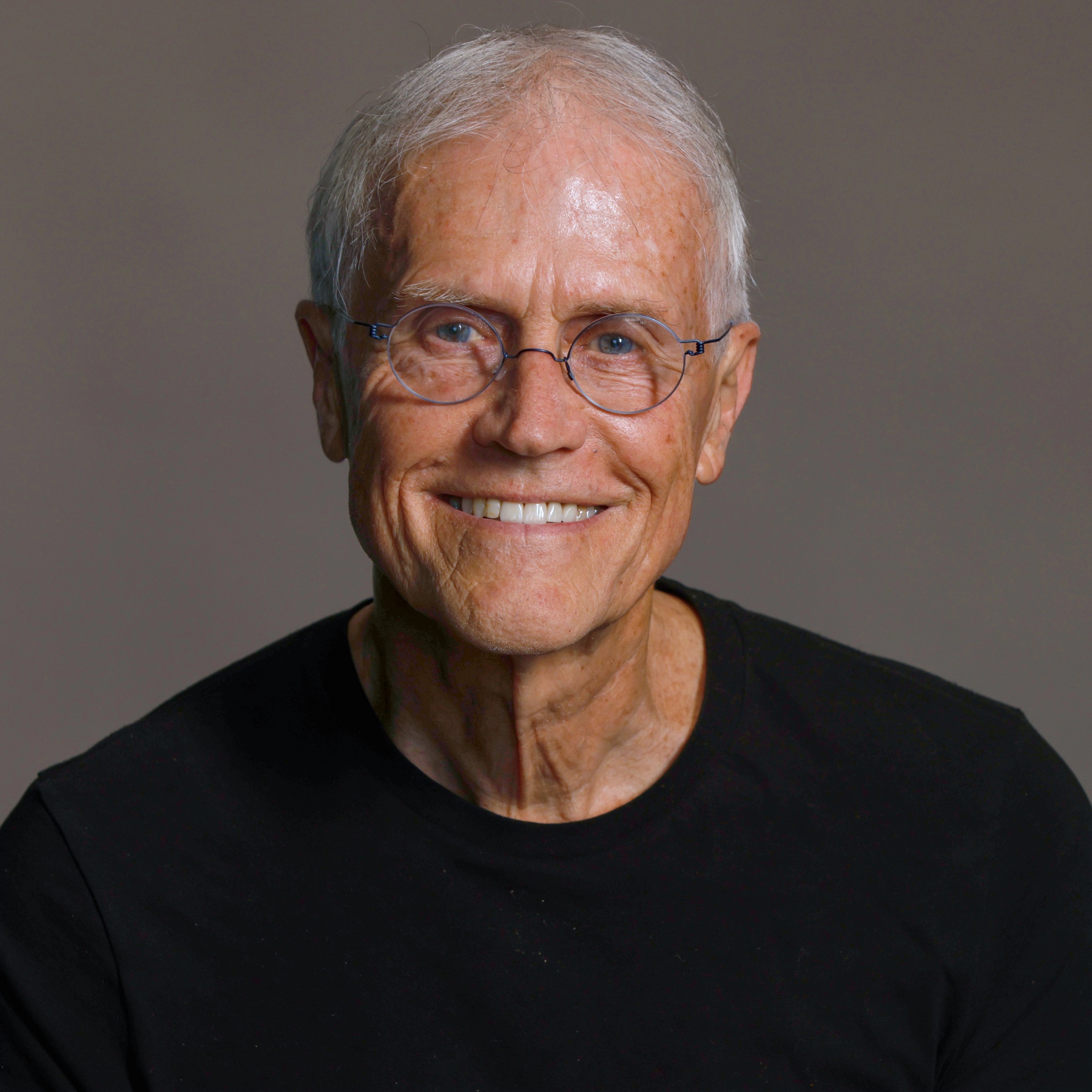
Paul Hawken
American environmentalist and entrepreneurWikipedia
16
MENTIONS
12
EPISODES
11
PODCASTS
Search complete. 16 mentions across 12 episodes found for "Paul Hawken".
Sep 23, 2026

Leah PennimanGUEST
But folks have brought back the forest and they brought it back through this incredible polyculture called Jardin Lacu that combines trees with perennial herbs.
Leah PennimanGUEST
annual vegetables and livestock in this integrated system that, you know, Paul Hawken ranked this top 10 in drought drawdown, these sort of climate solutions.
Leah PennimanGUEST
But you go to the Jaden Lakou, you're not only getting food and medicine, you sit five minutes there and get to see the pollinators.
Leah PennimanGUEST
like such a diversity of pollinators, the incredible fecund abundance, the colors of the flowers.

Corinna BellizziHOST
This is what it means to put life at the center of every action we take and every decision we make.
Corinna BellizziHOST
That's exactly how Paul Hawken defines regeneration in his book, Regeneration: Ending the Climate Crisis in One Generation.
Corinna BellizziHOST
In this perspective then, ethics of care and regeneration could be synonyms for one another.
Corinna BellizziHOST
You can't have regeneration without ethics of care.

Michael ManiatesGUEST
Instead, let's think about, let's think about the maze.
Michael ManiatesGUEST
Let's think about how we can come together around issues we care about to slowly, uh, reshape everyday systems of living so that in the words of, of environmental author and entrepreneur Paul Hawken, it becomes as-- acting sustainably becomes as easy as falling off a log.
Michael ManiatesGUEST
It becomes a natural kind of thing.
Michael ManiatesGUEST
I mean, t- to make the point, um, before coming to Abu Dhabi, I lived in Singapore for 10 years.

Jody EvansGUEST
We didn't need Netta, but everybody else did.
Jody EvansGUEST
My friend Paul Hawken was doing a book called Drawdown, and he's a bestie, right? And he shows me the book, and I'm like, where is war in here? War is the greatest contributor to climate change.
Jody EvansGUEST
We have to end war if you want to defend carbon.
Jody EvansGUEST
And he said, well, there wasn't a study.
Jody EvansGUEST
Because...
Jody EvansGUEST
Abby walking into all the information and all the people in the anti-war movement who work on this issue.
Jody EvansGUEST
I would say many of my friends in the anti-war movement have really gone deeper into this issue.
Jody EvansGUEST
We've brought it to every gathering when we're all together.

Dave ChapmanHOST
Yeah
Amy WesterveltGUEST
... it's so like why would we spend all of that money and time and energy, you know, robbing Peter to pay Paul when we can just, like, [chuckles] do this thing that we've known about for 30 years that works and now, oh, by the way, it's also very cheap.
Amy WesterveltGUEST
Um, like I just, I don't know why we would do it.
Amy WesterveltGUEST
Also, um, just from a pure like physics standpoint, we s- we don't have the space underground to store the volumes of CO2 that oil companies and, and various other folks are suggesting we could store s- solely as a way for them to continue making profits.
20 MINS LATER
Amy WesterveltGUEST
Mm-hmm.
Dave ChapmanHOST
And I was preparing to do a workshop, uh, well, a conference, uh, about 2020.
Dave ChapmanHOST
It was the year that COVID began, and Paul Hawken was gonna come and keynote.
Dave ChapmanHOST
It was gonna be a great two-day conference.

Lynley DixonHOST
We're a grassroots farmer-led movement with an add-on organic label that distinguishes crops grown in healthy soils and animals raised on pasture without synthetic fertilizers or toxic chemicals.
Lynley DixonHOST
You just heard from Paul Hawken, an environmentalist, entrepreneur, and author whose work has helped shape the climate movement for decades.
Lynley DixonHOST
Paul recently sat down with Dave to talk about why his next book is tentatively titled Upstream, because he believes we need to move beyond treating symptoms and start asking what created these problems in the first place.
Lynley DixonHOST
Paul believes that means taking a hard look at endless economic growth, consumption, chemical agriculture, and our relationship to the natural world.
Corinna BellizziHOST
It plays a role in the environment.
Corinna BellizziHOST
And as Paul Hawken has said, you know, in his book Carbon, and also during conversation when I had him on this podcast, you know, we need to bring more carbon home.
Corinna BellizziHOST
Each of these animals plays a role in that.
Corinna BellizziHOST
Simply eliminating them and removing forest does exactly the opposite of that.

Rebecca TickellGUEST
And so then we had made four movies about oil and we're like, oh gosh, the only thing more dull than making movies about oil is going to be making movies about soil.
Rebecca TickellGUEST
But the more I learned about biosequestration and then I read Drawdown by Paul Hawken and it just became so clear that All of the things that we had done, that was just training for us to tell this story, to tell the story of the soil.
Rebecca TickellGUEST
And so in 2013, after becoming farmers, I mean, I use that in air quotes because honestly, in the first year, we couldn't even get a weed to grow.
Rebecca TickellGUEST
It was so desertified here on this farm.

Rebecca TickellGUEST
And so then we had made four movies about oil and we're like, oh gosh, the only thing more dull than making movies about oil is going to be making movies about soil.
Rebecca TickellGUEST
But the more I learned about biosequestration and then I read Drawdown by Paul Hawken and it just became so clear that All of the things that we had done, that was just training for us to tell this story, to tell the story of the soil.
Rebecca TickellGUEST
And so in 2013, after becoming farmers, I mean, I use that in air quotes because honestly, in the first year, we couldn't even get a weed to grow.
Rebecca TickellGUEST
It was so desertified here on this farm.

David GottfriedGUEST
But wire it so it's a default system.
David GottfriedGUEST
Wire it so you don't need a David Godfrey, a Rick Fidresi, a Paul Hawken, a Bill McDonough, a Che Wall in Australia, Christina Gamboa running the World GBC.
David GottfriedGUEST
These are people climbing mountains.
David GottfriedGUEST
And some of us did it without gear, without a base camp, without a map of now let's wire it so it just happens
8 MINS LATER
David GottfriedGUEST
Now that we have technology, we can all have.
David GottfriedGUEST
Well, guess what? We have a lot of have-nots and they're growing.
David GottfriedGUEST
Paul Hawken at College of Commerce 30 years ago.
David GottfriedGUEST
Amory Lovins and Hunter Lovins and Paul, natural capitalism.
2 more episodes mention Paul Hawken.
Create an account to see the whole feed, search across every transcript, and follow the entities you care about.