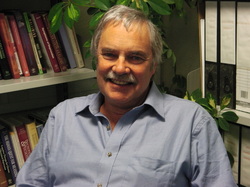
Paul Gilbert
British clinical psychologistWikipedia
23
MENTIONS
14
EPISODES
14
PODCASTS
Search complete. 23 mentions across 14 episodes found for "Paul Gilbert".
Oct 30, 2026

Chris GermerGUEST
Most of us.
Chris GermerGUEST
And also, theoretically and empirically, and we know this also from the wonderful therapeutic perspective research of Paul Gilbert and other folks in CFT, self-compassion is an antidote to shame.
Chris GermerGUEST
It is a beautifully targeted antidote to shame.
Chris GermerGUEST
So as...
16 MINS LATER
Stan SteindlHOST
And so of, of course, shame is ubiquitous too, in a way, you know, because it's sort of, but if we can connect with that underlying very fundamental, uh, human motivation to be loved.
Stan SteindlHOST
I think
Chris GermerGUEST
I first started thinking along these lines, um, when Paul Gilbert, said that we all wish to be considered favorably in the minds of others
Stan SteindlHOST
you know

Patricia Zurita OnaGUEST
Yeah.
Patricia Zurita OnaGUEST
And that's the difference, right? I think in compassion-focused therapy, Paul Gilbert makes this interesting distinction about there is compassionate self-correction of the action when there is compassionate learning, right? Okay, so what can I do next? And there is sometimes the self-attacking that people go to.
Patricia Zurita OnaGUEST
I shouldn't have done this.
Patricia Zurita OnaGUEST
You know, why did I waste time? I can't believe I'm doing this.

Patricia Zurita OnaGUEST
Yeah.
Patricia Zurita OnaGUEST
And that's the difference, right? I think in compassion-focused therapy, Paul Gilbert makes this interesting distinction about there is compassionate self-correction of the action when there is compassionate learning, right? Okay, so what can I do next? And there is sometimes the self-attacking that people go to.
Patricia Zurita OnaGUEST
I shouldn't have done this.
Patricia Zurita OnaGUEST
You know, why did I waste time? I can't believe I'm doing this.

Matthew JacksonGUEST
Okay.
Bronwyn MilkinsHOST
So, this one comes from Paul Gilbert, who is actually the founder of compassion focused therapy.
Bronwyn MilkinsHOST
He says that compassion is a sensitivity to suffering in self and others, with a commitment to try and alleviate and prevent it.
Bronwyn MilkinsHOST
So, compassion isn't just being nice to yourself, it's actually noticing when you're struggling and then doing something to support yourself through it.

Kristin NeffGUEST
What can we do about this? You know, because again, it's not, I don't take it personally.
Kristin NeffGUEST
There's a great quote from Paul Gilbert, who's another self-compassion researcher who says, it's not your fault, but it is your responsibility.
Kristin NeffGUEST
So it's not our fault in the sense we don't have to take it personally.
Kristin NeffGUEST
We don't have to shame ourself.

Kristin NeffGUEST
Again, I have these guests interviews every month.
Kristin NeffGUEST
I just interviewed Paul Gilbert yesterday, for instance.
Kristin NeffGUEST
I have monthly sessions with me one-on-one.
Kristin NeffGUEST
Well, not one-on-one, but group with me.

Tim AnstissGUEST
I've always had an interest in and around physical activity, and now trying to develop a little digital health company.
Tim AnstissGUEST
But we're focusing on behavior change and health behavior change, although I did work with Professor Paul Gilbert.
Tim AnstissGUEST
This may be relevant as well.
Tim AnstissGUEST
Got a grant from MacMillan, and we developed an immersive VR experience for people with cancer.
32 MINS LATER
Tim AnstissGUEST
You wouldn't want to be without a critical self.
Tim AnstissGUEST
But when it's a bully, that leads to problems.
Tim AnstissGUEST
So the focus of compassion-focused therapy, et cetera, Paul Gilbert, fantastic, is helping people or yourself move from hostile self-criticism to compassionate self-correction.
Tim AnstissGUEST
If there's a real bully outside of you slagging you off, threatening you, intimidating you, then you might keep your head down, be intimidated, et cetera, but you can commonly get away from it.

Nicky LoweGUEST
I think there's different ways to that, but there's a model that I hold in my head, which at what I would call a global thinking level, might be useful to share with your audience.
Nicky LoweGUEST
And it comes from the work of Dr. Paul Gilbert.
Nicky LoweGUEST
So he is a leader in compassion-based therapy.
Nicky LoweGUEST
And I remember training with him and him sharing these three motivation systems And a massive light bulb went off for me.

Kathryn ChoulesGUEST
And so we have to work now in 2026 with a biology that evolved a long, long time ago, outdated hardware and software, you could think.
Kathryn ChoulesGUEST
Paul Gilbert, who is a professor of psychologist at the University of Derby, he describes this as having three emotion regulation systems.
Kathryn ChoulesGUEST
And I've already alluded to two of them, the threat system and the drive system.
Kathryn ChoulesGUEST
So the threat system is designed to keep us alive, safe from danger.
Kathryn ChoulesGUEST
Sometimes they help us survive our survival and they might also be social benefits.
Kathryn ChoulesGUEST
And the neurochemical most involved in that is dopamine that gets us chasing, gets us looking for what we think will keep us alive and responding well.
Kathryn ChoulesGUEST
And the third of the emotion regulation systems that Paul Gilbert talks about is the, he calls it a number of things, the soothing system.
Kathryn ChoulesGUEST
It's about affiliation, care.

Paul GilbertSOUNDBITE_SPEAKER
Um, so yes, I would s- be interested to see what Jeremy says, but yes, I would say that.
Jeremy HolmesSOUNDBITE_SPEAKER
Yeah, just to, to develop what Paul's been saying and, and, uh, going to Niall's point, or starting with Niall's point, uh, perhaps, another, uh, uh, researcher in this field who I, I've been hugely influenced by is, uh, an Israeli researcher called Ruth Feldman, and her work, she's really sort of queen of oxytocin, if I can put it that way, and, and w- she's been, uh, she's shown, for instance, she's been very interested in, uh, male gay couples adopting babies at birth, and she's so- shown that the same oxytocin, um, uh, reciprocity, I mean, the point about oxytocin is it's not just the mother.
Jeremy HolmesSOUNDBITE_SPEAKER
It's mother and baby, and there's a reciprocal relationship between them, and the mum's oxytocin levels go up, the baby's go up, and when hers go down, the baby's go down.
Jeremy HolmesSOUNDBITE_SPEAKER
And in, uh, r- uh, problematic mother, uh, baby relationships, um, that reciprocity, reciprocity and synchrony, if you like, rather than reciprocity, isn't there.
Jeremy HolmesSOUNDBITE_SPEAKER
But she's shown that, uh, you get exactly the same phenomena when-
Zo WilliamsHOST
Andy, uh, d- who ju- who, who was that? Paul Gilbert and Jeremy Holmes.
Zo WilliamsHOST
Paul Gilbert and Jeremy Holmes, and I hear what they're talking about.
Zo WilliamsHOST
They're talking about this relationship with mother and child, and he was talking about the early developmental attachment system that's in place.
4 more episodes mention Paul Gilbert.
Create an account to see the whole feed, search across every transcript, and follow the entities you care about.