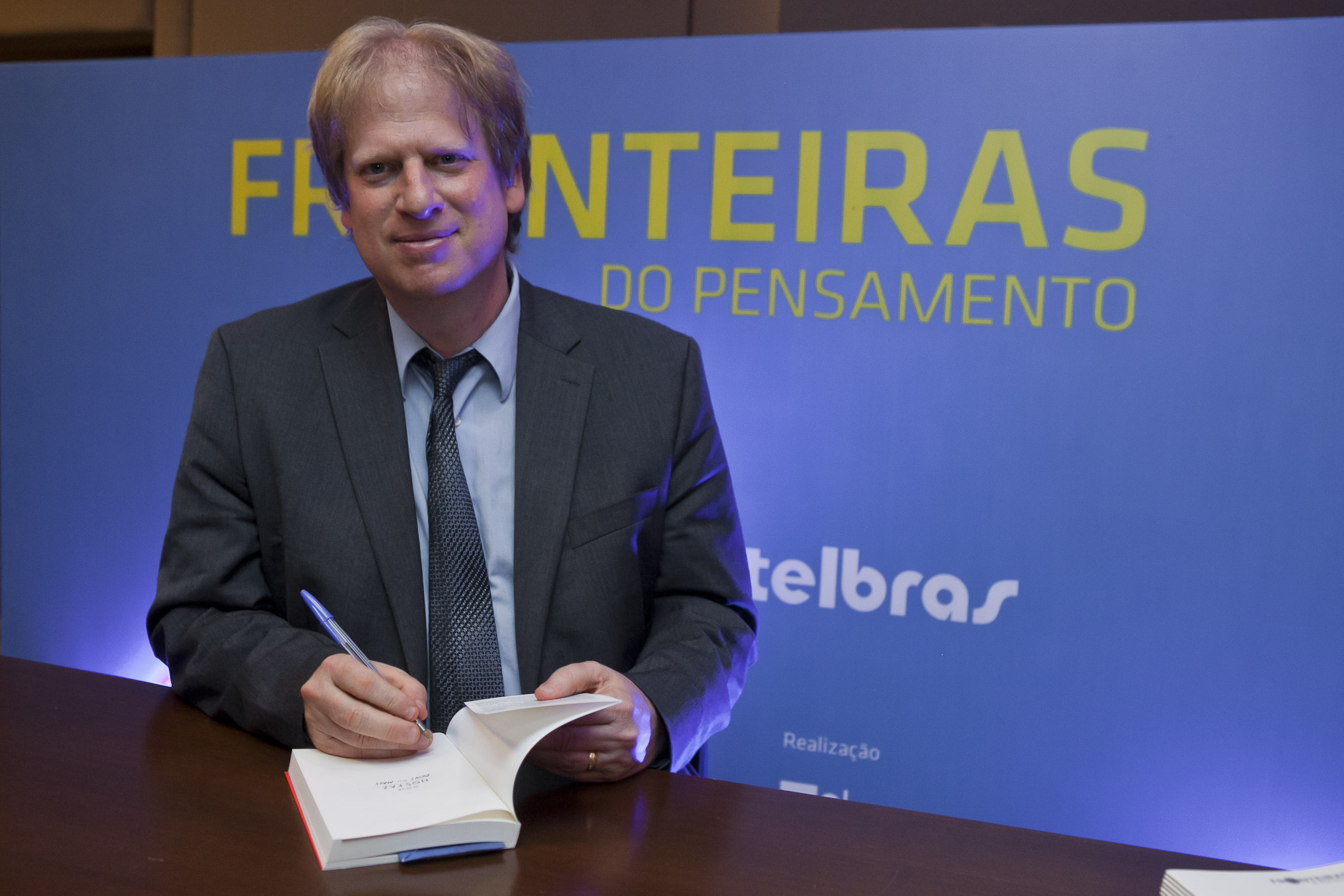
Paul Bloom
Canadian-American psychologistWikipedia
40
MENTIONS
17
EPISODES
17
PODCASTS
Search complete. 40 mentions across 17 episodes found for "Paul Bloom".
Sep 20, 2026

Paul BloomHOST
I'll Never Be Your Pizza Vernon.
Paul BloomHOST
Anybody know, figure out what that corresponds to? Beast of Burden.
Paul BloomHOST
Professor Paul Bloomfield Beasts of Burden, very good.
Paul BloomHOST
A Girl with Colitis Goes By.
Paul BloomHOST
Somebody? The ants are my friends, they're blowing in the wind.

Julian WalkerHOST
The main types of empathy are cognitive, affective or emotional, and somatic.
Julian WalkerHOST
Derek will be looking at the first two in segment two through the lens of Paul Bloom's work.
Julian WalkerHOST
But given a recent book by Lebanese-born Canadian marketing professor Gad Saad, which Matthew is going to cover in segment three, we thought we'd look at how empathy is being used and potentially distorted in modern society, or, as I'll get into next, how it's being weaponized on social media by Christian nationalists.
Julian WalkerHOST
[upbeat music] Last year saw a wave of anti-empathy content across the Christian nationalist, independent, and social media sphere, which is, sounds like an odd sentence [laughs] at first glance.
20 MINS LATER
Derek BeresHOST
It's not possible for me to actually know the circumstances of nineteen hundred America or even modern-day India because one is impossible for me to understand, and the other is highly unlikely, as it would entail me not just visiting, but becoming part of that culture.
Derek BeresHOST
So even my assumption that Indian parents would be pro-vaccine is pure speculation based on my own understanding of space and time.
Derek BeresHOST
And this sort of bias in empathy is a problem, and that's according to Yale psychology professor Paul Bloom, who wrote Against Empathy: The Case for Rational Compassion in twenty sixteen to point out the flaws, not against empathy per se, as he understands that that's a function of being human, but on decision-making based on empathy.
Derek BeresHOST
I'll break it down a little bit, but as a heuristic, think of immediately replying to a social media post without context to the person making the claim, the source and validity of information presented, or thinking through where that claim leads simply because the sentiment made you feel a certain way.

Will GervaisGUEST
I think it's pretty intuitive that we might have such a bias.
Will GervaisGUEST
Also work by like Paul Bloom and others has looked at intuitive mind-body dualism.
Will GervaisGUEST
And I think that is a pretty easy kind of theoretical and empirical cell that, you know, I have a hard time not thinking dualistically.
Will GervaisGUEST
So if you want to call it intuitive, that's fine by me.

Scott Barry KaufmanGUEST
Well, there, there are other people in the field as well that are starting to, um, argue.
Scott Barry KaufmanGUEST
So I'll get Paul Bloom I, I argue with all the time about this.
Scott Barry KaufmanGUEST
Paul Bloom, um, was like, "Well, the research suggests that it's not, um, real, um, growth.
Scott Barry KaufmanGUEST
It's perceived growth, um, because statistically, we went in and we measured, and we found that people aren't actually better off after the event than before the event.
Scott Barry KaufmanGUEST
They're not actually growing, you know, um, even though they think they are." Um, it's sort of like a "Ha, gotcha" kinda thing, and I'm like-

April AuHOST
And so there's a study done by this, this professor at Yale.
April AuHOST
His name's Paul Bloom, and he has a PhD in cognitive psychology, and he specializes in pleasure research.
Aaron AuHOST
Hmm.
April AuHOST
The study of how we as humans develop the ability to derive pleasure from people, experiences, and things.
April AuHOST
And then we think that when that is not there in the same way, that, oh, we've just lost the spark.
Aaron AuHOST
Yeah.
April AuHOST
But what Paul Bloom has discovered is that it's through intentionality and study of something or someone-
Aaron AuHOST
Mm-hmm

Pete QuiñonesHOST
If babies are born racist, what's...
Pete QuiñonesHOST
That means we're just racist, right? Let's talk about Paul Bloom.
Pete QuiñonesHOST
[laughs]
Josh NealGUEST
Yeah.
Josh NealGUEST
So whether it was Midtown Manhattan or South Brooklyn or the Bronx or Nassau or Queens, whatever, I had to teach the same material.
Josh NealGUEST
And one of the chapters was on human development from, you know, infancy till, you know, cradle to the grave, human psychology.
Josh NealGUEST
And, uh, at the time I was teaching, or around the time I had finished graduate school, Paul Bloom had published a series of studies that were, um, well, there were 60 minutes segments on it.
Josh NealGUEST
He got, he wrote, you know, New York Times bestselling books about it.

Barry FernsHOST
Rocks.
Barry FernsHOST
So in 2007, three researchers, George Newman, Gil Diesendruck, and the Yale psychologist Paul Bloom, published a study in the Journal of Consumer Research with a title that, well, [laughs] sounds like a podcast for literalists, and it's called Celebrity Contagion and the Value of Objects.
Barry FernsHOST
And they ran experiments, right, on what people would pay for objects owned by famous people, and they found that people pay significantly more if the object had been touched by the famous person.
Barry FernsHOST
Like a jumper worn by someone famous is worth more than an identical jumper just from their wardrobe that they never wore.
5 MINS LATER
speaker_0ADVERTISER
Mr. Pitt and Jolie recently walked through the air, which was bottled in a mason jar at the premiere of Mr. & Mrs. Smith.
speaker_0ADVERTISER
The mason jar with potential celebrity breath was initially listed for $9.99, but it quickly gathered traction and was sold for an incredible $75,000.
Barry FernsHOST
So two psychologists, Jonathan Haidt and Dacher Keltner, who Dacher, by the way, I mention so often that I should really call him a friend of the channel at this point, but obviously Dacher doesn't know it, but they are my mate, and I'd do something illegal for him.
Barry FernsHOST
Just ask me, Dacher, I'm here for you.

Greg PliskaHOST
Okay
A.J. JacobsHOST
... which is one of my favorite writers, I had the, the pleasure of talking to him recently, is, is Paul Bloom.
A.J. JacobsHOST
He's a great-
Greg PliskaHOST
Ooh

Sean IllingHOST
This part of it is so interesting to me.
Sean IllingHOST
I mean, I've, I've had psychologists on the show before, people like Paul Bloom, who I love.
Sean IllingHOST
I, I think he's, I think he's just fantastic.
Sean IllingHOST
Um, and I may be bastardizing his, [laughs] his argument here.

Ben KornellHOST
But I do think more AI practice, let's do that.
Alex SarlinHOST
And they go out of their way in this article and in the Harvard Business School to say that the students actually really love this feature because, I mean, as you're saying, it is a ratio thing, right? And we talked about this all the time in my time at Coursera, right? Because being in an actual course with a leading faculty at Princeton, a leading faculty at The incredible schools that have been doing MOOCs for years at Yale, like the Paul Bloom psychology course, Paul Bloom, legendary psychology professor at Yale.
Alex SarlinHOST
Like, yes, to be in that course and be able to raise your hand and comment and have him respond to you and have a conversation.
Alex SarlinHOST
That's worth a huge amount.
Alex SarlinHOST
So the ability to have videos of him explaining the stuff is worth some portion of that.
Alex SarlinHOST
Maybe a small portion, but you could do it for everyone in the world.
Alex SarlinHOST
This is somewhere in between, right? If you could take a Paul Bloom and copy him and sort him out with his knowledge, train an avatar with all of the research he's ever done, all the books he's ever published, and then have a conversation and have him talk to you for three straight hours.
Alex SarlinHOST
I mean, there's definitely value there.
7 more episodes mention Paul Bloom.
Create an account to see the whole feed, search across every transcript, and follow the entities you care about.