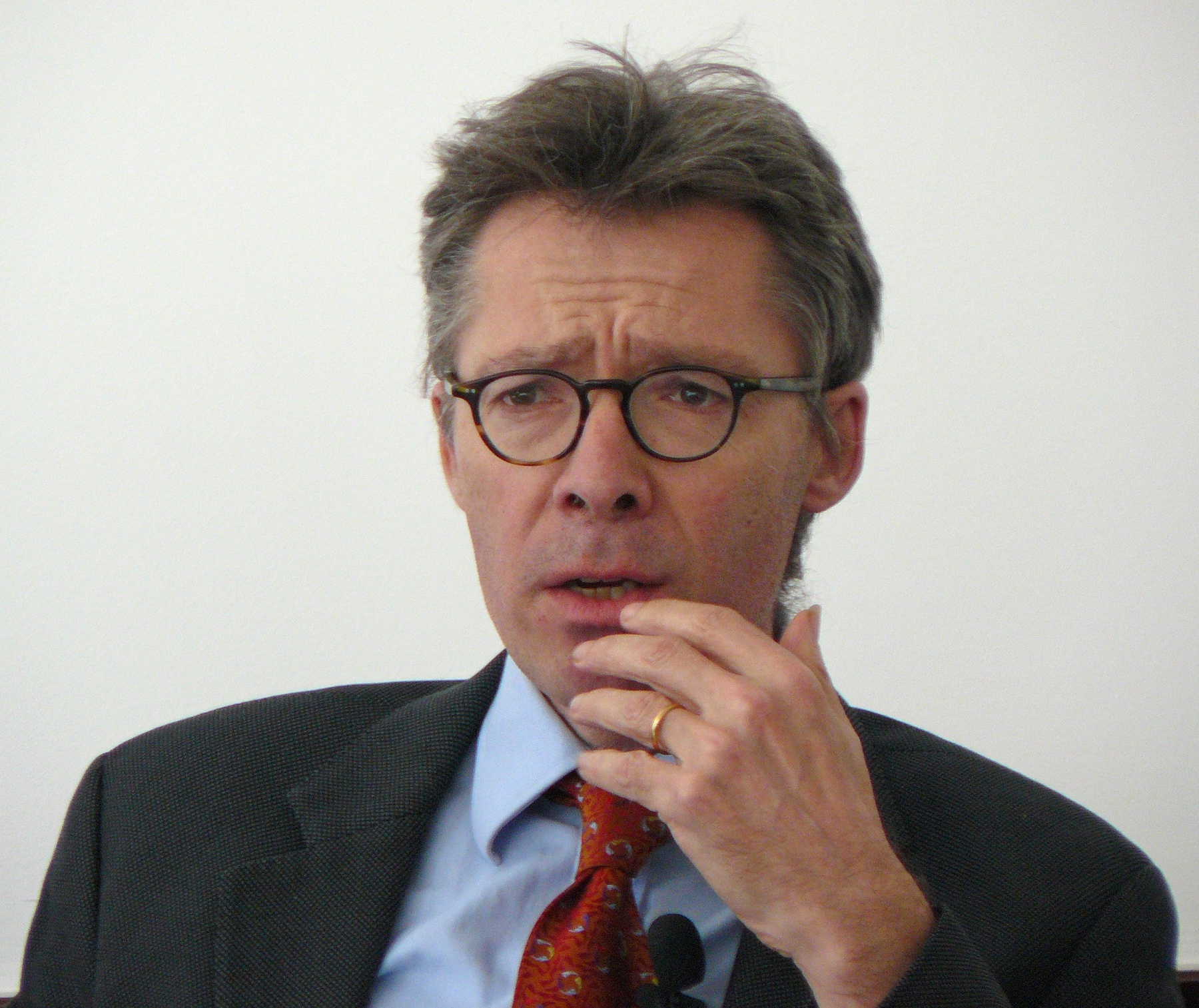
Patrick Wintour
British journalist
11
APPEARANCES
3
PODCASTS
Sep 22, 2026


Patrick WintourGUEST
... uh, with both of these straits, uh, under pressure and the amount of supplies and reserves dwindling as demand starts to rise.
Patrick WintourGUEST
So the impact is gonna be higher inflation, interest rates, recession, and it's, you know, it's not very difficult to work out that is the course on which we're, we're treading at the moment.
Patrick WintourGUEST
You have to see this as now two fronts in one war, and so you have to realize that when wars start, uh, they don't always stay where they started and they move, and this war's now moved to this second front.
Patrick WintourGUEST
They've boomed about eight, nine percent as a result of when it became clear that the Houthis had full control of the, the strait.
Patrick WintourGUEST
Uh, and there's been some, uh, leaning back since then, but no one should be in any doubt that this is a really new long-term extra dimension to this huge war that we've been, um, watching since February.

Patrick WintourGUEST
So I think it, this is actually one occasion where the individual, the personality does matter, and I don't think if he wasn't, um, if, if someone else was the foreign secretary, I don't think what was announced yesterday would've happened.
Patrick WintourGUEST
But I think one of his strongest arguments was to say that it, it was almost antisemitic in itself, that if he criticized, um, the Israeli government, the current Israeli government, he was therefore criticizing Israel or Jews.
Patrick WintourGUEST
Well, that might be true, but it has been a truth that for, uh, five or six years, um, foreign secretaries have been told it's impossible to make that distinction.


Tim FranksHOST
Patrick Wintour is diplomatic editor of The Guardian newspaper and has just returned from a reporting trip to Iran.
Patrick WintourGUEST
In Tehran, I attended both the funeral in the major mosque in Tehran, which lasted over two days.
Patrick WintourGUEST
And then on the third day that I was most active, there was a, uh, funeral procession through Tehran with the body of the Supreme Leader and members of his family all assassinated at the start of the war.
Patrick WintourGUEST
One was quite a lot of genuine remorse, sitting, standing ten yards from about three or four men who were sobbing uncontrollably for about ten to fifteen minutes.
Patrick WintourGUEST
And that was just not something you sort of buttoned up British person's used to seeing.
Patrick WintourGUEST
So there was r- the remorse, even though you've got to remember he died four months ago, the Supreme Leader.
Tim FranksHOST
Did you get any sort of sense of how representative this feeling of sadness and fury is?

Nosheen IqbalHOST
You said that there's a, a lot of security around, like, various figures of the leadership, but are they actually collectively on show in some ways?
Patrick WintourGUEST
I mean, there was a complete long line of all the most senior figures in the military, the judiciary, and religion and politics in front of the caskets yesterday at morning prayers, including the three sons of Ali Khamenei, who have not appeared in public and they appeared together.
Patrick WintourGUEST
There was senior figures in the IRGC who haven't been seen for weeks and months.
Patrick WintourGUEST
The one exception to all this is obviously the son Mojtaba, I mean, who's, um, not attended any of these public events and his whereabouts and health remains a mystery.
Patrick WintourGUEST
He's sending out written messages quite frequently now, but whether they're genuinely from him, uh, there's been even no audio from him, so it is slightly mysterious as to why they're holding him back so much.
Patrick WintourGUEST
Uh, and he also accepted, um, that it'd be possible for Iran to dilute this stockpile of highly enriched uranium inside Iran, where previously he'd insisted it had to be exported abroad.
Patrick WintourGUEST
So you can already see the parameters of the nuclear negotiations, which obviously- Very open at the moment.
Patrick WintourGUEST
But you can see America giving ground, um, red lines disappearing in the dust, um, eh, every time Trump spoke.
Patrick WintourGUEST
So, um, sure, we're gonna have to think what, what was achieved i- in this war.
Patrick WintourGUEST
And I think if you look at what Iran, um, was willing to do before the fighting started, and what they're gonna-
Patrick WintourGUEST
But, uh, if they continue, um, I think it will be, the moment they're contained and I think they're understood on both sides, as it were, it's, it's one attack by the Americans, then a, then a reprisal by the, uh, Iranians into Kuwait where the, they say the, um, missiles have come into Iran.
Patrick WintourGUEST
If it continues, uh, the argument that the Americans, which are making these are acts of self-defense, becomes difficult to sustain.
Patrick WintourGUEST
Uh, I still think both sides don't want to go back to full, fully fledged war.
Patrick WintourGUEST
Yeah, I think if-Broadly, I think there's four sort of sticking points that were being negotiated over the last few days.
Patrick WintourGUEST
And then you're right, the issue of whether there was going to be a full ceasefire in Lebanon.
Patrick WintourGUEST
And then there's a question of how the Straits of Hormuz are going to be managed in the future.

Lucy HoughHOST
It feels, Patrick, like we're just stuck in some kind of stalemate given the multifaceted, complex talks that you're describing.
Lucy HoughHOST
So what's going on? I mean, this doesn't feel like sort of fertile ground for ceasefire negotiations.
Patrick WintourGUEST
I mean, I think the ghastly phrase kin- the kinetic activity has switched from land to sea and there are these two different blockades, one laid over the other.
Patrick WintourGUEST
There's, there's the US blockade on Iranian ports and the purpose behind that is to, in effect, make it impossible for Iran to start produce, uh, continue to produce oil within a matter of a fortnight.
Patrick WintourGUEST
It's been estimated if they can't get their oil out, then the oil production will have to come to a halt, uh, and that could cause some permanent damage to some of the oil installations in Iran.
Patrick WintourGUEST
So they lose revenue and their, their industry, which is the most important revenue-generating industry gets crippled.
Patrick WintourGUEST
That, I mean, that's the American plan and obviously the Iranian plan which they're stepping up by now seizing ships is to keep the chokehold on the, the strait with, and twenty percent of oil and most commodities go through that strait.
Patrick WintourGUEST
I think it's actually one of the first sort of semi-sensible things the Americans have done in this war.
Patrick WintourGUEST
And I mean, obviously, on the surface, it seems paradoxical in the sense that the Americans are trying to get the Strait of Hormuz opened.
Patrick WintourGUEST
And now they seem to be mounting a blockade, but it's actually a specific blockade of troops.
Patrick WintourGUEST
Iranian ports of which there are about seven or so along the strait and they're trying to make sure that no Iranian oil ships can leave those ports.
Patrick WintourGUEST
I mean whether it will work or not I don't know but it obviously has the impact of trying to reduce the amount of income the Iranian government receives but it also has a particular political pressure on China because China is the most keen to import Iranian oil and liquid gas.
8 MINS LATER
speaker_0NARRATOR
As to the talks between
Patrick WintourGUEST
be some crowing going on in Tehran about this and saying we haven't spoken to him at all.
Patrick WintourGUEST
And those would probably be via one of two intermediaries, either Oman or Turkey, both of whom have got kind of respect in Washington and in Tehran.
Patrick WintourGUEST
And it may be that the talks were very much focused on this issue of how to reopen the Strait of Hormuz and on what terms.
Patrick WintourGUEST
And then that might broaden out into a wider discussion of how Iran and America are going to live with one another.
Patrick WintourGUEST
But we've been living in this situation where everyone's been escalating and escalating.
Lucy HoughHOST
Do you think because of this taco type quality of Trump, his unreliability, that Iran feels it's in a stronger position to keep going, to not bow to US? I think at the

Patrick WintourGUEST
I mean, you can have sort of university dissertations about the role of the individual in history, but I think this is much, much more (laughs), much more complicated.
Patrick WintourGUEST
One, in the summer there was a, an agreement by the Arab states that Hamas would no longer play a role in the future of Gaza and that Hamas would have to disarm.
Patrick WintourGUEST
A bit later, Trump abandoned the idea of there being a, an American riviera and the whole of Gaza would have to be decanted.
7 MINS LATER